By the end of this hands-on guide you will be able to perform a full, model-aware Chanel authentication in 30–90 minutes depending on access to photos and tools; this assumes a beginner-to-intermediate skill level and basic tools (loupe, ruler, flashlight).
Before you start
- 10x jeweller’s loupe or macro smartphone lens
- Soft LED flashlight (cool white, 200–400 lumens)
- Ruler (mm markings) or caliper
- Clean flat surface and neutral background for photos
- Access to clear photos of serial hologram, interior stamping, and hardware
- Notebook or photo folder to record suspicious features
Introduction to Spotting Fake Chanel Bags
How to Spot a Fake Chanel Bag: Real vs Fake Guide starts with understanding why Chanel is targeted and which core features are most frequently forged. Chanel’s strong brand equity and stable resale value make models like the Classic Flap, Boy, and Gabrielle prime targets for counterfeiters. Counterfeit quality ranges from crude replicas to “superfakes” that mimic serial stickers, hardware, stitching, and packaging.
According to a 2024 industry report, luxury handbags account for a high percentage of seized counterfeit goods globally, driven by improved reproduction techniques and online marketplaces. Think of the serial number like a bag’s fingerprint: alone it can be forged, but combined with hardware, stitching, leather, dust bag, and provenance it becomes a strong signal.
For broader context on replica patterns across brands, see:
Luxury Brand Replica Guide: Gucci, Chanel, Louis Vuitton & More
Transition: next we’ll cover fundamentals you must verify on every Chanel bag.
Understanding Chanel Bag Authenticity Basics
- Serial number & hologram sticker — Chanel uses serial stickers with year-linked formats; placement, font, holographic elements, and adhesive visibility matter.
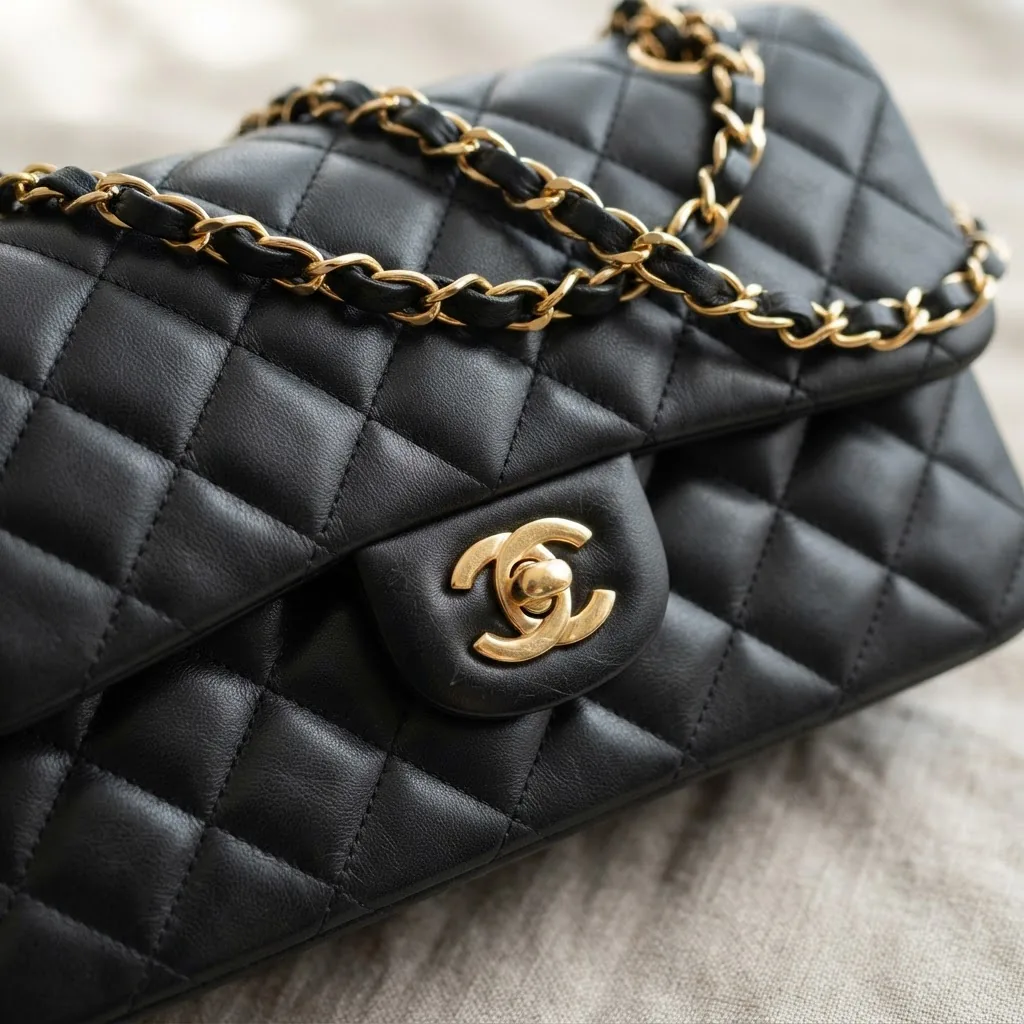
- Hardware — Weight, finish, and engravings on the CC lock, chains, and clasps reveal production quality and plating techniques.
- Stitching & quilting — Count stitches per diamond unit, check alignment across seams and flap edges; authentic Chanel typically has 10–11 stitches per diamond on Classic Flap sizes and consistent “quilt puffiness.”
- Leather and materials — Lambskin (soft, buttery, light patina) vs caviar leather (textured, durable pebble); smell, feel, and grain uniformity are cues.
- Interior branding & cards — Serial card authenticity, font alignment, placement of “Made in France/Italy,” and interior stamps must match year conventions.
- Packaging & dust bag — Dust bag print quality, fabric weight, logo font, and stitching differ significantly between authentic and fake Chanel dust bags.
For expanded discussion on Chanel materials and features, see:
Chanel Bags Guide: Materials, Features, and Common Questions
Need more brand comparisons? See:
YSL Bag Guide: How to Spot Fake vs Real Saint Laurent Bags
Transition: the next section is a hands-on checklist of exact features to inspect, step by step.
How to Identify a Fake Chanel Bag: Key Features to Examine
-
Check the serial number and hologram sticker first.
Locate the serial sticker inside the interior pocket or seam. Note the number of digits (7–8 digits for older bags; 8 numbers for 1986–2004, 7–8 digits in other years depending on production run; 10–12 digits are a red flag for obvious fakes). Look for clear, sharp digits, a layered holographic element, and a clear rectangular sticker edge with visible adhesive patterns.
- Use a loupe to inspect hologram micro-prints and reflective layers; modern counterfeit holograms often use flat reflective foils without depth.
- Compare the serial number format to known year tables (see H3 below).
-
Inspect the CC lock and hardware weight.
Authentic Chanel hardware is heavy and solid (not hollow-feeling) with consistent plating (gold-tone or aged rhodium). The CC lock should close smoothly, with the right C overlapping the left C at a precise ratio consistent with the model year.
- Measure chain thickness with calipers; vintage chains are often heavier and show subtle patina.
- Look for laser-engraved hallmarks and “CHANEL” or serial stamps on the back of plates; poor engraving depth is a fake sign.
-
Count stitches per diamond and examine quilting alignment.
Use a ruler: authentic Chanel Classic Flap models typically have 10–11 stitches per diamond unit (smaller sizes may have 8–9). Quilting should align across the flap and body—mismatched diamonds at seams are low-quality reproductions.
- Check the “puffiness”: lambskin has soft three-dimensional quilt puff while caviar is more resilient with defined pebbles.
- Inspect edge piping and corner finishing; sloppy glue or uneven piping indicates a forgery.
-
Assess leather quality and smell.
Rub a corner with a clean finger: lambskin darkens slightly with oils and has a leather aroma; faux leather often smells chemical and peels under light friction. Caviar leather’s pebble should be uniform; random flat spots or overly glossy coating often mean PU or imitation finishes.
-
Open the bag—check interior labels, stitching, and lining.
Interior Chanel stamps should have even depth, consistent font, and correct “Made in France/Italy” wording based on the production year. Lining is typically leather in classic models or fabric in some seasonal pieces; mis-matched linings are red flags.
- Inspect inner zipper pulls for brand engraving and consistent teeth alignment.
- See H3 below for serial card and sticker specifics.
-
Verify the authenticity card and packaging.
Authenticity cards have gold trim, a serial that matches the hologram sticker, and a specific cardstock weight. Packaging—box, dust bag, ribbon—should use high-quality materials; dust bags often indicate production era by logo type (see H3 on dustbags).
-
Evaluate logo embossing and font details.
CC logos, interior stamps, and font spacing are precise on authentic bags. Look for even kerning, aligned letters, and consistent thickness. The CC turn-lock font and placement vary slightly by model and year—compare to reference images for the exact model.
-
Look for model-specific cues (Gabrielle, Boy, Flap).
Gabrielle uses a fixed base with a different strap attachment and lacks the same flap-stitching found on classic flaps; Boy bags have chunkier hardware and rectangular lock plates. Counterfeits often mix elements from multiple models—if a Boy bag has a soft lambskin quilt like a Classic Flap, be suspicious.
-
Cross-check provenance and pricing.
If the price is dramatically lower than typical resale values (e.g., a Classic Medium Flap listed at under 30% of running secondhand value), require additional proof: dealer invoices, original receipts, and multiple detailed photos. According to a 2024 consumer protection agency report, unusually low pricing is the leading red flag in online handbag fraud.
-
Document discrepancies and, if unsure, seek verified authentication.
Take high-resolution photos of the serial sticker, hardware engravings, stitch counts, and dust bag. Use these to consult pros or reputable authentication platforms—don’t rely on a single cue like serial cards alone.
Transition: the next three sections deep-dive into serials/holograms, hardware, and leather so you can apply the measurements above with confidence.
Serial Numbers and Hologram Stickers Explained
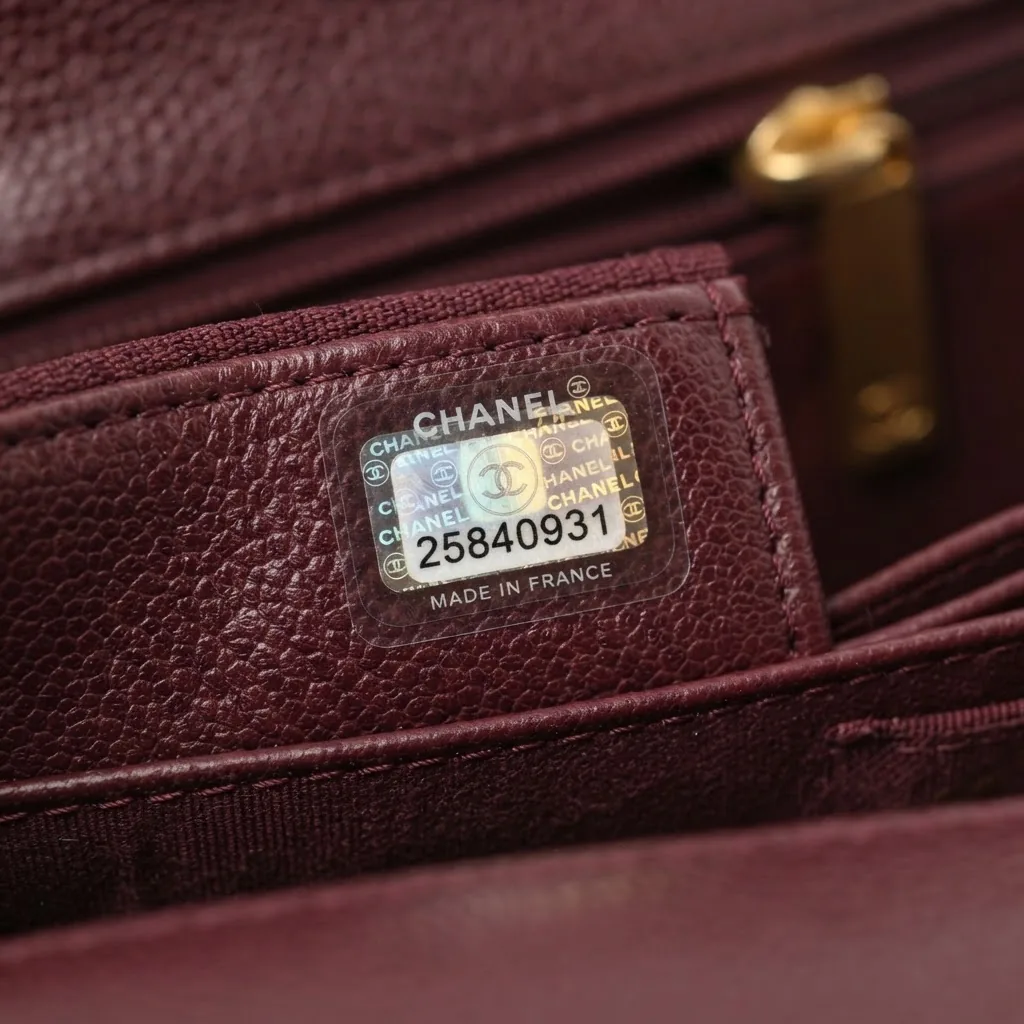
Serial code format: Chanel serial numbers follow year-linked conventions. Think of the serial number as a timestamp: 6-digit numbers are pre-1986 (rare and usually on paper tags or stamps), 7–8 digits are common in 1986–2004, and post-2005 stickers evolved to include micro-holograms and laminated layers. Recent years introduced more complex holographic elements and adhesives.
Examples of real vs fake serial features:
- Real: layered hologram with depth, clear serial font, exact digit spacing, and sticker edge showing thin glue residue but secure adhesion.
- Fake: printed or foil-only serials with flat reflectivity, uneven or misaligned digits, inconsistent font weight, or stickers placed where glue bubbles are visible.
Recent counterfeit trend: 2023–24 counterfeiters now print near-photorealistic hologram foils and apply them with clear adhesives, making the sticker appear convincing. According to a 2024 industry report, this has increased false positives when buyers rely only on holograms. Always pair hologram checks with hardware and stitching inspection.
Hardware and Logo Details: Lock, Chain, and Stitching Scrutiny
Follow these numbered checks when inspecting hardware and logos:
- Weight test: authentic chains feel dense; measure by hand and compare to reference photos or known authentic bag.
- Engraving depth: use a loupe to read engravings—authentic Chanel uses crisp, shallow but well-defined engravings; sloppy shallow etching or black-filled letters usually indicate fakes.
- CC lock geometry: check the overlap: left C should overlap right C at a consistent location per model; mismatched curvature or gap size is suspicious.
- Chain leather threading: leather interlaced through chain links should be uniformly folded and edge-painted; loose or raw-edge threading is a red flag.
- Stitch count per diamond: measure across a diamond unit; Classic Flap ranges from 10–11 stitches on medium sizes—document your count and compare to model references.
Leather and Quilting Quality: Real Materials vs Fake Textures
Comparison examples:
| Feature | Authentic | Common Fake |
|---|---|---|
| Lambskin feel | Buttery, slight sheen, develops patina | Plastic feel, overly glossy or matte coating |
| Caviar texture | Uniform pebble, durable, even dye | Irregular pebbles, flat spots, ink pooling |
| Quilt loft | Consistent three-dimensional puff | Flat quilting or uneven stuffing |
Interior Features and Dust Bag Comparison
- Check interior brand stamp: font weight, spacing, and “Made in” location must match the year and factory conventions.
- Match serial card to hologram: numbers must be identical; mismatch means fake or swapped parts.
- Dust bag inspection steps:
- Feel the fabric: authentic dust bags use medium-weight cotton or jersey; very thin synthetic fabric is a fake indicator.
- Logo placement: Chanel logo alignment (centered, size of font) varies by era—compare to era-specific references.
- Check seams and overlock stitching inside the dust bag; poor seam finishing is common on replicas.
Transition: model-specific cues are crucial—next we contrast the Classic Flap, Boy, and Gabrielle in detail.
Model-Specific Fake vs Real Comparisons
This table highlights model-callouts to watch. If a replica mixes elements across models, it’s often a copy-paste forgery.
| Model | Authentic markers | Fake markers |
|---|---|---|
| Classic Flap | Signature Mademoiselle turn-lock, precise stitch count, quilt alignment across flap | Misaligned quilting, incorrect CC overlap, light-weight chains |
| Boy Bag | Chunkier rectangular hardware, unique serial sticker placement, bold plate engraving | Thin hardware, wrong plate proportions, inconsistent engraving font |
| Gabrielle | Structured base, dual strap mechanics, fewer interior leather panels | Soft slouching that contradicts fixed base, strap hardware that rotates freely |
For more on replicas and styles related to Chanel influences:
Replica and Chanel-Inspired Bags Guide: Styles and Features
Transition: counterfeiters are evolving—these advanced checks reflect 2024 tactics and protective tools.
Advanced Tips: How to Spot Fake Chanel Bags in 2024
- Don’t trust holograms alone: 2023–24 fakes often use printed holographic foils; check hologram depth under angled light. According to a 2024 industry report, faux holograms increased successful online listing fraud by 22%.
- Use reverse-image checks for provenance: run seller photos through reverse-image search to find reused stock images commonly tied to scams.
- Ask for progressive photos: request serial sticker, interior stamp, bottom corners, chain ends, and box barcode photos taken in sequence—fraudsters often cannot produce consistent high-resolution images.
- Leverage brand-agnostic authentication tools: compare findings using multi-brand reference libraries and marketplaces with authentication history.
Further reading on cross-brand counterfeit trends:
Gucci, Prada & YSL Bags Guide: Materials, Quality, and Pricing
Fake Gucci Bag Guide: How to Identify Real vs Fake Handbags
Guide to Spotting Fake Louis Vuitton Bags: Real vs Fake Tips
How to Spot a Fake Prada Bag: Real vs Fake Identification Guide
Guide to Replica and Fake YSL Bags: Identification and Insights
Replica and Faux Louis Vuitton Bags Guide: Styles and Tips
Replica and Gucci-Inspired Bags Guide: Features and Identification
Replica Prada Bags Guide: Identification and Quality Insights
External authority resources:
Federal Trade Commission guidance on counterfeit goods — consumer protection resources and reporting.
United States Patent and Trademark Office — trademark guidance affecting counterfeit enforcement.
The RealReal — industry authentication practice notes and marketplace verification processes.
When to Use Professional Authentication Services
If more than two significant red flags appear (serial mismatch, poor hardware, incorrect stitch count, suspicious dust bag), get a professional review. Typical independent authentication costs range from $20–$150 for photo authentication and $75–$300 for in-person or couriered inspections; turnaround varies from same-day to 7 business days. For cross-brand authentication options and pricing information:
Replica Hermès Bags Guide: Birkin, Kelly, Lindy, Evelyne Info
Hermès Bags Guide: Cost, Buying Tips, and Selling Advice
How to Spot Fake Hermès Bags: Birkin, Kelly, Evelyne & More
Louis Vuitton Bags Guide: Materials, Prices, and Resale Info
Transition: below are common mistakes I’ve observed and practical avoidance steps.
Common mistakes and how to avoid them
I once accepted a convincing hologram photo and later found the hardware plating and stitch count were wrong; I now always require macro photos of hardware and a clear serial sticker shot. I’ve also seen buyers assume high resale value guarantees authenticity — price is just one data point. Avoid these errors by following the step sequence above and documenting each feature.
Summary Checklist: Real vs Fake Chanel Bag Quick-Reference
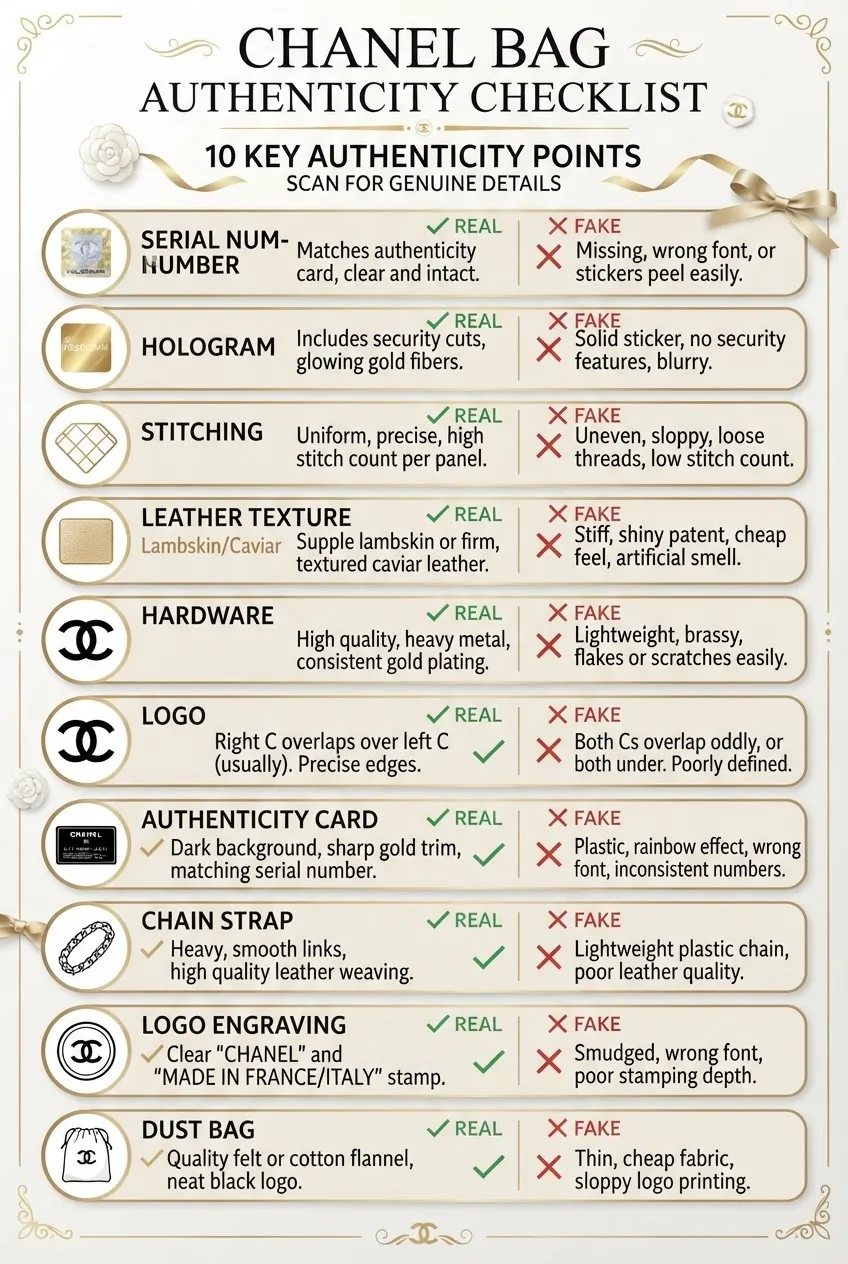
- Serial number format & hologram depth match year codes.
- Serial card number matches sticker; cardstock weight feels rigid and gold trim lines are crisp.
- Stitch count per diamond consistent with model (document and compare).
- Quilt alignment across flap seam—no offset diamonds.
- Hardware weight, engraving depth, and CC overlap geometry correct.
- Leather type consistent with model (lambskin vs caviar) and smells like real leather.
- Dust bag material weight and logo font match era references.
- Provenance photos and pricing are consistent with market resale ranges.
- If multiple checks fail, escalate to pro authentication.
When to call in a professional
Call a pro if two or more of the checklist items fail, if the bag’s price is suspiciously low compared to market averages, or if the seller can’t provide layered provenance (purchase receipt, original store tags). Professional authentication is mandatory for high-value purchases (above retailer resale prices) or estate sales where paperwork is incomplete.
Final takeaway: Combine serial/hologram checks, hardware scrutiny, stitch-count verification, leather assessment, and packaging comparison to make a reliable determination. When in doubt, document everything and use a reputable authentication service before you commit to purchase. Ready to verify a bag? Save this checklist and request step-by-step photos from sellers before offering.