Chanel Bags: What They’re Made Of and Common Questions — Chanel bags are made from signature leathers (lambskin and caviar), woven tweed, patent leather and occasional exotic skins, paired with plated metals or gold-tone hardware; material choice drives texture, durability, care and resale. This guide explains materials, hardware, construction and common consumer questions.
Introduction to Chanel Bags: What They Are and Why Their Materials Matter
Answer: Chanel bags are luxury handbags whose material selection—leather type, textile, and metal hardware—directly defines their look, feel, durability and market value; understanding materials explains why some styles patina or hold value better than others and how to care for them correctly.
Term: luxury handbag — a high-end, often designer-made bag where materials, finish and brand heritage significantly affect price and longevity.
Chanel has a century-long brand heritage rooted in haute couture, and its handbags (from the 2.55 to the Classic Flap and Boy Bag) pair couture-level design with specific material choices that signal quality. Materials matter because they affect tactile experience (soft lambskin versus pebbled caviar), structural integrity (lined tweed versus stiff patent), hardware longevity, and resale appetite among collectors.
For readers comparing materials across brands, see the Gucci, Prada & YSL Bags Guide for cross-brand material and pricing context. For brand-wide comparison across major luxury houses including Chanel, consult the Luxury Brand Replica Guide: Gucci, Chanel, Louis Vuitton & More.
What Materials Are Chanel Bags Made Of?
Answer: Chanel uses a core palette—lambskin leather, caviar (pebbled) leather, woven tweed, patent leather, and occasional exotic skins—combined with brass or plated metals for hardware; variants and seasonal fabrics expand the line, but these materials define the majority of classic Chanel offerings.
Signature Leathers: Lambskin and Caviar
Term: lambskin — a soft, fine-grained leather sourced from young sheep known for a smooth, luxurious surface that scratches more easily than pebbled leathers.
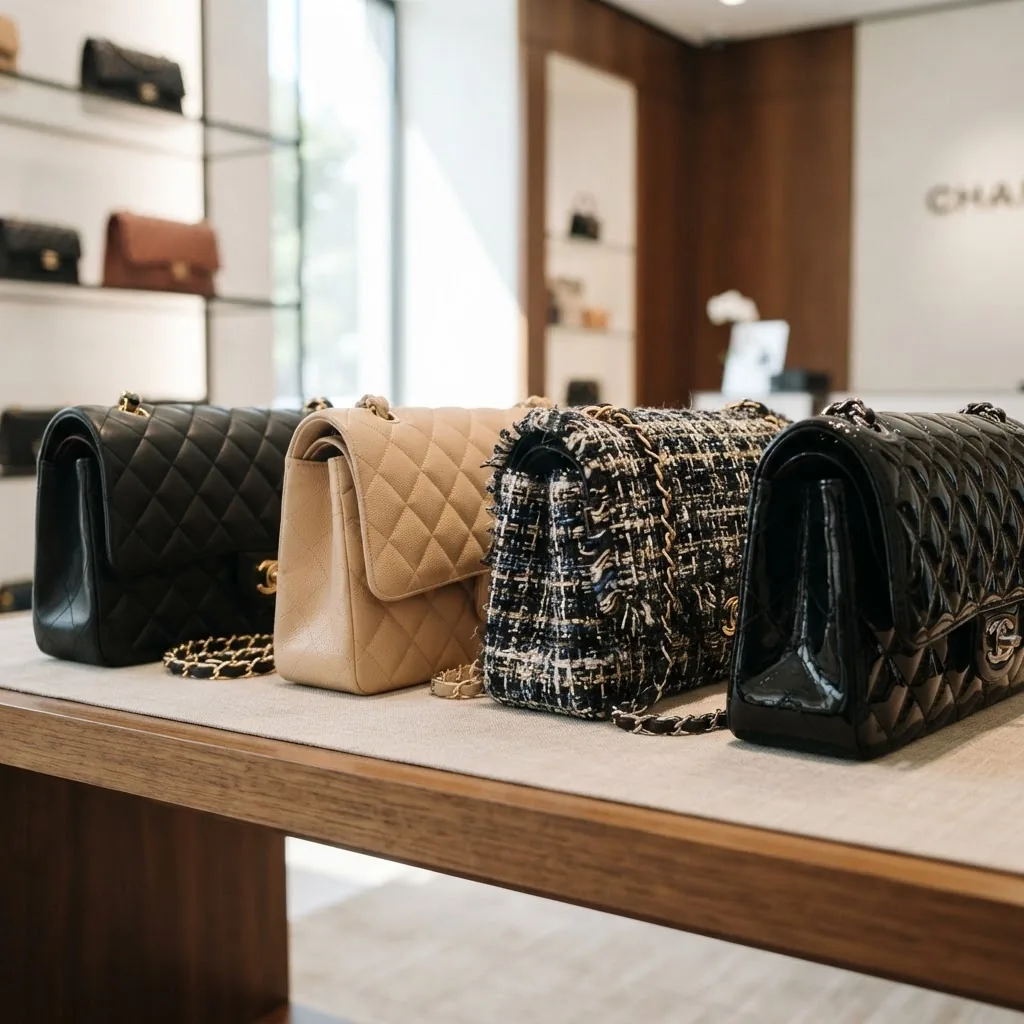
Lambskin is prized for its satin-like touch and sleek appearance. Visually it offers a smooth, uniform grain and deep, luxurious color saturation. Lambskin feels like light silk wrapped over leather: supple and slightly glossy. The downside is sensitivity—lambskin scratches and scuffs more readily, showing wear sooner on everyday carry.
Term: caviar leather — a textured, pebbled calfskin finished to resist scratching and abrasion while retaining a refined sheen.
Caviar leather, often referred to as pebbled calfskin, has a raised grain pattern that disperses light and camouflages surface marks. It’s heavier and more structured than lambskin, offering superior scratch resistance and suitability for frequent use. Many collectors prefer caviar for Classic Flaps when durability and resale resilience are priorities.
| Material | Feel & Appearance | Durability |
|---|---|---|
| Lambskin | Ultra-soft, smooth, satin sheen | Lower—prone to scratches and patina |
| Caviar (pebbled) | Textured, grainy, matte to semi-gloss | High—very scratch resistant |
Other Fabrics and Exotic Materials: Tweed, Patent, and More
Term: tweed — a woven textile traditionally made from wool or wool blends, often featuring multicolored yarns and a soft, textured surface used extensively in Chanel couture and accessories.
Chanel’s tweed is a signature fabric tied to Gabrielle “Coco” Chanel’s fashion revolution; it appears on seasonal bags and boutique exclusives. Tweed bags are usually structured and lined, often paired with leather trim. They are less water-resistant than treated leathers and require careful storage to avoid pulls or staining.
Term: patent leather — leather coated with a high-gloss varnish or lacquer for a shiny, reflective finish.
Patent leather makes a bold visual statement. It resists some surface wear but can show micro-scratches and is prone to heat-related cracking over decades. Patent finishes are easier to wipe clean but may stick to darker linings or color-transfer more readily.
Chanel also intermittently uses exotic skins (ostrich, alligator, python) and technical textiles for seasonal and haute couture pieces. These materials have specific legal and care implications; exotic skins often require specialist servicing and can carry country-specific trade restrictions.
Hardware Materials: Does Chanel Use Real Gold?
Answer: Chanel typically uses gold-plated brass or metal alloys for hardware rather than solid gold on most production pieces; some collectible or high-jewelry pieces may incorporate higher-grade metals, but the standard Classic Flap and 2.55 hardware is plated, often with a gold-tone finish.
Term: gold plating — a thin coating of gold applied to a base metal (such as brass) using electroplating or mechanical bonding to give the appearance and some corrosion resistance of gold without the weight or cost of solid gold.
Chanel hardware is typically brass or other alloys finished with a gold-tone plating; the plating process bonds a thin layer of gold to the base metal. The thickness and quality of plating affect wear: thicker plating or PVD (physical vapor deposition) finishes last longer. According to hallmarking and jewelry standards discussed by the World Gold Council, plated pieces are not classified as solid gold and should be described accurately in provenance documents.
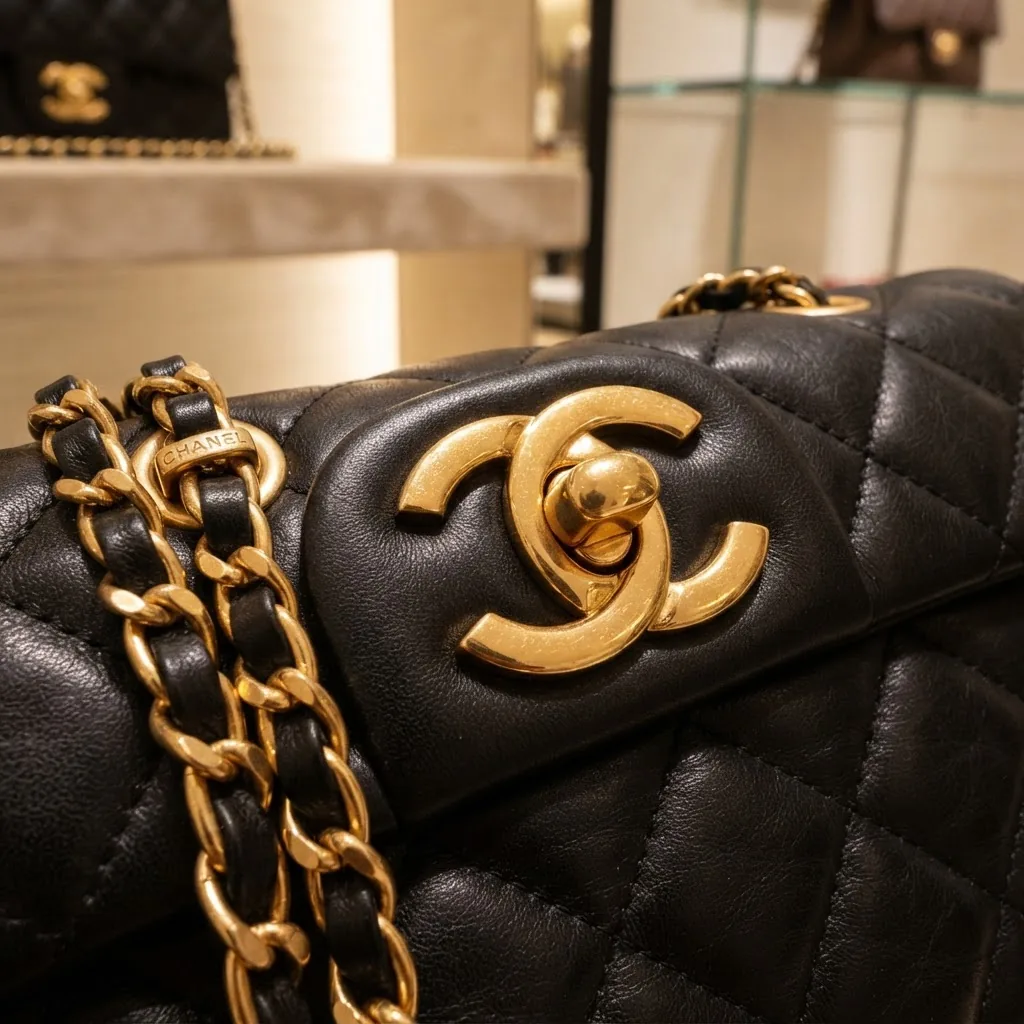
Walkthrough: gold plating is applied by first polishing the base metal, cleaning it chemically, then electroplating in baths with gold ions. Thickness is measured in microns; watch for flaking or greenish discoloration as signs of plating wear. For collector-level pieces, Chanel has occasionally used vermeil (gold over sterling silver) or solid precious metals on limited-run jewellery-inspired bags—these are exceptions, not the rule. For context on responsible sourcing and metal standards, consult the Responsible Jewellery Council.
Caveat: material composition can vary by production year, country of manufacture and special editions; vintage Chanel hardware and boutique-exclusive runs sometimes differ from mass-production standards.
Key Features of Chanel Bags Influenced by Their Materials
Answer: Materials determine core Chanel features—quilted pattern depth, CC lock finish, chain strap drape, stitching clarity and interior lining selection—each feature depends on leather weight, textile structure and hardware type.
- Quilted design depth and stability: Quilting relies on leather thickness and interlining—lambskin yields a softer, puffier diamond while caviar keeps neat, defined quilting. Thicker interlinings preserve structure over decades.
- CC lock and clasp finish: The appearance and wear of the CC lock is tied to plating quality—thicker gold plating resists rubbing; brass cores can resist corrosion but will show base metal if worn through.
- Chain strap weight and drape: Metal alloy choice and chain construction influence how a bag hangs; heavier chains paired with thicker leather provide a luxurious sit, while lighter hardware suits seasonal fabric bags.
- Stitching quality and stitch count: Leather suppleness affects stitch tension—lambskin requires careful stitching to avoid puckering; consistent stitch count per diamond (a classic quality marker) is easier to achieve on stable materials like caviar.
- Bag lining and interior protection: Materials dictate lining choice—leather-lined interiors feel sumptuous but need maintenance; fabric linings can breathe more but stain easier. Lining choices also affect weight and internal wear.
- Edge finishing and piping: Smooth leathers allow cleaner painted edges; textured or woven materials require reinforced piping or leather trim to prevent fraying and maintain silhouette.
- Hardware attachment and reinforcement: Heavy hardware needs reinforced leather tabs or concealed plates; lighter fabrics require structural supports to prevent stretching of strap anchors.
- Surface finish and color retention: Dyeing processes and protective topcoats influence how color ages; lambskin often develops a soft patina, while treated caviar resists fading and color transfer.
- Seasonal material choices: Chanel’s runway and seasonal collections introduce novelty fabrics (satin, denim, embroidered canvases) where the material defines construction techniques and expected wear patterns.
- Value perception: Solid-feeling materials and high-quality plating elevate perceived luxury and resale demand; conversely, delicate finishes reduce everyday utility and buyer confidence.
Examples: a Classic Flap in lambskin will show softer quilting and patina within a handful of years of regular wear, whereas a caviar Classic Flap will retain structured quilting and fetch steadier resale prices. The Boy Bag’s boxier silhouette often uses thicker leathers and sturdier hardware, designed to minimize deformation.
Common Questions About Chanel Bags’ Materials and Features
Answer: Buyers commonly ask about typical materials, whether Chanel uses real gold, how to tell lambskin from caviar, proper care, durability ranking, cost differentials, spotting fake materials, and why Chanel chooses specific materials for each style—this section answers those materials-and-feature questions clearly.
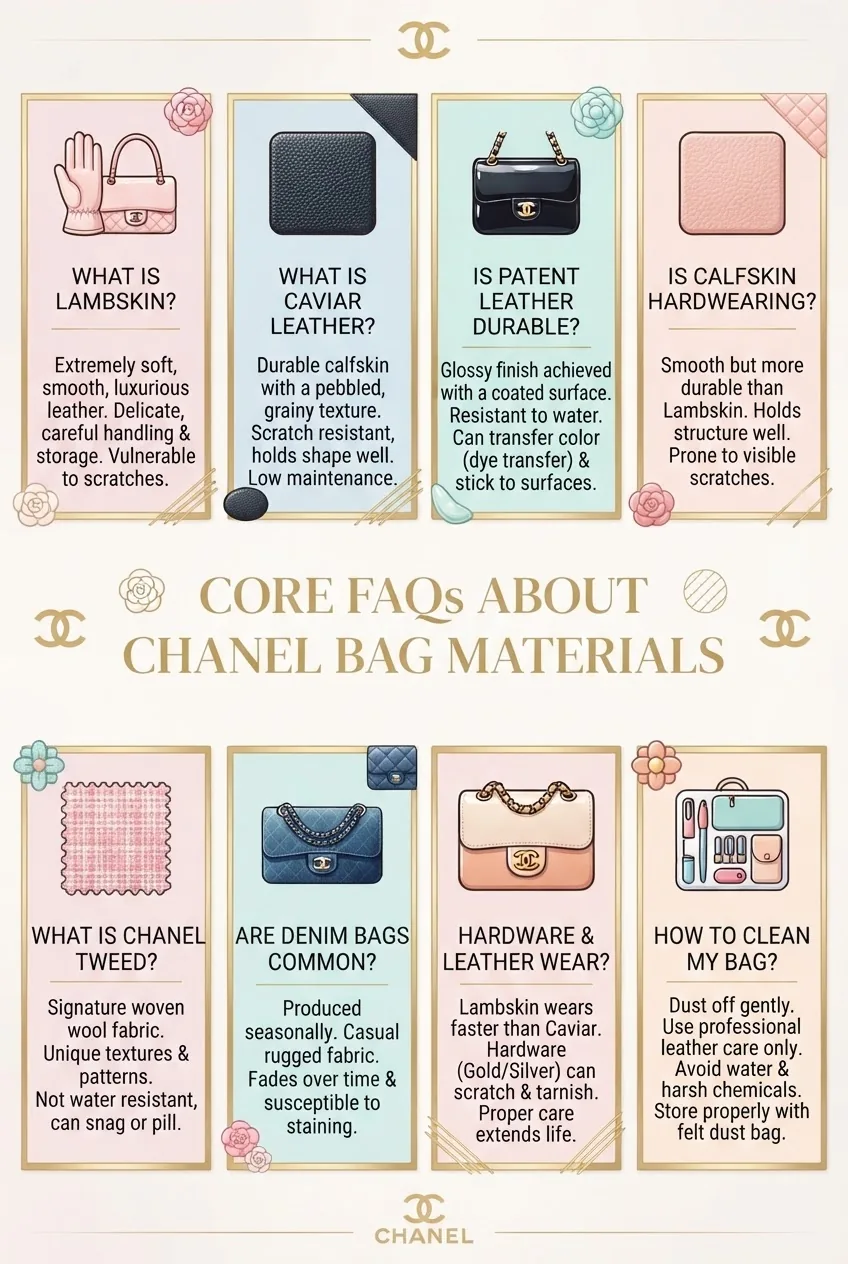
Below are high-level, material-based authenticity indicators—these are not a step-by-step authentication guide. For detailed authentication processes, see How to Spot a Fake Chanel Bag.
The following grouped FAQs address common consumer concerns about materials, real gold usage, lifespan and care.
Grouped FAQs
- What materials are Chanel bags typically made of? — See section above for lambskin, caviar, tweed, patent and occasional exotics; these form the bulk of Chanel’s material palette.
- Do Chanel bags use real gold in their hardware? — Typically gold-plated metal, not solid gold, except in rare high-jewelry or collector pieces.
- How can I tell the difference between lambskin and caviar leather? — Lambskin is smooth and soft; caviar is textured and pebbled; texture, weight and scratch patterns are telling.
- How do I properly care for the materials on a Chanel bag? — Use material-specific care: soft cloths and gentle products for lambskin, leather conditioners sparingly for caviar, and professional cleaning for tweed and exotics.
- What are the most durable Chanel bag materials? — Caviar (pebbled calfskin) and treated leathers are most durable; patent resists some stains but can crack long-term; tweed and lambskin need more careful use.
- How much does a Chanel bag cost based on its materials? — Material influences price—lambskin vs. caviar is small relative to collection status; exotic skins and special metalwork raise prices significantly.
- What should I look for to avoid fake materials in a Chanel bag? — Check grain uniformity, stitch count consistency, hardware weight and plating quality; mismatched textures or lightweight metal can be red flags.
- Why does Chanel use different materials for different bag styles? — Function, aesthetic intent and heritage drive choices: classic silhouettes often use leathers for longevity, while seasonal pieces use fabrics for runway statements.
For more on how materials play into authentication and spotting inconsistencies, read How to Spot a Fake Chanel Bag which expands on material indicators without covering every authentication technique here.
How Chanel’s Material Choices Affect Bag Longevity and Value
Answer: Material choice directly affects longevity and resale value—durable pebbled leathers retain structure and resale; delicate lambskin offers luxury but can reduce longevity and slightly depress resale if heavily worn.
Durability scenarios:
- Daily use, caviar leather: Years of daily wear with minor surface marks but preserved quilting and structure; resale remains strong.
- Daily use, lambskin: Softer sheen and faster patina, visible scratches and potential color loss; may need refurbishment services sooner and can sell for less if heavily worn.
- Tweed or fabric seasonal bags: Vulnerable to snags and dirt; professional cleaning can restore appearance, but heavy wear lowers resale more than on leather bags.
- Exotic skins: High resale potential if pristine, but require specialist care and documentation to maintain market value.
According to a 2023 luxury resale study, certain Chanel models (Classic Flap in durable leather) showed the strongest price retention among mainstream luxury bags; the study highlighted material durability and perceived timelessness as key resale drivers. For comparative resale frameworks and auction trends, see the Hermès Bags Guide for deeper insight into how material and brand interact to determine long-term value.
| Material | Typical Longevity | Resale Impact |
|---|---|---|
| Caviar leather | 15+ years with regular care | Positive—strong resale |
| Lambskin | 5–10 years with careful use | Neutral to negative if worn |
| Tweed/fabric | Varies; susceptible to staining | Lower unless limited edition |
Care matters: storing bags upright, using breathable dust bags, avoiding humidity and regular gentle cleaning extend life. Gold-tone plating condition and the presence of original packaging and receipts further influence resale. According to a 2024 industry report on luxury materials and consumer preferences, buyers increasingly favor durable finishes and sustainability credentials when purchasing pre-owned luxury bags.
Considerations When Buying Replica Chanel Bags: Materials and Features to Watch For
Answer: When evaluating replica Chanel bags, scrutinize material hand-feel, stitch count, hardware weight/plating and lining; common replica weaknesses include thin faux leather, lightweight or flaking plating, inconsistent quilt geometry, and poorly matched textile patterns.
Key tips:
- Check leather texture: faux lambskin often feels plasticky; real lambskin is supple and warm to the touch.
- Inspect grain and uniformity: authentic caviar has natural but consistent grain; replicated pebbles are often repetitive.
- Hardware weight: genuine Chanel hardware has a solid heft; cheap replicas use lightweight alloys with thin plating that flakes.
- Stitching and quilting: count stitches per diamond—authentic pieces maintain consistent stitch counts and clean diamond alignment.
- Lining and interior stamps: look for quality linings and clear serial labels; poor thermal printing or misaligned stamps can be indicators of replica construction.
- Edge finishing: real Chanel edges are neatly painted and sealed; sloppy edge paint or visible glue suggests lower quality.
- Price vs. materials: steep discounts often correspond to material shortcuts—ask detailed questions and request close-up images of any suspected area.
For comparison of replica quality in other major luxury brands, see these related guides for further context and examples:
Replica Hermès Bags Guide
Fake Gucci Bag Guide
How to Spot Fake Hermès Bags
Guide to Spotting Fake Louis Vuitton Bags
How to Spot a Fake Prada Bag
YSL Bag Guide
Replica and Chanel-Inspired Bags Guide
Guide to Replica and Fake YSL Bags
Replica and Faux Louis Vuitton Bags Guide
Replica and Gucci-Inspired Bags Guide
Replica Prada Bags Guide
If you want deeper comparisons of replicas across brands, these guides provide model-specific examples, material photos and reported seller practices that will help you evaluate whether the materials and features on offer match the asking price.
Conclusion: Understanding Chanel Bags Through Their Materials and Craftsmanship
Answer: A Chanel bag’s materials—leather type, textile, hardware and construction—are the primary determinants of its look, durability and value; learning material-specific care and recognizing material-driven features lets buyers make informed choices about purchase, care and resale.
Key takeaways:
- Lambskin offers unmatched softness but requires careful use; caviar offers superior everyday durability and resale resilience.
- Chanel hardware is generally gold-plated metal—quality of plating matters for long-term appearance and corrosion resistance.
- Material choice should align with intended use: frequent wear favors tougher finishes; collecting favors rare materials with proper storage.
- When assessing replicas, focus on material hand-feel, hardware weight and consistent construction; consult model and material guides for comparisons.
For readers ready to dive deeper into multi-brand material comparisons or resale impact by brand, explore the Luxury Brand Replica Guide: Gucci, Chanel, Louis Vuitton & More and consult trade resources for material standards like the Leather Working Group for environmental and material quality guidance. If you want guidance on longevity and selling strategies across brands, see the Hermès Bags Guide.
Ready to inspect a specific Chanel model? Review its material list, request detailed photos of quilting, stamp, hardware and serial tag, and consider professional appraisal for high-value pieces. Understanding materials equips you to buy smarter, care better, and protect value.