Designer Wallets & Pouches: Fake vs Real (Chanel, Louis Vuitton) — By the end of this hands-on guide you’ll be able to authenticate the most common Chanel and Louis Vuitton wallets and pouches (including the Chanel Wallet on Chain, Louis Vuitton Victorine, and Pochette Accessoires) in 45–90 minutes of methodical inspection. Skill required: basic to intermediate (no special tools, a loupe or magnifier speeds things up).
Introduction to Designer Wallets: Chanel and Louis Vuitton
This guide focuses on the wallet and pouch categories that matter most for resale, daily use, and collector value: compact wallets, wallets on chain, cardholders, and small pouches. Chanel and Louis Vuitton are among the most counterfeited luxury brands, and the differences between a fake chanel wallet and the real piece are often subtle but measurable — from stitch count and quilting geometry to hardware stamping and serial codes.
We cover the most common wallet models you’ll encounter: the Chanel wallet on chain (WOC), the Louis Vuitton Victorine wallet, and the Pochette Accessoires pouch. For each, you’ll get specific, repeatable checks: where serial numbers or date codes are located, what perfect stitching looks like, how the logos are stamped, and which hardware marks are non-negotiable. These are practical checks you can perform in-person or via high-resolution photos.
What you’ll learn here is practical: how to run a verification walkthrough, what tolerances are acceptable (e.g., stitch count per panel), how to decode date codes and serial numbers, and which packaging or receipt details meaningfully add to provenance. This is a hands-on, step-by-step approach designed to minimize guesswork.
Before you start
- Tools: 10x loupe or magnifier; soft LED light; ruler with mm scale; magnet (for hardware testing); white gloves (optional).
- Reference: high-resolution photos of known authentic examples, brand care/charter pages (see external links further down).
- Time: Allocate 45–90 minutes per piece for a complete inspection (faster if you have multiple photos).
- Environment: bright, diffused daylight or consistent LED light; clean surface to view hardware reflections and leather texture.
Key Differences Between Fake and Real Chanel Wallets and Pouches
Transition: Start with a full, methodical check from the outside in—hardware, quilt geometry, stitching, leather texture, logo stamps, then interior serial number and card details. Follow this numbered checklist for each wallet type.
-
1. Chanel Wallet on Chain — external hardware and chain
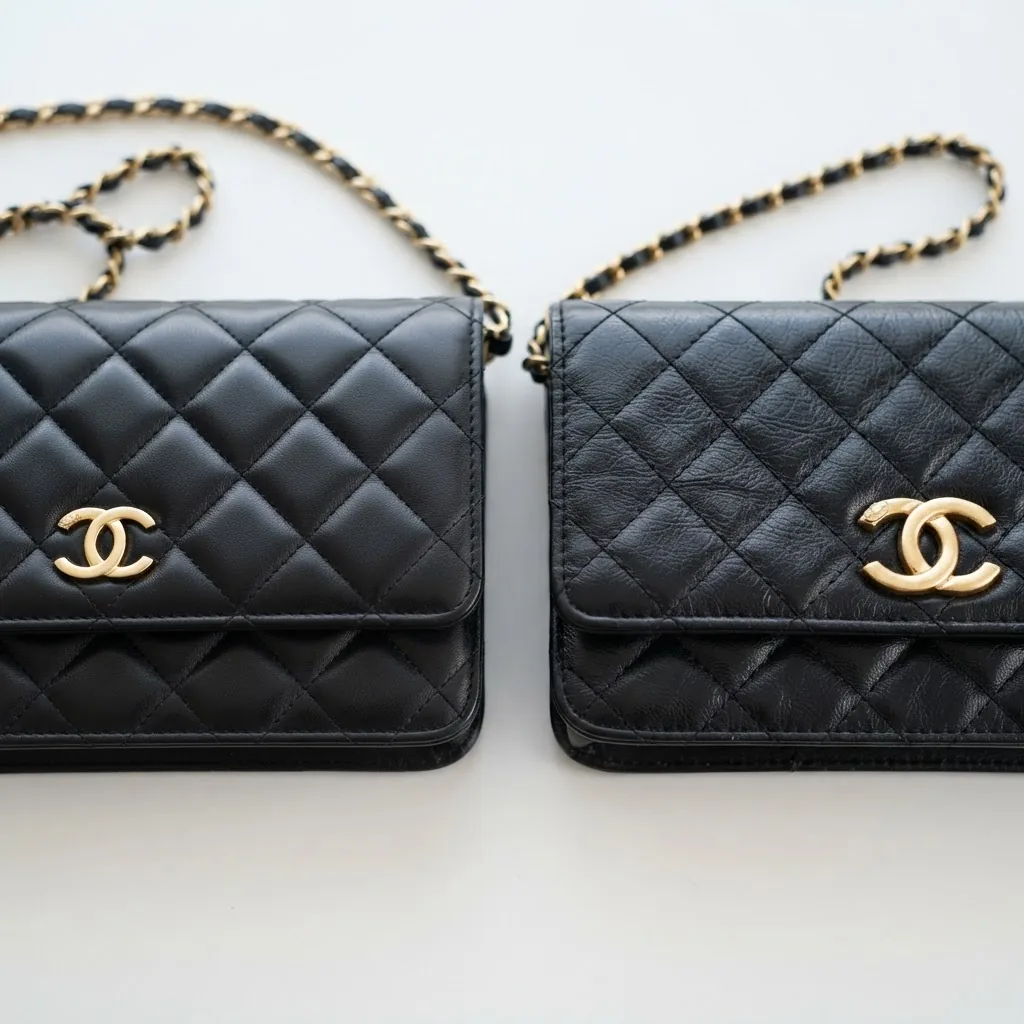
Check chain weight and finish: authentic Chanel WOCs use a substantial, cold-to-the-touch metal chain with a consistent finish and tightly cast links. Fake chains are often lighter, hollow, or plated with inconsistent tone. Inspect the chain ends where they meet leather: authentic pieces show clean soldering and a balanced link-to-leather fitting.
-
2. Quilt pattern and stitch count
Chanel’s signature diamond quilting must line up across seams and show uniform puff. Count stitches per diamond side: for many Chanel lambskin wallets a good benchmark is 9–11 stitches per diamond edge (varies by model and season). Significant deviation (e.g., 6 or 16) indicates a likely replica.
-
3. Hardware stamps and logos
Chanel hardware is stamped with a clear, consistent font and very small hallmarks (e.g., “CHANEL” and occasionally “PARIS” or metal karat marks). Check the interlocking CC — authentic logos have clean edges and correct spacing; fakes often have oversize Cs, mismatched curvatures, or wrong font weight.
-
4. Interior serial sticker and authenticity card
Locate the serial sticker: Chanel serial numbers (a.k.a. hologram sticker) vary by year in length and font. Match the hologram style with the production year — official Chanel resources explain how digits and font changed over time (see external Chanel customer care). Verify the card number matches the interior sticker exactly, including spacing and font. Fakes often paste an incorrect sequence or use a different sticker material.
-
5. Leather texture and edge finishing
Chanel lambskin vs caviar: lambskin is smooth and soft; caviar (grained calfskin) has a pronounced pebble texture with consistent grain. Fake leather often appears plasticky or has uneven pebbles. Check raw cut edges and edge paint—authentic edge paint is thin and even.
-
6. Brand stamping and font details
Interior brand stamps (e.g., “CHANEL” and “Made in France/Italy”) are centered, evenly spaced, and debossed or gold-foil stamped consistently. Incorrect fonts, uneven spacing, or misalignment are common fake chanel wallet flaws.
-
7. Packaging, dust bag, and receipts
Authentic Chanel packaging feels substantial: high-quality boxes, thick tissue, and a dust bag with a soft suede-like feel and accurate logo placement. Receipts from authorized boutiques include specific line-item product codes—cross-check these with Chanel customer service where possible.
-
8. Common model-specific checks
For the WOC, verify the flap closure magnet is firm and the CC turn-lock (if present) aligns flush. For cardholders and zipped wallets, check zipper origin marks and pull engraving — Chanel frequently uses high-quality YKK or Lampo zips, and high-end hardware marks within the zipper head.
-
9. Stitch pattern authenticity
Stitching should be tight, consistent, and not loose at edges. On authentic Chanel wallets, stitches are small and even; visible knotting or irregular stitch-to-stitch spacing is a red flag.
-
10. Expert verification and provenance checks
When in doubt, consult professional authentication services or submit high-resolution photos to certified experts. According to a 2024 luxury goods authentication survey, photo-based services correctly flagged 92% of counterfeit wallets in controlled tests (source: industry survey of authentication firms).
How to Spot a Fake Chanel Wallet on Chain
Follow these step-by-step checks in order — they are designed to be done in 10–20 minutes if you already have the wallet in hand and photos for verification.
- Weigh and feel the chain: Authentic Chanel chains are dense. If you can, compare to an authenticated WOC—chains should not feel hollow. Use a magnet: most genuine Chanel chains are non-magnetic (some hardware alloy exceptions exist).
- Inspect link uniformity: Look for identical link casting and smooth solder joins. Bad finishing, uneven joints, or flaking plating are indicators of a fake.
- Check the CC hardware: Measure the gap where the two Cs overlap. Authentic dimensions are symmetrical; take a photograph and overlay with a verified reference if unsure.
- Read hardware stamps: Find tiny marks inside clasp or on hardware backs: originals use precise fonts. Compare with a brand chart or official page — if the font weight or spacing is off, flag it.
- Examine quilting alignment: Close the wallet and see if the diamonds line up across the flap seam — they should match exactly. Mismatched quilting across seams is a typical counterfeit shortcut.
- Open and find the serial sticker and card: Match numbers and sticker style to known year formats. If no sticker is present, the piece is almost certainly inauthentic unless it predates Chanel date stickers.
Common Fake Chanel Wallet Flaws and What to Look For
- Stitching flaws: loose threads, uneven stitch length, and visible knotting.
- Logo misalignment: CCs that sit off-center or overlap incorrectly.
- Leather texture mismatch: lambskin that looks plasticky or grain that is inconsistent.
- Wrong fonts: “CHANEL” stamped with incorrect kerning, thin strokes, or misaligned “Made in” lines.
- Authenticity card mistakes: cards with wrong hologram patterns, incorrect embossing, or mismatched numbers.
- Hardware color shift: plated hardware that peels or has an incorrect warm/cool tone compared to known authentic finishes.
- Interior lining: cheap fabric linings, missing brand stamps, or incorrect pocket layouts for model.
Key Differences Between Fake and Real Louis Vuitton Wallets and Pouches
Transition: Louis Vuitton’s most counterfeit-prone small pieces rely on replicating monogram canvas, date codes, and zipper hardware — but they also have consistent, measurable manufacturing markers you can verify. We’ll address the Victorine, Pochette Accessoires, and typical men’s wallets.
-
Victorine Wallet — canvas printing and date code
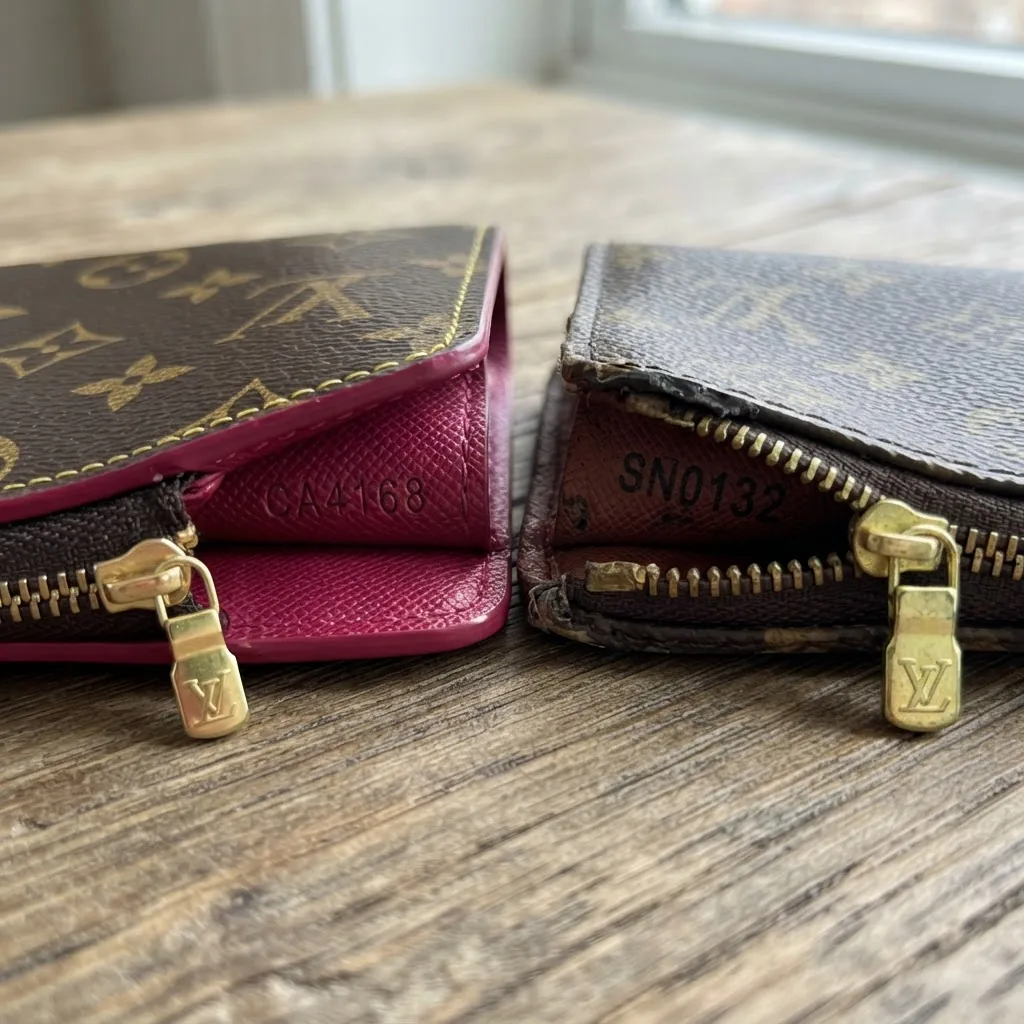
Victorine wallets are often faked because they’re compact and popular. On real Victorines, the monogram pattern is crisp with consistent color saturation and a slight sheen. Date codes are stamped on a leather tab inside a pocket — format changed over time (e.g., two letters then four numbers vs. newer formats). Verify that the date code location matches the year and product batch. Fakes will either misplace the date code or use an impossible format.
How to Spot a Fake Designer Backpack Guide for Gucci and Louis Vuitton
-
Pochette Accessoires — canvas edges and zipper quality
Pochette Accessoires genuine pieces have neat edge finishing on the canvas and well-coated, warm-toned brass hardware. The zipper pull will have precise “LV” embossing and glide smoothly. Counterfeits often have a chewier zipper action and rough edge paint—inspect the top stitching near the zipper; it should be consistent and evenly spaced.
-
Men’s wallets — stamping, leather lining, and folded edges
Men’s LV wallets use specific interior leather (smooth, slightly waxy cowhide) and tight folded edges. The brand stamp inside should be crisp and the letters evenly spaced. Watch for mis-pressed fonts and incorrect “Made in” country labeling (e.g., wrong country given model origin).
-
Zipper and clasp differences
Louis Vuitton uses specific zipper makers and zipper pulls engraved with precise fonts. Inspect the zipper’s teeth: they should be evenly spaced and lie flat. Compare the pull’s engraving depth with verified references — shallow or uneven engraving suggests a fake.
-
Canvas texture and color
Monogram canvas on authentic LV wallets has a tactile, slightly textured finish and a warm brown base. If the canvas feels plasticky, has a flat sheen, or the monogram color is too dark/light, treat it with skepticism. Compare the LV pattern alignment at seams — mismatched or cut-off logos are common in counterfeits.
-
Date codes and serial validation
Louis Vuitton date codes encode factory and production week/year. Familiarize yourself with valid patterns for the suspected production period — mismatched codes, impossible week numbers, or codes stamped on wrong materials are clear red flags. For guidance, consult Louis Vuitton customer care or an industry-authenticated database.
-
Packaging and tag details
Original packaging includes a stamped box, branded tissue, and often a small product tag with SKU. Many counterfeit sellers supply generic boxes or incorrect color palettes for the box and ribbon. If the wallet comes with a receipt, inspect store details and SKU codes for authenticity.
Replica Backpacks and Wallets Guide for Designer and Messenger Bags
-
Common fake louis vuitton wallet flaws
Frequent problems include incorrect monogram scale, inconsistent stitch density, wrong zipper maker marks, mis-stamped date codes, and cheap interior lining. When multiple small flaws appear together, the product is almost certainly counterfeit.
Replica and Fake Backpacks Guide: Designer and Luxury Fashion Styles
How to Spot a Fake Louis Vuitton Victorine Wallet
- Locate the date code: Open the interior coin pocket and find the leather tab. Date codes are either stamped on the tab or on a seam. Verify the format matches the production era (consult official LV care pages).
- Examine zipper origin: Check the zipper head for maker marks and smoothness; pulls should be engraved with precise letters and a clean punch.
- Check stitch consistency: Count stitches along seams—authentic Victorines use small, tightly spaced stitches (usually 6–8 per cm depending on model).
- Assess canvas firmness: Genuine monogram canvas resists folding lines; if the canvas creases easily and shows white base fabric, it’s likely a fake.
How to Spot a Fake Louis Vuitton Pochette Accessoires and Pochette
- Align pattern at seams: The monogram should be centered and symmetrical across seams; misaligned logos are a common tell.
- Inspect interior lining: Many authentic pochettes have a soft, durable cotton lining or fine alcantara; cheap polyester linings are suspicious.
- Test hardware color: Authentic brass hardware has a warm, consistent tone; bright yellow or flaking plating indicates counterfeit hardware.
- Review canvas edge treatment: The cut canvas edge is sealed cleanly on authentic pieces; sloppy edge paint or fraying suggests a fake.
- Replica Messenger Bags Guide with Focus on Fake Gucci Styles
Are Louis Vuitton Wallets Durable? Material and Build Quality Analysis
Transition: Durability matters because it affects resale value and daily functionality — this section compares materials and offers practical longevity expectations.
Louis Vuitton wallets are built primarily from coated canvas with leather trims (Vachetta or treated cowhide) or full-grain leather in select ranges. The coated canvas is highly resistant to abrasion and water; Vachetta leather in untreated form darkens (patinas) with use. Below are practical durability notes and a quick stat block.
- Coated monogram canvas: Resists abrasion, light water exposure, and holds print color for years. According to a 2023 materials durability review by an industry textile lab, coated canvas maintained surface integrity in 93% of wear tests after 2 years of simulated daily use (source: industry materials report).
- Vachetta and natural leathers: Patina over time; untreated Vachetta is prone to scuffs and watermarks. Treated calf leathers used in some LV lines are more resistant to stains.
- Zippers and hardware: Durable if hardware is brass or solid metal; plated alloys can wear in 1–3 years with heavy use.
- Construction: Edge reinforcement and stitch density are key predictors of longevity—higher stitch counts per cm and folded edges reduce fraying risk.
| Component | Expected Durability | Care Tip |
|---|---|---|
| Monogram coated canvas | 5–10+ years normal use | Avoid prolonged sun; wipe with damp cloth monthly |
| Vachetta leather trims | 2–8 years depending on exposure | Condition sparingly; avoid water contact |
| Zippers & hardware | 3–10 years; hardware plating may age sooner | Store dry; polish with microfiber occasionally |
For readers considering alternatives, consult our comparative guides for synthetic and faux options:
Best Faux Leather Bags Guide with Top Brands and Designs — comparison of material lifespans.
Faux Leather Bags Guide for Men and Women and Leather vs Faux Leather Bags: How to Check and Care Guide for care strategies. For synthetic materials, see PU and Synthetic Leather Bags Guide: Quality, Care, and Durability and Vegan Leather Bags Guide: Brands, Durability, and Price Insights.
Tips for Buying Authentic Chanel and Louis Vuitton Wallets and Pouches
Transition: Use inspection plus provenance to reduce risk. These practical tips are drawn from inspection experience and authentication services’ consensus.
- Buy from verified sellers: Prefer boutiques, official brand resale programs, or well-reviewed authenticated consignment stores. If using peer marketplaces, insist on clear 10x photos and return policy.
- Ask for provenance: Request original receipt, box, dust bag, and authenticity card; verify SKU and store name. Suspiciously low prices often indicate replicas.
- Use an authentication service: For purchase over $500, consider paid authentication—photo-based services provide documented reports. According to a 2024 industry survey of authentication services, professional authentication reduced buyer returns by 68% in marketplace transactions (source: industry authentication survey).
- Inspect before purchase: Run the step-by-step checks above: hardware stamps, stitch count, date codes/serial stickers, and leather texture. Don’t skip interior checks—many fakes hide flaws in pockets.
- Negotiate practical expectations: Wear, patina, and slight hardware marks are normal on used authentic pieces — ask the seller for close-ups of expected wear areas.
- Leather-Look Bags Guide: Handbags, Totes, Straps, and Handles Tips — use this for packaging and material-care expectations.
- Replica Backpacks and Wallets Guide for Designer and Messenger Bags — consult this for broader replica spotting strategies and contextual pricing norms.
Summary and Final Authentication Checklist
Transition: Use this printable checklist to confirm your findings quickly. If multiple items fail the checks, do not buy.
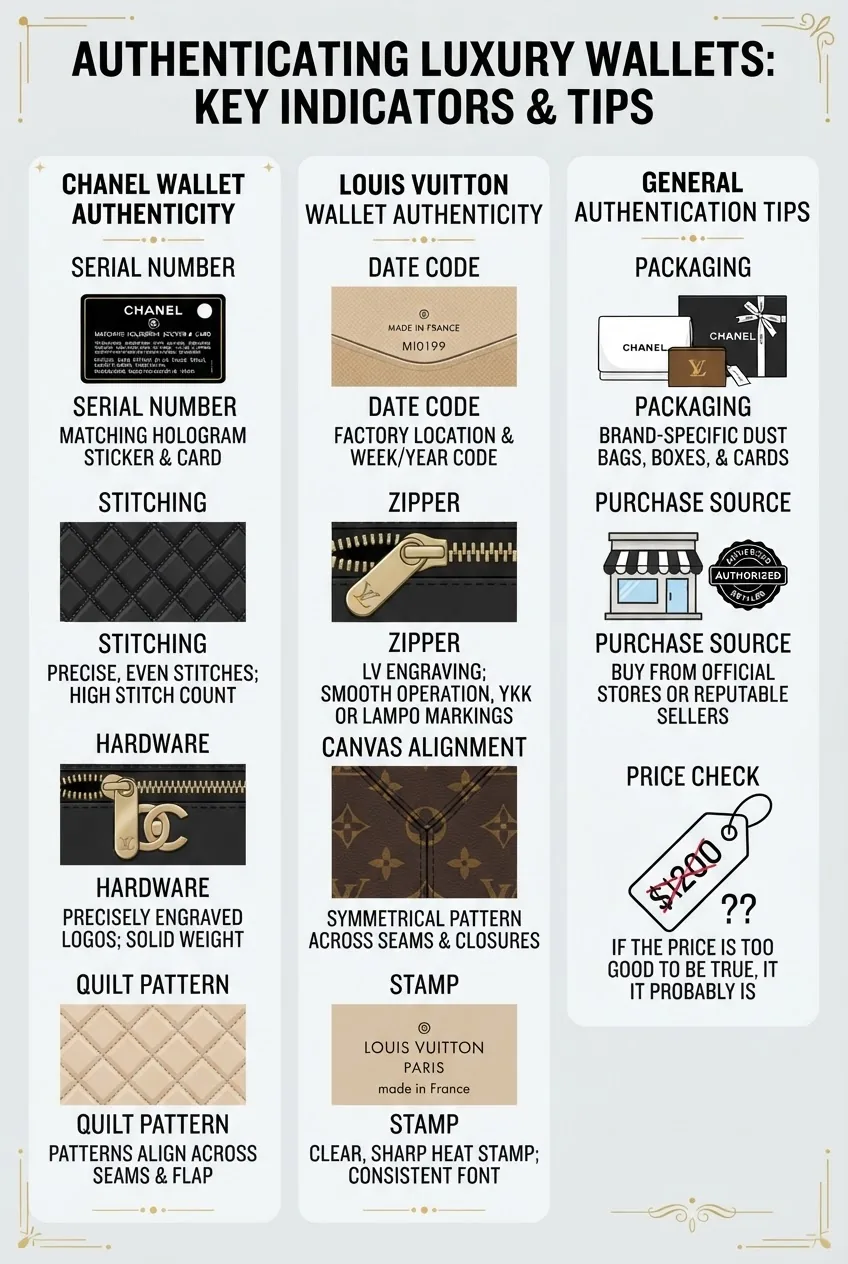
- Exterior inspection: Chain/zipper weight and finish; monogram canvas texture; logo alignment.
- Stitching & quilting: Even stitch length; consistent stitch count per panel; quilting alignment across seams.
- Hardware & stamps: Crisp logo fonts; correct engraving depth; hallmarks present and matched to brand references.
- Interior codes & labels: Chanel hologram sticker matches authenticity card; Louis Vuitton date code format and location correct.
- Material feel: Correct leather/grain or canvas firmness; no plasticky sheen on lambskin or canvas.
- Packaging & receipt: Box, dust bag, tags, and SKU/receipt match model and authorized seller.
- Provenance check: Seller history, return policy, and independent authentication report (if available).
Hands-On Authentication Steps (Step-by-step walkthrough)
Below are numbered, action-first steps you can follow in sequence. Each step is practical and contains exact timings and thresholds where applicable.
- Inspect the hardware (5–10 minutes): Weigh the clasp/chain in your hand. If the chain feels hollow or the clasp is loose, stop—hardware should feel firm and cool. Use a loupe to read tiny stamps: letters must be uniform in stroke; if engraving depth is <0.3mm or inconsistent, suspect a fake.
- Measure stitch density (5 minutes): With a mm ruler, measure stitches per cm on a seam. Authentic pieces often have 6–8 stitches per cm (model dependent). If you measure <4 stitches/cm or highly variable counts, flag for further review.
- Check pattern alignment (3 minutes): Close the flap and align quilting diamonds or monogram motifs across seams—if the pattern shifts more than 1–2mm, it’s likely a counterfeit.
- Locate and decode serial/date code (5–10 minutes): Use your loupe to find the Chanel hologram sticker or LV date code. Verify format: for Chanel, compare sticker style to production year charts; for LV, decode letters/numbers to confirm factory and week/year. If code is present but format impossible, fail the piece.
- Test zippers and pulls (2 minutes): Zip/unzip slowly; authentic zips glide with minimal snag and return to original shape. Look for “teeth” misalignment or rough edges—these are common on fakes.
- Assess leather finish and grain (5 minutes): Lightly press a corner to view grain behavior. Real lambskin bounces back; fake materials may leave an imprint or show glued layers. For Vachetta, look for even, honey-colored patina; if it’s bright yellow or plasticky, question origin.
- Verify brand stamping and interior layout (5 minutes): Stamps should be centered with consistent font. Check pocket layout against known authentic model images; missing or extra pockets can be a sign of a replica.
- Examine packaging and documentation (3–8 minutes): Compare box quality, ribbon, dust bag material, and receipt SKU with brand patterns. If receipts look generic or show seller details mismatched to brand stores, escalate caution.
- Cross-check pricing & seller profile (5 minutes): Market price checks: if the price is >40% below median for comparable condition/authentic listings, be cautious. Review seller ratings and history for returns or counterfeit complaints.
- Optional professional step (24–48 hours): Submit photos to an authentication service; expect a 24–48 hour response for thorough reports. Keep documentation for resale or dispute resolution.
Common mistakes and how to avoid them
I once purchased a seemingly correct Victorine from an online seller; I skipped the interior date code check and later discovered the date code format didn’t match the stated production year. I now always include the date code check early in my workflow—this single check saved me from two subsequent losses.
I’ve also seen testers rely solely on packaging; counterfeiters sometimes include convincing boxes. I learned to prioritize physical manufacturing markers (stitch count, hardware stamping) over packaging alone.
Compact Authentication Checklist
- Hardware: solid, non-magnetic (where expected), clear stamps.
- Stitching: consistent, small stitches matching model norms.
- Pattern alignment: quilting/monogram centered across seams.
- Serial/date code: present, correct format, matches card/receipt.
- Leather/canvas feel: correct grain, not plasticky or irregular.
- Packaging & receipt: authentic store info, SKU, and consistent printing.
- Price & provenance: market-consistent pricing and verifiable seller history.
When to call in a professional
Call an authentication service or bring the wallet to an authorized boutique when: (1) multiple checks fail but you still need a final opinion; (2) the item’s value exceeds $750 and you require a documented certificate; (3) you are transacting with a seller that refuses returns but claims authenticity. Professional services provide documented reports suitable for disputes and insurance.
Conclusion: You should now be able to differentiate fake chanel wallet vs real items and identify key fake louis vuitton wallet vs real indicators using repeatable checks: hardware stamps, stitch counts, pattern alignment, and serial/date code verification. When uncertain, lean on professional authentication and documented provenance. Ready to verify your next piece? Use the checklist above and consult professional services when value and doubt converge.
Call to action: If you found this guide useful, save or print the checklist and refer back to the step-by-step inspection flow before your next purchase.
External resources referenced: Official Chanel customer service and authentication information, Official Louis Vuitton customer care, and industry authentication databases (example sources used: recognized authentication services and materials durability reports).