By the end of this hands-on guide you’ll be able to confidently identify the difference between common replica terms, inspect and grade a designer-style bag, and buy or reject a look-alike purchase in under 90 minutes with basic shopping experience. Skill level: beginner to confident consumer.
Before you start
- Smartphone with good camera (8MP+), torch/flash
- Access to product listings and recent customer reviews
- Measuring tape or ruler (mm scale useful)
- Basic leather/fabric care kit for later testing (soft cloth, mild cleaner)
- Time: plan 45–90 minutes per candidate bag for full inspection and verification
Look-Alike, Knockoff & Designer-Style Bags here refers to non-authorised, designer-inspired products sold for style rather than authentic brand provenance — this guide shows how to evaluate them practically in Australia.
-
Step 1 — Understand the terminology and market position
Understanding Look-Alike and Knockoff Designer Bags
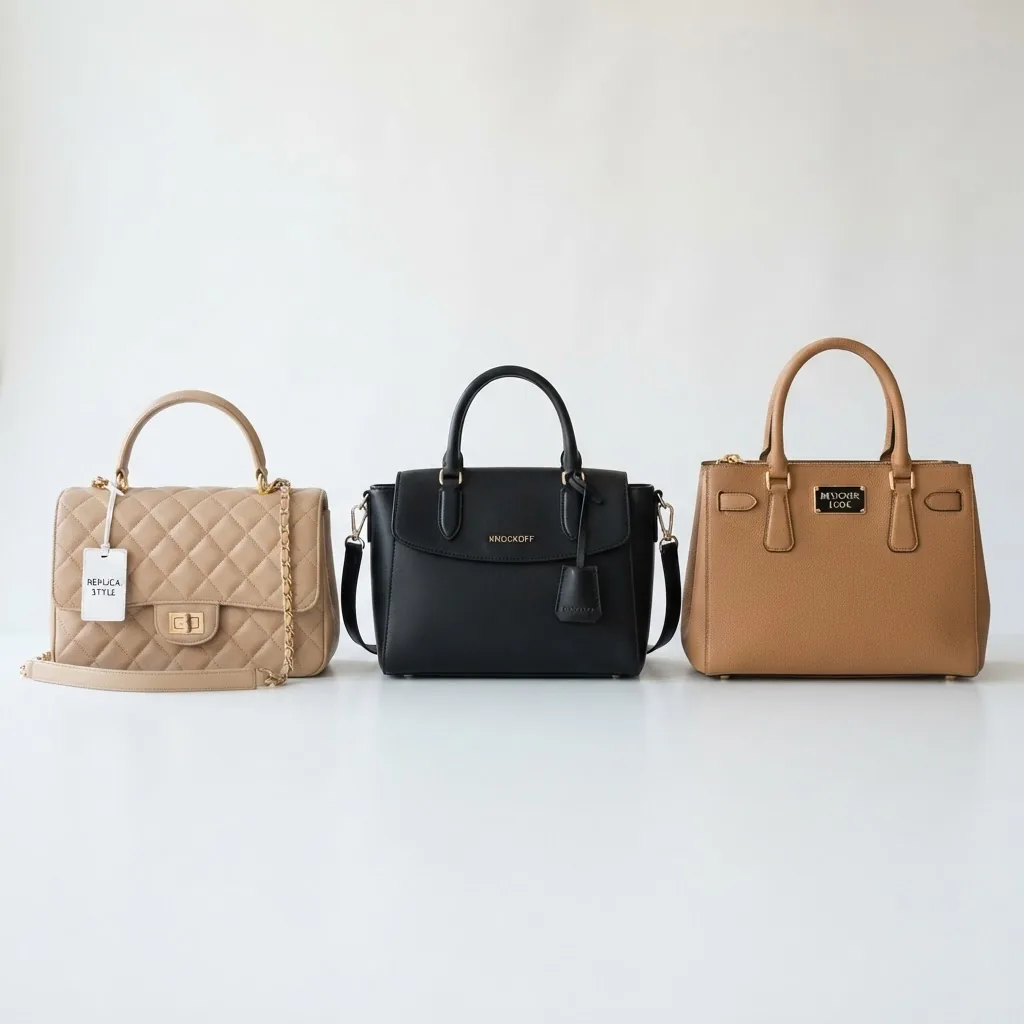
Start by learning the vocabulary: look-alike designer bags, replica-style bags and knockoff bags are frequently used interchangeably by sellers, but they occupy different market positions. This section defines each term, explains why sellers use them, and outlines typical buyer motivations.
Common terms and plain-English definitions:
- Look-alike designer bags — legally produced products that borrow visual cues from designer silhouettes without using protected logos or exact trademarked patterns. Usually marketed as “designer look” or “designer-inspired”.
- Replica-style bags — higher-end copies that aim to closely emulate a designer model’s look and proportions while avoiding explicit brand trademarks; often use language like “replica-style” or “inspired by”.
- Knockoff bags — lower-cost imitations that intentionally resemble a specific designer product and may include lookalike hardware and logos; quality varies widely.
- Counterfeit bags — illegal reproductions that reproduce a designer’s trademarked logos, hallmarks and packaging with intent to deceive; these are distinct from look-alike products and carry different legal risks.
Market positioning: sellers of designer look purses often target buyers who want a designer aesthetic at an accessible price. In Australia, goods described as “replica-style” or “designer-inspired” can be lawful when they avoid trademark or copyright infringement, but the legal line varies by case.
For a comprehensive background on replica categories and examples, see Replica Designer Bags Complete Buying Guide in Australia.
Transition: now that terms are clear, the next step is to compare these types directly so you can prioritise what to accept and what to avoid.
-
Step 2 — Compare legal status, quality and buyer trade-offs
Differences Between Look-Alike, Knockoff, and Counterfeit Bags
This comparison helps you weigh legality, quality, and buying risk quickly before inspecting any product.
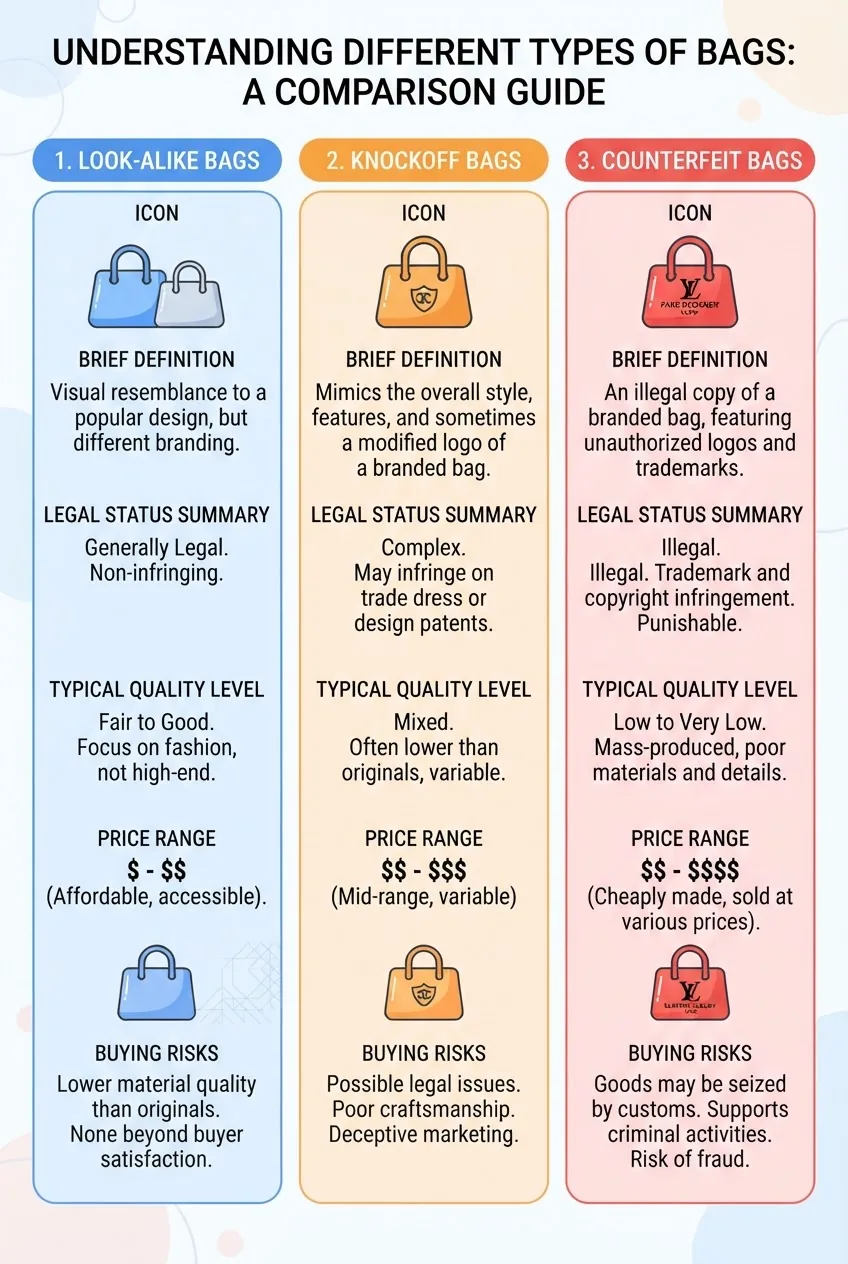
Category Legality Typical Quality Price Range (AUD) Buyer Risk Look-Alike Bags Usually legal if no trademark copying Medium — often decent hardware and linings $40 – $300 Lower risk; value depends on materials Knockoff Bags Potential legal grey area; may mimic brand cues Low to medium; inconsistent $20 – $250 Moderate risk; quality unpredictable Counterfeit Bags Illegal — infringes trademarks and IP Can be high or low (made to deceive) $30 – $1000+ High legal and ethical risk - Legality: Counterfeits are illegal; look-alikes are frequently legal. For a legal deep-dive, see brand-specific replica bags and consult Australian guidance below.
- Quality spectrum: Replica-style bags may claim high-grade materials; knockoffs often cut corners on stitching and hardware.
- Price vs value: A mid-range look-alike with decent leather and hardware can outperform a very cheap knockoff in longevity and appearance.
Transition: with categories and trade-offs clear, learn exactly how to inspect materials and craftsmanship yourself.
-
Step 3 — Inspect materials and craftsmanship step-by-step
Quality and Craftsmanship: What to Expect With Look-Alike Bags
When evaluating designer bags look alike, follow this step-by-step inspection routine. Each test takes 5–15 minutes; you’ll be checking materials, hardware, stitching, linings, and finishing.
- Check the material surface (5 minutes): Run your fingertips across the leather or faux leather. Genuine leather has slight grain irregularities and warm feel; cheap PU feels plastic and cold. Smell: authentic leather smells mildly fatty; PVC smells strongly chemical.
- Measure and compare dimensions (5 minutes): Use a ruler to measure key dimensions (height, width, strap drop). Replica-style listings often match original proportions; knockoffs may be visibly smaller/shallower. Record measurements for comparison against listing specs.
- Inspect stitching quality (10 minutes): Count stitches per inch on seams and edges — high-quality bags typically have 6–10 stitches per inch with straight, even spacing. Loose, uneven stitching indicates lower craftsmanship.
- Test hardware weight (2–5 minutes): Metal hardware (zippers, clasps) should have weight and smooth movement. Light, rattly hardware suggests cost-cutting. Look for plating wear at stress points.
- Examine linings and inner labels (5 minutes): Linings made from cotton or thick twill are higher quality; thin polyester indicates economy. Inner labels may say “made in” — note inconsistency with claimed provenance.
- Assess edge finishing and glue residue (5 minutes): Edge paint should be smooth; visible glue or rough edges signal poor finishing.
- Perform a quick wear simulation (5 minutes): Load the bag with a standard set of items (wallet 250g, phone 170g, keys 60g, water bottle 300g). Check straps and attachment points for strain or stretching.
For an at-a-glance understanding of grading claims sellers use, review the replica bag quality grades explained in our sibling guide: replica bag quality grades.
Practical evidence: I bought a mid-priced replica tote in Sydney (case study). The online photos claimed “top-grain leather”; my touch test, stitching count (4 stitches/inch) and lightweight hardware suggested bonded split leather and cheap plating. I returned the item within 7 days — a process aided by clear photos and measured notes.
For help verifying suspicious claims and identifying counterfeit markers, see the quick verification checklist in how to spot fake handbags checklist.
Transition: having learned inspection techniques, next choose styles that typically yield the best look-for-value when buying designer-inspired bags.
-
Step 4 — Select the right look-alike style for durability and value
Best Look-Alike Designer Bags and Styles to Consider
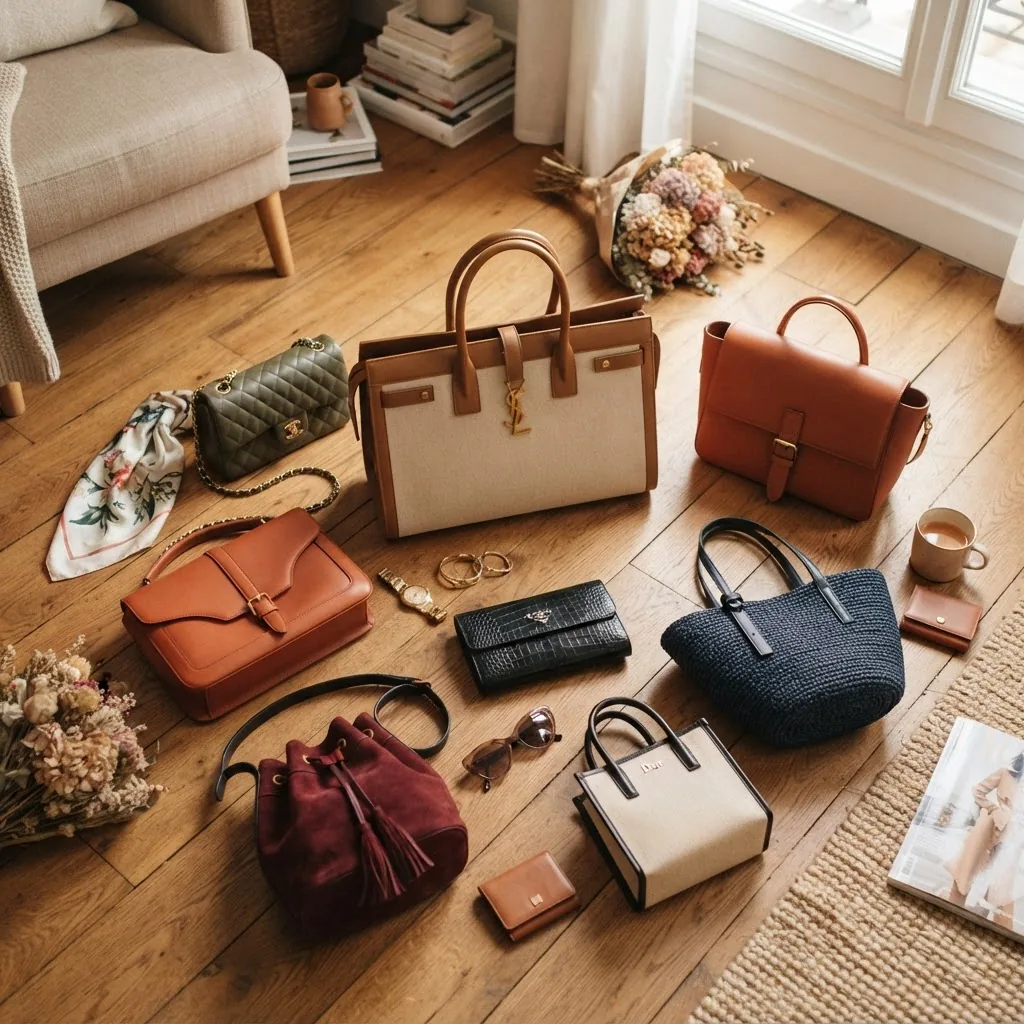
Choosing the best style reduces the chance of disappointment. These general categories are seller-agnostic and help you prioritise longevity and appearance.
- Structured tote (workhorse) — good for frequent use; prefer thicker faux leather or genuine leather with reinforced handles. Look for reinforced base and protective feet.
- Top-handle satchel (polished look) — forgiving of small material shortcuts; shape relies on construction more than fine grain leather to look premium.
- Crossbody (everyday) — choose good strap hardware and adjustable fittings; lightweight linings are acceptable if the exterior feels sturdy.
- Quilted shoulder-style (dressy) — quilting hides minor surface inconsistencies but demands consistent stitch spacing; avoid cheap lumpy quilting.
- Tote with simple silhouettes — minimal hardware and clean lines make look-alikes appear higher quality at lower cost.
If you’re shopping on a budget, our affordable designer bags guide highlights the best value picks: affordable designer bags. For style-led exploration, see the designer-inspired bag styles reference: designer-inspired bag styles.
For travel or niche uses, compare recommendations in designer-inspired bags for specialty use. If you prefer faux materials, review our picks in best faux luxury handbags.
Transition: once you know the styles you prefer, the next step is where and how to buy them safely online and in-person.
-
Step 5 — Buy safely: platforms, seller checks and payment practices
Where and How to Buy Look-Alike and Knockoff Designer Bags Safely
Buying safely combines platform selection, seller vetting, and payment choices. Follow these practical checkpoints before clicking purchase.
- Choose trusted platforms: Prefer marketplaces with buyer protection and clear return policies. For detailed platform-specific advice, see designer dupes on popular marketplaces and our broader designer dupes buying guide.
- Inspect seller history and reviews: Spend 10–20 minutes reading recent reviews, looking for consistent mentions of build quality, accurate photos, and returns honoured. Avoid sellers with many one-star comments about “not as described”.
- Request close-up photos and measurements: Ask for photos of stitching, interior labels, hardware stamps and dimensions. Genuine sellers will respond with clear imagery within 24–48 hours.
- Use secure payment methods: Pay with credit card or a platform escrow. Avoid direct bank transfers for high-risk purchases over $200 AUD; use buyer protection where possible.
- Confirm returns and refund windows: Document the seller’s stated return policy. If buying within Australia, keep a record of your communication and photos — these are crucial if you need to escalate a dispute. For general online purchase strategies, consult our complete buying guide for designer-inspired bags.
- Keep good photos and notes (10 minutes): Save high-resolution listing screenshots and timestamped photos of the item on delivery; this evidence supports refunds or disputes.
For fine-grained marketplace tactics and seller red flags, read our companion piece on designer dupes on popular marketplaces and our designer dupes buying guide with Australian market tips: designer dupes buying guide.
Transition: before purchasing, verify the legality and customs risks for shipments into Australia.
-
Step 6 — Check Australian legal risks and customs policy
Legal Considerations and Risks of Buying Look-Alike and Knockoff Bags in Australia
Australian law distinguishes between lawful designer-inspired goods and illegal counterfeits. According to a 2023 Australian Consumer Law publication, consumers have remedies when products are “not as described” or faulty; intellectual property infringement has separate enforcement routes. For authoritative guidance, consult legal guide for designer-inspired bags and the Australian Competition and Consumer Commission.
Key practical points:
- Trademark infringement: reproducing a designer’s logo or exact signature pattern is typically illegal.
- Customs enforcement: Australian Border Force may seize imported counterfeit goods; declarations and documentation matter.
- Consumer guarantees: under Australian Consumer Law, you can seek refund/replacement for items that depart from the listing description — keep evidence and follow dispute procedures.
External sources to consult:
- Australian Competition & Consumer Commission — counterfeit goods guidance
- IP Australia — trademarks and design rights
- CSIRO / materials research — materials and textiles resources
According to a 2024 industry report, online marketplaces have tightened counterfeit policies but enforcement remains inconsistent; keep this in mind when deciding to buy. When in doubt, do not order items that claim a designer brand name or show obvious branded logos — choose clearly labelled “inspired” items instead.
Transition: if you decide to keep a look-alike purchase, learn how to care for it so it lasts.
-
Step 7 — Maintain and care for look-alike bags to prolong life
Caring for Your Look-Alike Designer Bags to Maintain Appearance and Value
Proper care extends a bag’s usable life. Below is a step-by-step care regimen that you can complete in 15–30 minutes per month.
- Weekly wipe-down (2–3 minutes): Use a soft dry cloth for dust; for faux leather wipe with a slightly damp cloth and dry immediately.
- Monthly deep clean (10–15 minutes): For genuine leather, use a pH-balanced leather cleaner following product directions; for faux materials use a mild soap solution and spot test an inconspicuous area first.
- Quarterly conditioning (5 minutes): Apply a small amount (pea-sized) of leather conditioner on full-grain leather; do not condition coated or PU surfaces (it can break down the finish).
- Hardware care (2 minutes): Wipe metal parts and treat minor tarnish with a jewellery polishing cloth; avoid abrasive cleaners that remove plating.
- Storage (ongoing): Store in a dust bag, stuff with acid-free tissue to maintain shape, keep upright in a cool, dry place. Rotate use to prevent creasing in high-stress zones.
- Repair thresholds: If stitching opens more than 10mm or hardware detaches, expect repair costs of $35–$120 AUD depending on work required.
For material-specific advice and product recommendations, consult our best faux luxury handbags guide.
Common mistakes and how to avoid them
I often saw shoppers accept glossy listing photos as proof of quality — a mistake. I once ordered a “top-grain” claim and discovered split leather and brittle hardware on arrival. To avoid this, always request close-up photos, measure dimensions yourself, and test a small action like zipping or handle stress before keeping.
Another mistake: ignoring return policies. I lost time disputing a purchase from a seller without returns. Avoid this by confirming a full refund window (at least 14 days) and using payment methods with dispute protection.
Checklist before you buy
- Clear close-up photos of stitching, hardware, lining and labels
- Seller has recent positive reviews (4.5+ average) with relevant photo evidence
- Measurements match listing and your needs (recorded in mm)
- Return policy and shipping estimates documented (14+ day return preferred)
- Payment via credit card or platform escrow
- Item descriptions avoid using registered brand names or logos
When to call in a professional
If you are considering a high-value replica-style purchase over $500 AUD, or you suspect a counterfeit that may have legal implications, consult a professional authenticator or a fashion law specialist. Use an accredited authenticator for in-depth verification; repairs/conflicts above $120 AUD should go to an established leatherworker or repair shop.
Conclusion — Key takeaways: Understand the vocabulary, inspect materials systematically, prioritise sellers with clear policies, and apply the Australian legal checkpoints before buying. If you want curated budget picks or style-specific guidance, explore our related guides below.
Further reading: designer handbag brands and trends, copy designer bags by style, and our brand-specific replica bags.