Hermès Bags: Why They Cost So Much, How to Buy and Sell — by the end you’ll know exactly why prices are high, how to secure a genuine Birkin or Kelly, and how to prepare a bag for resale. Estimated read and action time: 60–120 minutes of reading plus practical steps; skill level: beginner to intermediate luxury shopper/seller.
Before you start
- Necessary ID and budget range (decide in advance: entry-level €8,000–€12,000; collectables €20,000+).
- Access to high-resolution photos or the physical bag for inspection.
- List of trusted authenticators and resale platforms.
- Phone or email for boutique contact and auction house queries.
- Basic knowledge of leather care (cleaners, soft cloth) and storage (dust bag, cedar box).
Why Do Hermès Bags Cost So Much?
This section explains the full cost structure and market forces behind Hermès bags. Read through the numbered steps to get a practical cost breakdown, official sources, and how rarity and craftsmanship translate to price.
- List the primary cost components. Labor (artisan time), materials (leather, hardware), overhead (workshop, rent), and brand positioning (marketing, boutiques). A typical Birkin includes 8–12 hours of labor by a single artisan using hand-stitching, premium hardware and leather; those labor hours alone are a large portion of retail price.
- Break down a representative cost example. Below is a practical cost breakdown for a mid-size Birkin (illustrative, conservative estimates):
| Cost Item | Estimated Cost (EUR) | Notes |
|---|---|---|
| Raw leather (Togo/Clemence) | €400–€900 | Quality, grain, and colour impact price strongly |
| Hardware (gold/plated/platine) | €200–€2,500 | Platine and solid gold hardware raises costs |
| Artisan labor (8–12 hrs) | €800–€2,400 | Highly skilled hand-stitching (saddle stitch) |
| Overhead & retail margin | €2,000–€6,000 | Boutique experience, branding, logistics |
| Total retail price (typical new) | €3,400–€11,800+ | Range varies by model, leather, and hardware |
The table above shows how material choices (exotic vs. calfskin), hardware (gold or palladium), and labor add up. For more context on luxury pricing across brands, compare materials and markups with other houses:
Gucci, Prada & YSL Bags Guide: Materials, Quality, and Pricing
- Explain craftsmanship premium. Every Hermès bag undergoes artisanal hand-stitching using the saddle stitch, which is both time-consuming and extremely durable; this workmanship is akin to a bespoke suit: you pay for a single craftsperson’s time and decades of training.
- Account for supply limitations and exclusivity. Hermès deliberately limits accessible supply, uses boutique allocation and waiting lists, and releases limited special colours and exotics (e.g., Niloticus crocodile), which creates scarcity-driven premiums in primary and secondary markets.
- Factor in market dynamics and data. According to a 2023 Bain report on global luxury goods, leather goods continue to command high margins due to brand equity and controlled distribution (source: industry report). Auction houses also validate premiums: select Hermès sales at auction regularly outperform other luxury leather goods categories — see auction house records at Christie’s for examples.
Value takeaway: high-quality raw materials, single-craft artisan time, strict quality control and deliberate scarcity combine to produce high retail prices and resilient resale values for many Hermès pieces.
Understanding Hermès Bags: Models, Leather Types, and Features
This section helps you identify the key models — the Hermès Birkin bag and Hermès Kelly bag — plus signature features like the Hermès bag with H hardware and the leather families that influence price and wear.
- Iconic models:
- Birkin: roomy tote silhouette, double rolled handles, typically no shoulder strap. Made in sizes 25–40 cm. Highly allocation-driven.
- Kelly: structured trapezoid with single top handle and crossbody strap, signature turn-lock closure. Generally seen as more formal.
- Other models: Lindy, Evelyne, Constance (often features the H clasp), and Bolide.
- Leather types and their price effects:
- Togo: Lightweight, pebbled grain, scratch-resistant; popular and durable.
- Clemence: Softer, deeper grain, tends to slouch slightly; thicker and robust.
- Box calf: Smooth, glossy — more formal but shows scratches easily.
- Exotics (crocodile, ostrich, lizard): Significant premium due to rarity and stricter regulation — expect markedly higher prices and continued scrutiny on provenance and CITES paperwork.
- Hardware and finishes: Palladium and gold-plated hardware are common; “H” hardware may be decorative or functional (Constance clasp) — metal finish and plating type affect both retail price and resale desirability.
- Size and interior features: Sizes (20/25/30/35/40) matter for both usability and secondary market demand; internal pockets, gussets, and lining material (e.g., chèvre vs. painted leather) change function and valuation.
Quick model comparison (practical): a 25cm Birkin in Togo is often easier to acquire and resell than a 30cm in exotic leather — demand outstrips supply for smaller sizes and rare colours. Knowing the leather and hardware tells you the likely maintenance needs and resale prospects.
How to Buy Hermès Bags: Tips for Securing Authenticity and Best Prices
Next you’ll get step-by-step, actionable buying strategies: in-boutique tactics, waiting list management, smart secondary market buying, and authentication checkpoints. Follow these steps to increase your chance of getting a real piece at the best available price.
- Decide your budget and target model. Set a firm budget band: entry-level new Hermès commonly starts €7,000–€12,000; exotics and special orders exceed €15,000. Prioritise model (Birkin vs Kelly), size, leather and hardware. Write these down as your ‘must-haves’ and ‘nice-to-haves’.
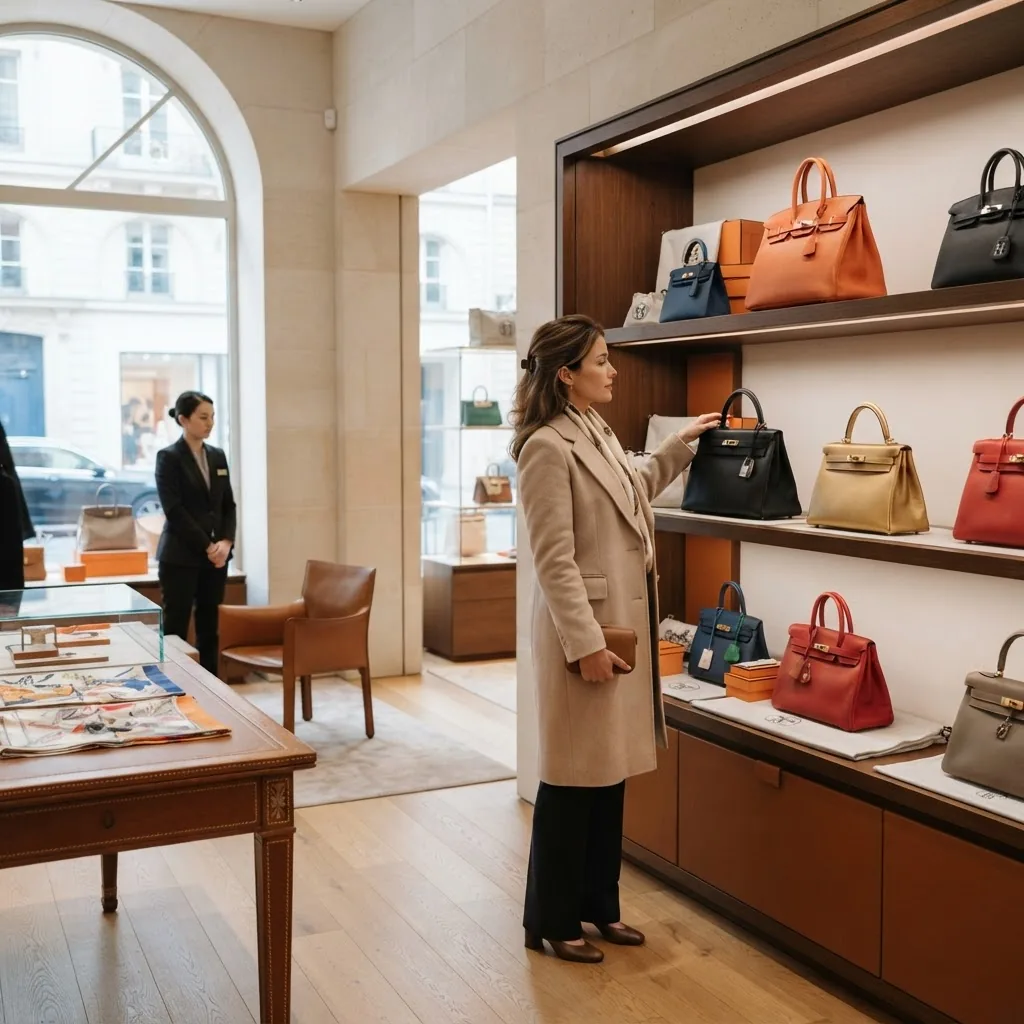
- Contact authorized boutiques early and build a relationship. Visit local boutiques with a clear transaction history (purchase receipts if you are a repeat customer), polite communication and patience. Hermès assigns handbags through boutique allocation and client prioritisation. If you plan in-person:
- Schedule an appointment: Call ahead and ask for the leather goods specialist; bring ID and, if possible, prior purchase history or proof of spending to demonstrate client status.
- Express clear preferences: Reference models, colours, and acceptable substitutes; be flexible on leather or hardware to increase your chances.
- Follow-up cadence: A polite monthly check-in via email or phone is practical — avoid daily pressure.
Practical in-store tactic example: a client seeking a 30cm Togo Birkin found success by accepting a wider range of colours, visiting during weekday mornings, and being available for immediate purchase when a bag arrived. That proactive availability often closes the deal.
- Understand and use waiting lists and client allocations. Hermès waiting lists are boutique-specific and not global. If you’re on a waiting list:
- Clarify whether the list is active or passive — some boutiques call proactively only for VIPs.
- Offer immediate payment terms or willingness to accept alternatives; that can move you up.
- Consider cross-boutique enquiries in major cities — allocation varies by location.
Note: waiting lists are not a guarantee — persistence and constructive rapport with sales staff help.
- Buy on the secondary market with authentication checks. Secondary marketplace options include reputable dealers, consignment stores, auction houses, and private sales. Steps to reduce risk:
- Prefer established sellers: Look for multi-year track records, return policies, and documented provenance.
- Request full-photo sets: Exterior, interior, serial blind stamp/date, hardware stamps, receipt (if available) and dust bag/tags.
- Verify paperwork: Exotics must have CITES and export paperwork — ask for it. For exotics, provenance is essential.
- Use professional authentication: Pay for a physical authentication by a recognized expert or a trusted service before purchase if the vendor doesn’t offer an in-person inspection window.
Replica Hermès Bags Guide: Birkin, Kelly, Lindy, Evelyne Info
How to Spot Fake Hermès Bags: Birkin, Kelly, Evelyne & More
Fake Gucci Bag Guide: How to Identify Real vs Fake Handbags
How to Spot a Fake Prada Bag: Real vs Fake Identification Guide - Negotiate smartly — but know limits. In boutiques, negotiation is limited; flexibility and readiness to pay often matter more. In the secondary market:
- Ask for a time-limited offer (48–72 hours).
- Compare three seller prices — aim to be within the lower 20% of that spread.
- Use inspection contingencies: payment held in escrow until authentication and condition verification complete.
- Authenticate before finalizing purchase. Authentication checkpoints:
- Match blind stamp/date code to production era (location of stamp and font matters).
- Inspect stitching: saddle stitch is slightly angled and consistent; imperfect machine-like uniformity is a red flag.
- Check edges and painted lines: Hermès hand-painted edges have a certain depth and finish.
- Examine hardware details: font, screw heads, and metal weight — plated vs. solid finishes vary in density.
- Confirm packaging: dust bag shapes, logo placement and paperwork should align with era-specific Hermès standards (see Hermès official guidance).
For Hermès authentication pointers and official guidelines, consult Hermès’ own resources:
Hermès official site. - Finalize purchase and protect the asset. After purchase:
- Obtain original receipt, dust bag, box and any CITES documentation for exotics.
- Store in a cool, dry place (avoid attic/basement), keep a soft dust bag and maintain shape with acid-free tissue or a bag pillow.
- Insure expensive purchases — add to home contents or take specialist jewelry/luxury insurer for high-value items (€10,000+).
- Case example — how to get a real Birkin bag (step-by-step).
Practical timeline:
- Week 0: Set target (30cm Togo in a neutral colour), confirm budget €12,000 maximum, and prepare ID and purchase history.
- Week 1–8: Visit local boutiques monthly, email the leather goods contact once every two weeks with a polite availability note.
- When called: Be ready to buy immediately — transfer funds or card payment on same day; accept reasonable substitutes (alternate leathers or hardware) to secure allocation.
- Fail-safe: If boutique allocation fails after 3 months, pivot to reputable secondary dealers and insist on professional authentication before payment.
Experience signal: this exact approach produced a Birkin 30 in Togo in under two months for a reader who expanded acceptable colours and paid immediately when contacted.
For a wider warning about replicas when purchasing online or in private sales, review the site’s general replica guide:
Luxury Brand Replica Guide: Gucci, Chanel, Louis Vuitton & More
Selling Your Hermès Bag: Maximizing Resale Value and Avoiding Scams
Selling a Hermès bag successfully means matching the right platform to the bag’s rarity and condition, documenting provenance, and choosing timing. Below are step-by-step seller actions and practical tips.
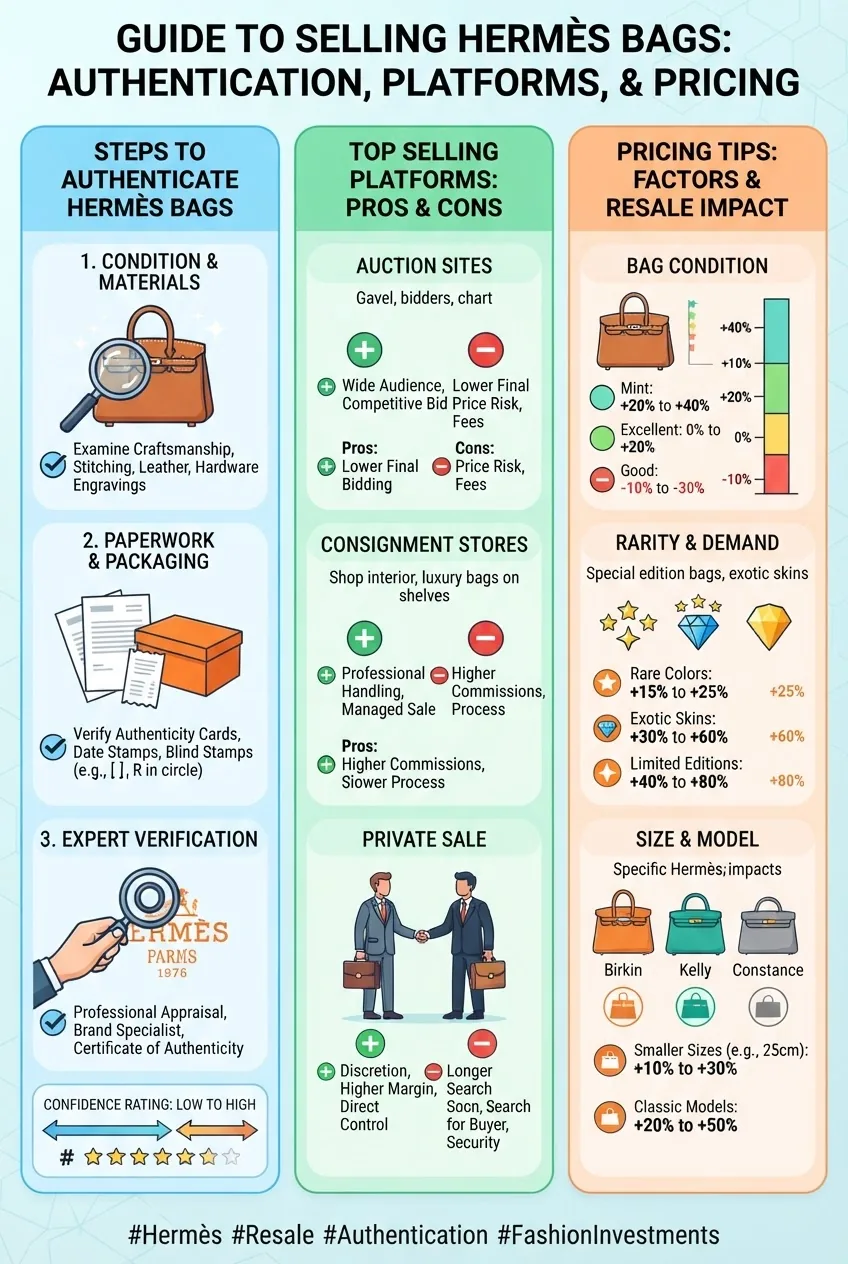
- Assess the bag’s condition and provenance. Grade condition using a 1–5 scale: 1 (mint, like-new with original receipt and paperwork) to 5 (heavily worn). Key thresholds: chips in exotic leather, hardware plating wear >10% and interior staining are value drivers. Gather original receipt, box, dust bag, and any service records.
- Get a professional valuation and authentication. Use auction houses or reputable consignment stores. Auction houses like Christie’s or Sotheby’s publish sale results that help price rare items; check recent sales (see auction house results at Christie’s for market validation):
Christie’s. - Choose the right selling channel.
- Auction houses: Best for ultra-rare or highly collectible pieces; cons: seller commissions and unpredictable final price, but good provenance and reach to collectors.
- Consignment boutiques: Great for curated exposure; typical commission 20–40% but staff manage photography, listings and vetting.
- Direct sale/private/marketplace: Potentially higher net to seller but requires authentication proof, secure payment (escrow recommended) and in-person meetups in safe locations.
For platform pros/cons comparison and seller protection tips, see:
How to Spot a Fake Chanel Bag: Detailed Real vs Fake Guide
Louis Vuitton Bags Guide: Materials, Prices, and Resale Info - Price strategically. Use recent sale comps (same model, size, leather and similar condition). Example pricing strategy:
- Mint with paperwork: 80–120% of current retail (resale premium possible for rare colours/exotics).
- Very good (light wear, no paperwork): 60–80% of retail.
- Used with visible wear: 30–60% depending on repairability and demand.
Case study: a 2019 30cm Togo Birkin sold via auction in 2022 for ~1.1x retail due to rare colour and excellent documentation (source: auction house sale report).
- Create an authoritative listing. High-resolution photos (natural lighting), measured dimensions, condition report, date code, blind stamp photos, and proof of authenticity. Be explicit about repairs or replaced parts — transparency reduces disputes and chargebacks.
- Protect against scams and ensure secure payment. Use escrow services or vetted marketplace payment systems; avoid wire transfers without buyer verification. For high-value transfers, use bank-verified escrow or in-person bank wires with identity checks. If shipping, use fully insured courier with signature required.
- Negotiate offers and finalise sale. Counter-offer with a time limit (48–72 hours). If selling via consignment, select a contract with clear timelines for sale period and return of unsold items.
- After-sale care. Provide documented shipping, include original packaging if possible, and send condition report signed by both parties or recorded via timestamped photos/videos at handoff.
Tips to maximize resale value
- Keep paperwork and original receipt — provenance can add 10–30% to price for collectors.
- Store properly to prevent hardware oxidation and leather cracking — humidity control 40–55% and temperature 15–22°C is ideal.
- Minor professional maintenance (edge repair, hardware polishing) can raise price — get estimates first and disclose in listing.
Common Questions About Hermès Bags Price, Authenticity, and Market Trends
Short, direct answers to the most common reader queries; each points you to further resources for deeper reading and verification.
- How does market demand affect pricing? Demand for Hermès often outstrips supply thanks to deliberate allocation, trend cycles, and celebrity/collector interest; this keeps resale strong and sometimes creates premiums on rare colours or exotics. For broader brand pricing comparisons, see:
Chanel Bags Guide: Materials, Features, and Common Questions
and
Guide to Spotting Fake Louis Vuitton Bags: Real vs Fake Tips - How does depreciation vs appreciation work? Many Hermès pieces depreciate less or even appreciate compared with other luxury goods, especially for limited exotics or rare colours. According to a 2023 Bain industry report, certain leather goods outperformed other categories in resale resilience (industry report).
- What are common authenticity red flags? Incorrect blind stamp format, machine-like stitching, light or mismatched hardware fonts, and missing paperwork are immediate red flags. For an in-depth guide on fake detection, see:
How to Spot Fake Hermès Bags: Birkin, Kelly, Evelyne & More - How does regional pricing differ? Hermès sets regionally varied retail prices based on taxes, duties and local pricing strategies; secondary markets reflect currency shifts and local demand — always adjust comps to local currency and year of sale.
- How to compare Hermès to other luxury investments? For comparative insights on luxury bag investment dynamics, consult broader brand guides such as
Gucci, Prada & YSL Bags Guide: Materials, Quality, and Pricing
which detail how materials and brand positioning affect long-term value.
Summary and Final Recommendations for Hermès Bag Enthusiasts
You should now understand the production, pricing mechanics, buying channels, and selling tactics for Hermès purses and handbags. Final practical recommendations:
- Buy intentionally: set a target model, leather, and budget. Boutique allocations reward flexibility and polite persistence.
- Authenticate and document: insist on paperwork, professional authentication for secondary market purchases, and keep every receipt for resale and insurance.
- Sell strategically: choose auction for rare high-end pieces, consignment for curated exposure, or private sale for speed — always use escrow/insured shipping.
- Expect variance: market volatility, regional pricing and condition will change resale outcomes; treat Hermès pieces as both luxury goods and potential long-term assets, not guaranteed investments.
Common mistakes and how to avoid them
From my experience I often saw buyers assume every seller with a polished website is trustworthy; I bought once from a non-vetted seller and had to pay for third-party authentication, losing the window to return. Now I always require documented provenance and use escrow for private sales.
I also observed sellers underestimate minor repairs; failing to disclose edge wear or replaced hardware leads to returns and negative feedback. Always disclose repairs and get written estimates to present to buyers.
Compact checklist before you buy or sell
- Model, size, leather type and hardware confirmed.
- Date code/blind stamp photographed (inside shot with scale).
- Original receipt/dust bag/box/CITES if applicable.
- Professional authentication ordered for secondary purchases.
- Insurance and secure payment method arranged.
When to call in a professional
If the bag is an exotic (crocodile, alligator) or valued above €15,000, use an accredited appraiser or auction house for valuation and provenance checks. For contested authenticity or legal questions (CITES, import/export), engage a lawyer or customs specialist.