How to Spot a Fake Gucci Bag: by the end of this hands-on guide you will be able to verify a Gucci bag’s authenticity using serial numbers, logos, hardware, stitching and QR codes. Expect 40–90 minutes per bag (depending on your tools); this assumes intermediate familiarity with luxury handbags and basic handheld tools (loupe, light, scale).
Introduction to Gucci Bag Authenticity
This guide focuses on why authenticating Gucci matters and what types of Gucci handbag styles you will learn to inspect. You’ll get precise checks for serial numbers, logo details, hardware quality, material grading (leather vs canvas), stitching patterns and digital markers like QR codes. The goal: when you finish, you will know how to tell a fake Gucci bag vs real with practical verification steps and when to escalate to a professional service.
Gucci produces many handbag types—classic shoulder bags, tote shapes, backpacks, and men’s crossbody and brief-style bags—each with unique authenticity markers. This guide dives into those nuances, emphasizing men’s bags and backpacks where counterfeits often try to cut corners in hardware and QR code fidelity.
Context and further reading: for a broader comparison across luxury brands, see the pillar overview below to understand materials and market behavior across Gucci, Chanel, Louis Vuitton and others.
Luxury Brand Replica Guide: Gucci, Chanel, Louis Vuitton & More
For deeper brand-to-brand material comparisons, the following sibling resources are useful context—Gucci sits within a market where stitching, hardware weight and serial coding strategies vary by brand:
Gucci, Prada & YSL Bags Guide: Materials, Quality, and Pricing
YSL Bag Guide: How to Spot Fake vs Real Saint Laurent Bags
Louis Vuitton Bags Guide: Materials, Prices, and Resale Info
Note on risk: counterfeit quality varies—some fakes can pass casual inspection. According to a 2024 industry report, counterfeit luxury listings remain a persistent problem on many online marketplaces (industry market analysis report).
Before you start
- Tools: 10–20x jeweler’s loupe, white LED flashlight, soft ruler (mm), small digital scale (g), magnified camera or smartphone with macro lens.
- Reference images: official Gucci product images from Gucci’s site and recent seller photos for the exact model/year.
- Authentication resources: a reputable third-party service like Entrupy (for paid digital authentication) and consumer guidance from FTC.
- Workspace: bright indirect natural light, neutral background, clean flat surface, and 40–90 minutes to inspect carefully.
- Skill level: intermediate (you know leather types and basic seam inspection); beginners can follow step-by-step but expect to consult photos and services for borderline cases.
Key Features to Spot a Fake Gucci Bag
Follow these features in order—each is a practical test you can complete in sequence. Use the tools above; document findings with photos and notes. The steps below prioritize highest-confidence indicators first.
-
Check the serial number tag: Open the bag to view the interior leather tag (usually behind a pocket or on the lining seam). Genuine Gucci serial numbers are embossed, not printed, and are typically 10–13 digits split across two lines (older models vary). Expect crisp, evenly spaced numerals; edges of the tag are smooth and heat-finished. If numbers are smudged, misaligned, or printed on paper glued to the lining, the bag is probably fake.
Action: use a loupe at 10x to ensure each digit is punched/embossed. Measure tag: authentic tag width usually 35–55 mm depending on model; text depth ~0.3–0.6 mm.
-
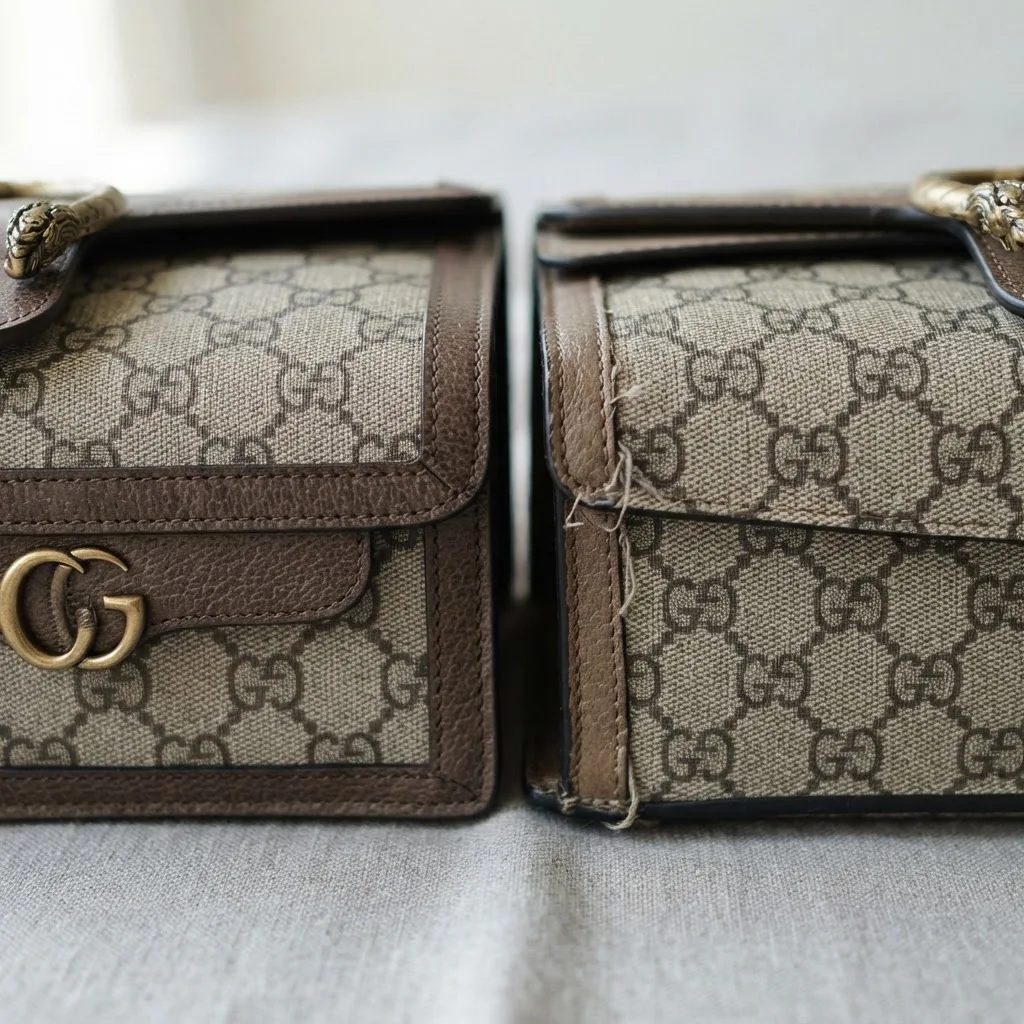
Confirm logo authenticity: The Gucci logo appears in several places: external hardware (double-G, plaques), stamped interior logos, and pattern repeats on GG canvas. Real logos are perfectly symmetric, with the right G curving inside the left G at exact proportions. On stamped interior logos, look for “GUCCI” in uppercase, “Made in Italy” beneath, and a consistent font weight. Counterfeits often use slightly off fonts, uneven spacing, or incorrect accent placement.
Action: compare with an official product photo in a split-screen; note letter spacing and the dot/period placement if present.
-
Inspect the hardware quality: Real Gucci hardware has weight and a dense, cool feel. Zippers are branded (often YKK, Lampo, Riri depending on year) or Gucci-logo hardware; pulls are solid with clean engraving. Fake hardware is lighter, hollow, loses plating easily, and engraving is shallow or off-center.
Action: weigh a similar genuine hardware piece when possible; authentic pulls often weigh 5–20g depending on size. Move zippers—authentic zippers run smoothly with no catching.
-
Assess leather and canvas materials: Genuine Gucci leather (e.g., calfskin, GG Supreme coated canvas) has a defined grain, supple hand and a consistent finish. Coated canvas should have a tight, even GG repeat and not appear painted on. Counterfeits use synthetic leather with plasticky sheen or inconsistent grain and canvas prints misaligned at seams.
Action: smell (real leather has a subtle, natural scent), press (authentic leather springs back), and look for dye bleed at cut edges (fakes often show excess paint).
-
Examine stitching patterns and craftsmanship: Gucci stitching is even, with 5–7 stitches per inch on many leather seams; thread tension is balanced with no loose ends. Stitches are usually tonal to the leather. Fake bags show uneven stitch length, backstitching visible on the surface, or mismatched thread color.
Action: count stitches along a 2″ seam; note any skipped stitches or knots under the seam (red flag).
-
Check interior labels and linings: Interior linings vary by model (microfiber, canvas, suede) but are always high-quality. Brand stamp should read “GUCCI” in a clear font with “Made in Italy” below. Serial numbers follow the brand stamp on a leather tab. Fake interior labels can be glued, misaligned, or show wrong country of origin.
Action: open pockets—many fakes hide sloppy labels inside pockets; verify label structure and placement with official photos.
-
Authenticate zippers and zipper codes: Zippers often include manufacturer marks; look up the code (e.g., “Riri” or “Lampo”) online. Real zippers align with the bag’s era and model. A modern Gucci wouldn’t use an obscure or inconsistent zipper maker or unbranded cheap zippers.
Action: research the model’s era and expected zipper maker; mismatched components are a major red flag.
-
Assess hardware engraving and plating: Engravings (GG logos, “GUCCI”) should be crisp with even depth. Plating should be uniform, not flaking. Fake plating chips quickly and reveals base metal (often brass-colored or dull grey).
Action: tilt hardware under light to detect micro-scratches and plating wear; flaking within months of unstated heavy use suggests counterfeit materials.
-
Look for correct pattern alignment: For GG canvas, pattern alignment at seams and edges is precise; monogram repeats should match at joins. Counterfeit pieces often misalign patterns to save material.
Action: open side seams and compare pattern continuity; even a half-repeat mismatch is suspicious.
-
Inspect packaging and dust bag: Authentic Gucci dust bags use heavy cotton or flannel with a centered simple printed logo. Box construction is sturdy with precise printing on labels. Many fakes include poor-quality dust bags, misprinted logos or incorrect color palettes.
Action: check stitching of dust bag, texture of box, and authenticity cards. Packaging alone isn’t definitive but supports other findings.
-
Test hardware function and weight: Handles and locks should feel secure; clasps align and close smoothly. Fake clamps may feel loose or have casting marks.
Action: test clasps 20 open/close cycles—authentic hardware resists deformation; counterfeit plating may lift or creak earlier.
-
Scan and verify QR codes and digital tags: Newer Gucci items include QR codes or digital authenticity markers. Scan with a smartphone—authentic QR actions direct you to Gucci or an authenticated reseller verification page. Fake QR codes may redirect to unrelated pages or simple image files.
Action: see full QR verification steps in the dedicated QR section below.
-
Price and provenance check: If a deal is 40–70% below retail from an unverified seller, assume fake until provenance is proven. Look for receipts, original purchase emails and seller history.
Action: ask for a high-resolution photo of the receipt showing masked payment method and date; verify retailer name against Gucci’s wholesale/reseller lists.
-
Seller reputation and return policy: Reputable sellers offer returns, verifiable history, and contactable customer service. Anonymous sellers with only a few listings are higher risk.
Action: check seller feedback for authenticity disputes and ask for a live video unboxing if buying remotely.
-
Use professional authentication for high-value uncertainty: If multiple tests are inconclusive, submit the bag to a trusted authentication service for a certificate.
Action: budget $20–$200 depending on service and package (instant photo check vs in-person); see FAQ for typical costs.
Transition: with the baseline features above covered, the next section applies these checks specifically to men’s Gucci bags, highlighting interior labels, straps and zipper expectations.
How to Identify Fake Gucci Men’s Bags vs Real Ones
Men’s Gucci bags—messenger styles, briefcases and crossbody pieces—often use different leather types (grainy calfskin, technical canvas) and hardware treatments. Counterfeiters commonly simplify interior label placement and use cheaper strap attachments. Follow these step-by-step comparison checks.
-
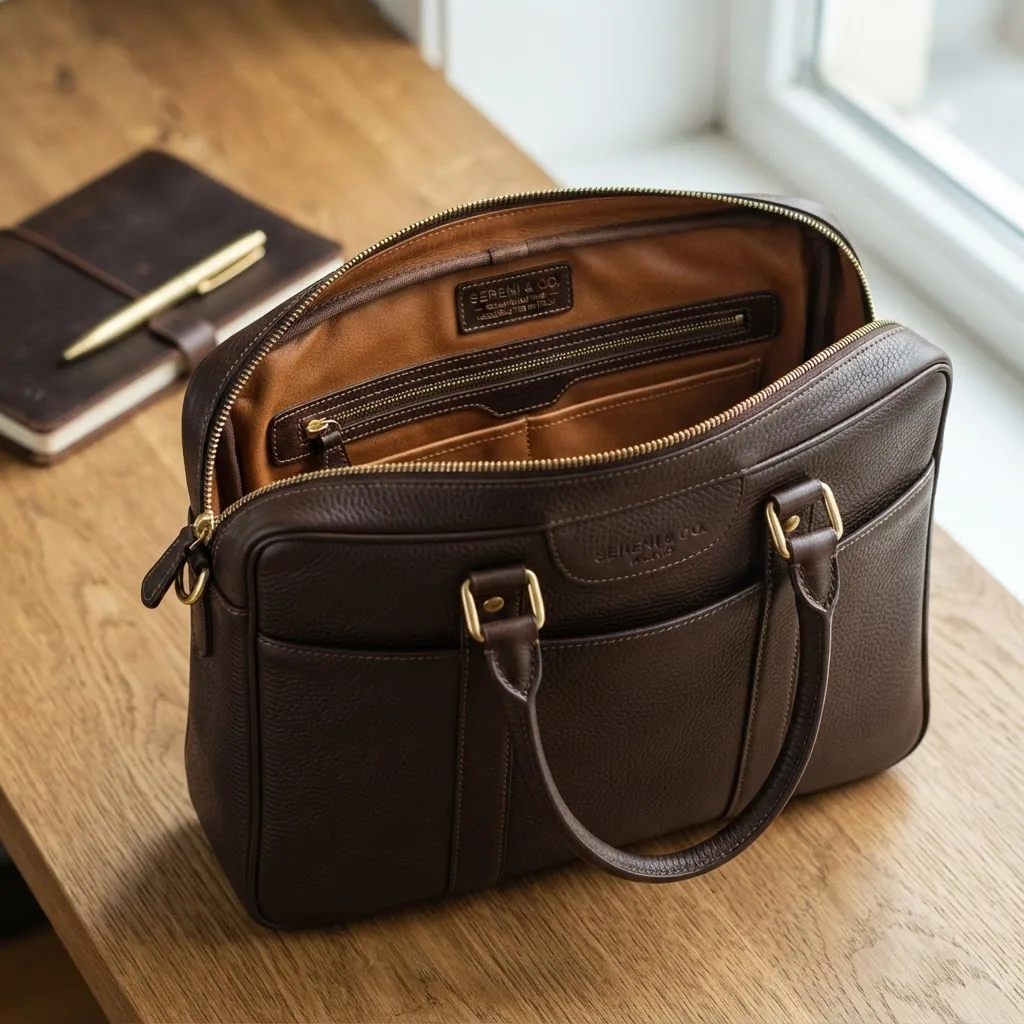
Open and inspect the interior label: Many men’s bags have the brand stamp on a rectangular leather tab inside a pocket or along the back wall. Authentic tabs are centered, properly heat-stamped and show a serial number on the reverse. Fake tabs are often glued and offset.
Comparison note: on real men’s bags the label text spacing is tighter than on many women’s models; compare to official images for the year of manufacture.
-
Compare zipper type and smoothness: Men’s bags often use heavy-duty metal zippers with branded pulls. Fakes sometimes use cheap YKK copies or plastic zippers with mismatched teeth spacing.
Comparison note: run the zipper 10 times—authentic zippers glide smoothly with uniform resistance; fake zippers may catch or misalign teeth.
-
Check strap attachments and buckles: Real strap hardware is robust, welded or screwed, and feels substantial. Examine the screws—authentic screws are recessed and consistent. Fake straps may be riveted with visible glue.
Comparison note: lightweight hardware on a men’s brief or crossbody is a major red flag—authentic men’s hardware weight is proportionally higher due to functional demands.
-
Verify strap leather quality and edge finishing: Strap edges are burnished and sealed on authentic Gucci straps; raw-cut edges or rough paint indicate cheaper production.
Comparison note: men’s straps meant for heavy wear show reinforced stitching where the strap connects to the bag—look for an X or box stitch pattern.
-
Assess interior layout and pocket shapes: Functional men’s bags have purposeful pocketing—laptop sleeves, document pockets, RFID compartments—stitched with uniform seams. Misproportioned pockets indicate pattern mistakes common in fakes.
Comparison note: measure pocket depth and width against official specs when available; a discrepancy over 5–10 mm is suspicious.
-
Look for correct hardware branding and finishes: Many men’s pieces use matte or aged hardware; the finish should be uniform. Fake bags often over-polish to hide poor metal or plating.
Comparison note: note patina consistency—authentic aged brass has even color; patchy tones mean aftermarket plating or cheap alloys.
-
Confirm serial number format and placement: Men’s bags follow the same serial-number system but some models place the tag within zipped pockets. If a seller claims a serial tag exists but cannot show clear embossed digits, suspect counterfeit.
Comparison note: serial tags on men’s bags are often smaller; ensure digits are clear and not laser-printed or sticker-applied.
-
Test wear points for reinforcement: Handles, strap ends and bottom corners should have reinforced stitching and sometimes metal feet. Fakes skip metal feet or use thin reinforcement.
Comparison note: press corners and stress strap junctions; real construction resists deformation under hand pressure.
-
Check documentation and model code: Men’s models often include model codes (style reference) on paperwork. Cross-check the code with Gucci’s official catalog or reseller listings to verify consistency.
Comparison note: mismatched style codes or a code that returns unrelated product images strongly suggests fake goods.
-
When in doubt, request a live video: Ask the seller for a 60–120 second live video showing serial tag, inside pockets, zipper action and hardware stamping. Authentic sellers can comply; sellers with counterfeits might refuse.
Comparison note: live video helps spot glued labels, loose threads, and noise from cheap hardware that photos can obscure.
Transition: now that you can identify men’s bag issues, next is a focused comparison for backpacks where pattern alignment, straps and interior tags differ from shoulder bags.
Fake Gucci Backpack vs Real: What to Look For
Backpacks have specific features: reinforced straps, interior laptop pockets, branded pull tabs, and often a structured base. Use the table below for a quick visual comparison, then read the prose checks that follow.
| Feature | Authentic Gucci Backpack | Common Fake Traits |
|---|---|---|
| Strap construction | Reinforced webbing, even stitching, metal adjusters with brand engraving | Thin webbing, loose stitching, unbranded cheap buckles |
| Logo placement | Centered or flush with seam; GG canvas repeats align | Offset logo, misaligned pattern at seams |
| Base & structure | Structured base, sometimes with metal feet; even padding | Floppy base, no feet, cheap filler |
| Interior tag | Embossed leather tag with serial numbers; correct lining | Printed stickers, glued tags, wrong lining material |
| Zippers & pulls | Branded, heavy zips; pulls engraved and finished cleanly | Lightweight zips, uneven teeth, shallow engraving |
Prose checks for backpacks (apply tools):
- Strap reinforcement test: Press and flex straps—authentic straps rebound and stitching remains flush. Fake webbing often creases permanently.
- Pattern alignment on GG canvas: Backpacks frequently show large pattern panels—if repeats don’t line up at the center seam, it’s often fake.
- Bottom inspection: Look for metal feet and internal baseboard—fakes often omit these to reduce cost.
- Interior pocket size and placement: Compare pocket sizes with official spec; laptop pockets should fit stated device sizes within ±10 mm.
Replica and Faux Louis Vuitton Bags Guide: Styles and Tips
Transition: physical checks are critical, but many new Gucci pieces include QR codes and digital markers—read the next section to verify them properly.
Understanding Gucci QR Codes on Bags — Do Fake Gucci Bags Have Them?
Gucci and many authorized resellers have started adding QR codes and digital authenticity tags to new items. These are designed to make quick verification easier, but counterfeiters sometimes copy or fake QR labels. Here’s how to verify digital markers step-by-step.
- QR code purpose: The code should link to Gucci’s verification service or an authorized reseller record showing model, manufacture year and sometimes serial number.
- Fake QR prevalence: According to a 2024 industry report, counterfeiters increasingly include copied QR codes that lead to images or unrelated websites (market analysis report).
Step-by-step QR verification:
- Scan the QR code: Use your phone’s native camera or a trusted QR app. If it opens a generic image or an unrelated site, treat it as suspicious.
- Confirm the destination domain: Authentic Gucci codes redirect to gucci.com or an authorized reseller domain. If the domain is unfamiliar, close the link and proceed with caution.
- Cross-check displayed details: The verification page should show a model reference, serial number and ideally an image. Ensure the serial number matches the interior tag.
- Verify time-stamps and issuance: Some verification pages show date of registration—recent registrations on old-model items are suspect.
- Check for tampering: Physical QR labels should be well-adhered and show Gucci-grade printing. Labels that lift easily or show printer dot patterns may be fake.
- Use third-party digital authentication: Upload high-resolution photos of the QR, serial tag and hardware to a paid service like Entrupy for machine-backed verification, or consult an expert authenticator.
Caveats: a valid QR code alone is not definitive—fraudsters sometimes attach legitimate QR codes to counterfeit bags. Always cross-check physical markers (serial, stitching, hardware) when a QR appears to validate authenticity.
External resource: Gucci’s official site documents certain authentication processes—see Gucci’s support pages for official QR guidance.
Transition: packaging, dust bags and authenticity cards are next—these often expose cheap counterfeits at a glance.
The Role of Packaging and Accessories in Authentication
Packaging and accessories are supporting evidence. While counterfeiters reproduce boxes and dust bags, they often miss material weight, print quality and finishing cues. Use the checklist below to evaluate packaging rigorously.
Checklist: verify these packaging elements in order—box, dust bag, authenticity card, care booklet, and receipt. Any single failing feature doesn’t prove a fake, but multiple failures are a strong indicator.
- Box quality: Heavy stock, tight corners, and a precisely printed label matching the bag’s barcode and model.
- Dust bag fabric: Soft heavy cotton or flannel with centered, well-spaced “Gucci” print; check stitching at the seams—authentic dust bags rarely have loose threads.
- Authenticity cards: Cards should be high-weight card stock with correct fonts and embossing; counterfeits often use thin card stock or incorrectly colored inks.
- Receipts and provenance: Receipts from authorized retailers with partial card numbers and date are strong provenance. A plain paper printout without vendor details is weak evidence.
- Care booklet: Present in many new Gucci items; quality paper, proper binding and model-specific care instructions.
Actionable steps:
- Compare box label barcode: Scan the barcode—if it yields no match or the product reference differs, request clarification.
- Examine dust bag edge stitching: Count stitches per inch; irregularity suggests fake packaging.
- Validate receipt vendor: Contact the vendor listed on the receipt to confirm the transaction if possible (expect redaction of some payment info).
Transition: experienced buyers often fall for common mistakes—read the next section to avoid those traps.
Common Mistakes When Trying to Spot Fake Gucci Bags
Below are typical pitfalls I’ve seen when consumers attempt self-authentication—follow this numbered caution list to avoid false positives and negatives.
- Relying on one indicator only: I once rejected a bag because the dust bag looked slightly off—later the serial and hardware were perfect. Always use multiple indicators in combination.
- Assuming low price always means fake: While price is a red flag, closeout authentic pieces and private sales exist—verify provenance before concluding.
- Trusting seller photos without live proof: A seller can use manufacturer photos—request live video with a timestamp or a finger next to serial tag.
- Mistaking patina for damage: I once thought authentic aged leather was wear; instead, it was genuine patina. Learn what authentic aging looks like for each leather type.
- Overvaluing packaging: Some counterfeiters now replicate packaging convincingly; packaging should support physical checks, not replace them.
For cross-brand authentication practice, study other brand guides to sharpen your eye:
Chanel Bags Guide: Materials, Features, and Common Questions
How to Spot a Fake Chanel Bag: Detailed Real vs Fake Guide
Replica and Chanel-Inspired Bags Guide: Styles and Features
Guide to Spotting Fake Louis Vuitton Bags: Real vs Fake Tips
Transition: armed with knowledge of common errors, learn safe buying practices to avoid fakes altogether.
Tips for Safely Buying Gucci Bags to Avoid Fakes
Use the steps below when purchasing new or secondhand Gucci bags—these prioritize provenance, seller vetting, and low-risk payment/return methods.
- Buy from authorized retailers where possible: New Gucci items from Gucci boutiques, gucci.com or authorized department stores are lowest risk. If buying online from marketplaces, verify seller credentials and reviews.
- Request provenance documentation: Ask for receipts, original order emails, and any service history. Authentic receipts include retailer contact, masked payment digits and purchase date.
- Insist on live video or in-person inspection: For high-value purchases, require a 60–120 second video showing serial tag, hardware engravings and interior in natural light.
- Use secure payment methods: Pay with traceable methods (credit card, PayPal Goods & Services). Avoid bank transfers or escrow-free cash payments.
- Check return policy: Sellers offering a 14–30 day return (with full refund) with traceable shipping are more reliable. Document the condition on receipt.
- Budget for authentication: Allocate $20–$200 depending on service level. For very high-value items, plan for in-person expert authentication ($100–$300).
- Verify reseller credentials: Many reputable resellers publish authenticity guarantees and have third-party seals—confirm those seals and check independent reviews.
- When buying internationally: Factor in customs paperwork and verify the receipt shows EU/Italy reseller details if the item claims to be new from Europe.
Replica Hermès Bags Guide: Birkin, Kelly, Lindy, Evelyne Info
Hermès Bags Guide: Cost, Buying Tips, and Selling Advice
How to Spot Fake Hermès Bags: Birkin, Kelly, Evelyne & More
Guide to Replica and Fake YSL Bags: Identification and Insights
Transition: below are common mistakes buyers make even when following steps—learn from these observed failures.
Common mistakes and how to avoid them
I’ve personally seen buyers misinterpret patina as damage, trust seller claims of “100% authentic” without proof, and accept suspiciously low prices without asking for receipt scans. Here’s how I avoid repeating those errors:
- I stopped accepting seller photos alone — now I request live video with serial tag shown against a hand to verify scale and positioning.
- I no longer assume packaging equals authenticity — I always cross-check packaging against physical bag details (serial, stitching, hardware).
- I apply a 3-point rule — if serial, hardware and stitching are all clean, I proceed; if any one fails, I pause and request authentication.
Summary and Final Checklist to Spot a Fake Gucci Bag
Use the checklist below to verify a bag quickly. If three or more items fail, treat the bag as likely counterfeit and stop the purchase.

- Serial number: Embossed, clear, consistent format.
- Logo & stamp: Symmetric GG, correct font, “Made in Italy”.
- Hardware: Weighty, engraved, uniform plating.
- Stitching: Even stitch count, tonal thread, no loose ends.
- Materials: Real leather grain or tight canvas print.
- QR code: Scans to Gucci or authorized reseller verification.
- Packaging: Heavy dust bag, correct box label and card stock.
- Seller checks: Live video, secure payment, return policy.
When to call in a professional
Hire a paid authentication service if the bag is above $1,000 in retail value, if the serial tag is ambiguous, or if multiple physical checks give mixed results. Budget $50–$200 for photo authentication and $100–$300 for in-person expert review; for ultra-high-value items, expect higher fees.
Conclusion
Key takeaways: verify serial numbers, inspect logo symmetry, evaluate hardware weight and engraving, confirm stitching quality and pattern alignment, and always corroborate QR code results with physical checks. When in doubt, request live video and use a trusted authentication service. Follow this hands-on sequence and you’ll reduce the risk of buying a counterfeit Gucci bag substantially. Ready to authenticate your bag? Start with the serial tag, then run through the full checklist above.
Call to action: If you’re buying a high-value Gucci piece soon, prepare tools from the “Before you start” list and budget for a third-party authentication if any test yields uncertainty.