By the end of this guide you will be able to choose, buy and plan resale for designer bags that retain or increase in value; this process takes about 4–12 hours of focused research plus variable acquisition time, and assumes an intermediate familiarity with luxury brands and resale marketplaces.
Designer bags that hold their value are not magic — they are the result of deliberate choices about brand prestige, rarity, condition and market timing. This guide is a hands-on roadmap, written for someone about to make an investment-grade purchase.
Before you start
- Budget range (set a primary acquisition budget and a 10–20% buffer for immediate fees)
- Research tools: laptop, spreadsheet, and access to resale platforms (listed below)
- Inspection kit: loupe (10x), white gloves, strong lighting or phone flashlight, measuring tape
- Documentation folder: receipts, authenticity cards, and photos (if buying used)
- Accounts set up on at least three secondary market platforms for price tracking
Understanding What Makes Designer Bags Hold Their Value
This section gives you the foundational knowledge that will shape every purchase decision. Refer to the Designer Bags Ultimate Guide: Brands, Prices, and Buying Tips for a broader brand and price context before applying these value-specific rules.
Designer Bags Ultimate Guide: Brands, Prices, and Buying Tips
Value retention depends on the interplay of brand prestige and exclusivity, product durability, collector demand and supply mechanics. Think of a bag like an asset class: its price trajectory is driven by scarcity (limited editions and rare releases), ongoing desirability (classic vs. trendy designs), and the condition and provenance carried into the secondary market.
Example: the secondary market saw a notable appreciation for a certain iconic structured bag between 2017 and 2022 — a model offered in limited runs that later became scarce. According to resale platform data compiled in 2023, some limited-run colorways appreciated by 15–35% over five years; these movements were driven primarily by collector demand and scarcity, not seasonal fashion cycles (source: resale platform market data 2023).
Key practical takeaways:
- Brand prestige and exclusivity create baseline demand. Brands that protect scarcity through controlled production or selective retail distribution tend to sustain price floors.
- Classic silhouettes anchor long-term value because they resist trend cycles; classic vs. trendy designs have different risk profiles for depreciation.
- Limited editions and rare releases can produce rapid appreciation but carry volatility — rarity helps, provenance and desirability determine how fast and how much.
- Bag condition and maintenance directly convert to resale price: a well-documented, minimally worn bag sells for a premium vs. one needing repair.
- Secondary market platforms and collector behavior form price discovery venues; platform fees and listing practices affect net returns.
Transition: With that foundation, the next section provides a neutral comparison of the models and features that commonly drive value retention across brands.
Top Designer Brands and Models Known for Value Retention (Without Ranking)
This comparison table is brand-agnostic and focuses on why particular models tend to hold value—whether through iconic design, limited edition mechanics, or collector demand.
| Model Type (Iconic) | Why it holds value | Typical rarity driver |
|---|---|---|
| Structured top-handle classic | Timeless silhouette; collector demand for original construction and hardware. | Limited colorways, leather types. |
| Signature flap or chain-strap bag | High brand recognition; many collectors seek original flap designs and period hardware. | Seasonal variants and discontinued sizes. |
| Small leather goods / artisan pieces | Lower entry price for collectors; certain artisanal finishes appreciate due to craftsmanship scarcity. | Limited editions and collaborations. |
| Travel and utility leather (totes, keepalls) | Functionality plus brand cachet yields steady demand for pre-owned buyers. | Discontinued leathers or patterns. |
| Limited editions / artist collaborations | High short-term upside when the release is scarce and culturally resonant; long-term retention depends on sustained collector interest. | Production caps, numbered editions. |
Contextual links for deeper reading and comparisons:
best designer bag rankings and reviews — for ranked reviews and buyer feedback.
designer bag brands and types — for full brand and style lists.
designer bag prices and most expensive bags — to contextualize high-value investments.
Transition: Now that you understand model categories and why they perform, let’s break down the specific factors that influence value over time.
Key Factors Influencing a Designer Bag’s Value Over Time
The infographic below summarizes the most impactful factors at a glance; read the numbered explanations that follow for practical inspection and valuation advice.
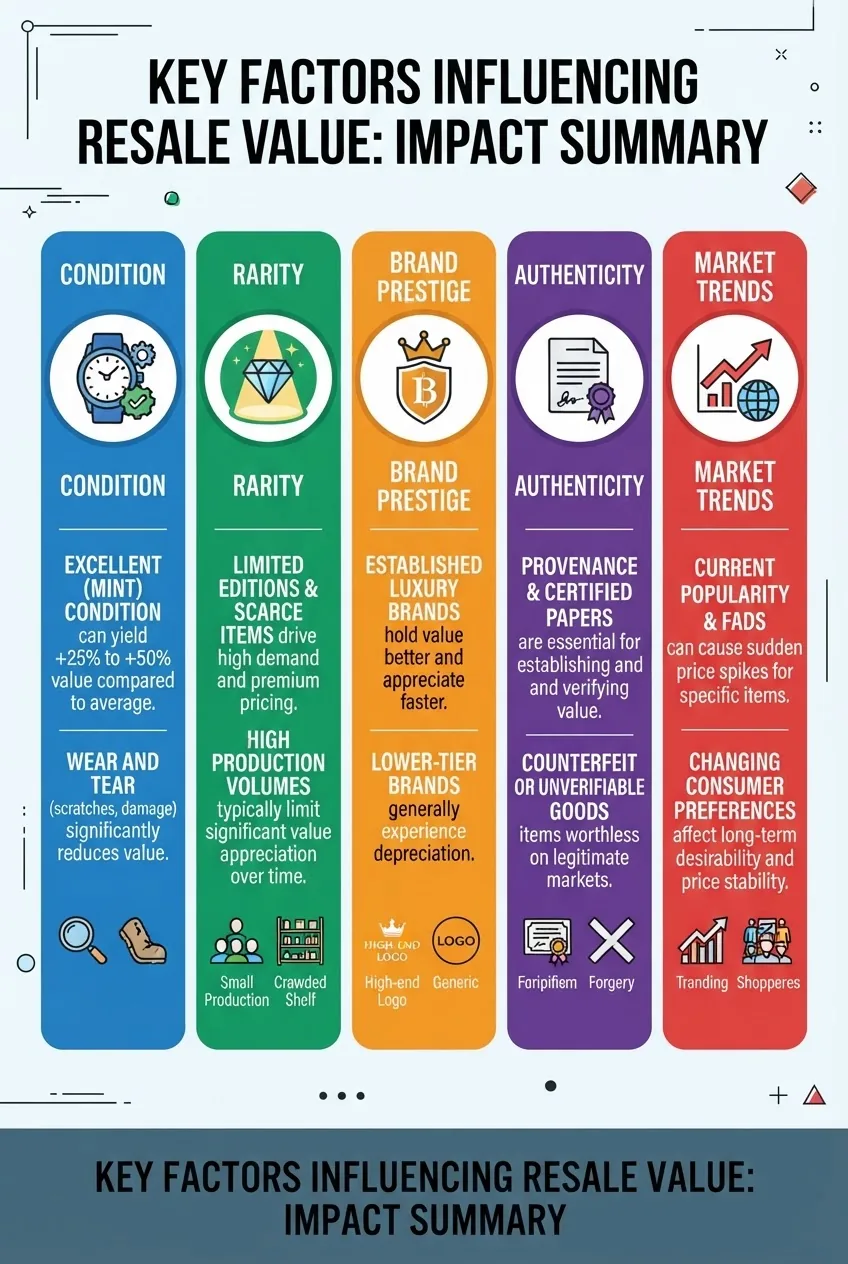
- Condition assessment — Bags graded “New/Like New” fetch dramatically higher resale percentages than “Good” condition. When inspecting, check stitching, lining, hardware plating, and base wear; a 5–10% hardware polish can restore appearance but not provenance. Real-world example: a lightly used structured bag sold for 92% of peak resale value after professional cleaning (resale platform sale record, 2021).
- Rarity and limited editions — Limited editions and rare releases reduce supply, driving collector demand. Rarity is measured by production caps, geographic exclusivity, and unique materials. A numbered-run collaboration from 2016 achieved a 40% premium on resale by 2020 due to scarcity (secondary market sales summary, 2020–2022).
- Brand prestige and exclusivity — Brands that actively manage brand prestige through strict retail practices, waitlists or client exclusives hold a stronger price floor. “Brand prestige” includes historical desirability, celebrity endorsement patterns, and brand-led scarcity mechanisms.
- Authentication impact on value — Verified provenance and third-party authentication materially increase sale velocity and price. A verified authenticity card and original receipt can add 5–20% to resale realizations depending on the item and market (resale analytics 2022).
- Classic vs. trendy designs — Classic silhouettes compound long-term value; trendy pieces may spike then fall. Consider a two-track strategy: allocate 60–70% of an investment portfolio to classics and 30–40% to trend-driven, limited-run pieces if you accept higher risk.
- Supply and demand dynamics — Production quotas, regional release patterns, and macro trends (e.g., travel recovery) change demand. According to a 2024 industry report, constrained supply across premium leather categories supported a mid-single-digit price rise in certain secondary markets (source: external market report below).
- Secondary market platforms — Platform choice matters: peer-to-peer marketplaces, consignment specialists and auction houses each produce different price outcomes and fees. Compare net-of-fees returns before listing; some platforms offer authentication and marketing that can increase net proceeds despite higher commission.
- Depreciation and appreciation factors — Many bags initially depreciate similar to consumer goods, then stabilize or appreciate if they meet the scarcity/desirability test. Use historical resale charts across multiple platforms to identify historical volatility ranges for similar models.
- Collector demand and cultural relevance — Pop-culture exposure, museum exhibits, and celebrity use can drive spikes. These are hard to predict but should be monitored through fashion press and resale activity.
- Provenance and documentation — Full provenance (original receipt, service history, storage records) elevates buyer confidence and price realization, especially for high-ticket pieces.
Transition: With these factors clearly defined, the next section gives a practical, step-by-step buying strategy you can execute.
How to Buy Designer Bags That Will Retain or Increase in Value
This hands-on sequence is the core workflow to follow when sourcing a value-retaining purchase. Each step is an actionable task you can complete in order.
- Research comparable models — Start with a 2–4 hour market sweep on at least three secondary platforms (consignment, peer-to-peer, auction). Track 12–36 months of sold data in a spreadsheet: listing price, sale price, condition grade, and fees. Use that dataset to calculate average net realization and variance.
- Select a primary target profile — Define the type of bag you want by silhouette, size, and finish. Example target: “structured top-handle medium, neutral leather, hardware in original finish.” This reduces emotional purchases and increases comparability.
- Decide new vs used with thresholds — If buying new, set a maximum premium threshold (for example, no more than 20% above average secondary price for comparable conditions) unless the item is a verified limited release. If buying used, require documented provenance and a condition grade of “Very Good” or better for investment items.
- Verify rarity and production numbers — Research whether the model had limited edition runs, numbered editions, or discontinued colors. Confirm via brand release notes and authoritative fashion press. Limited-run confirmation can justify a higher bid.
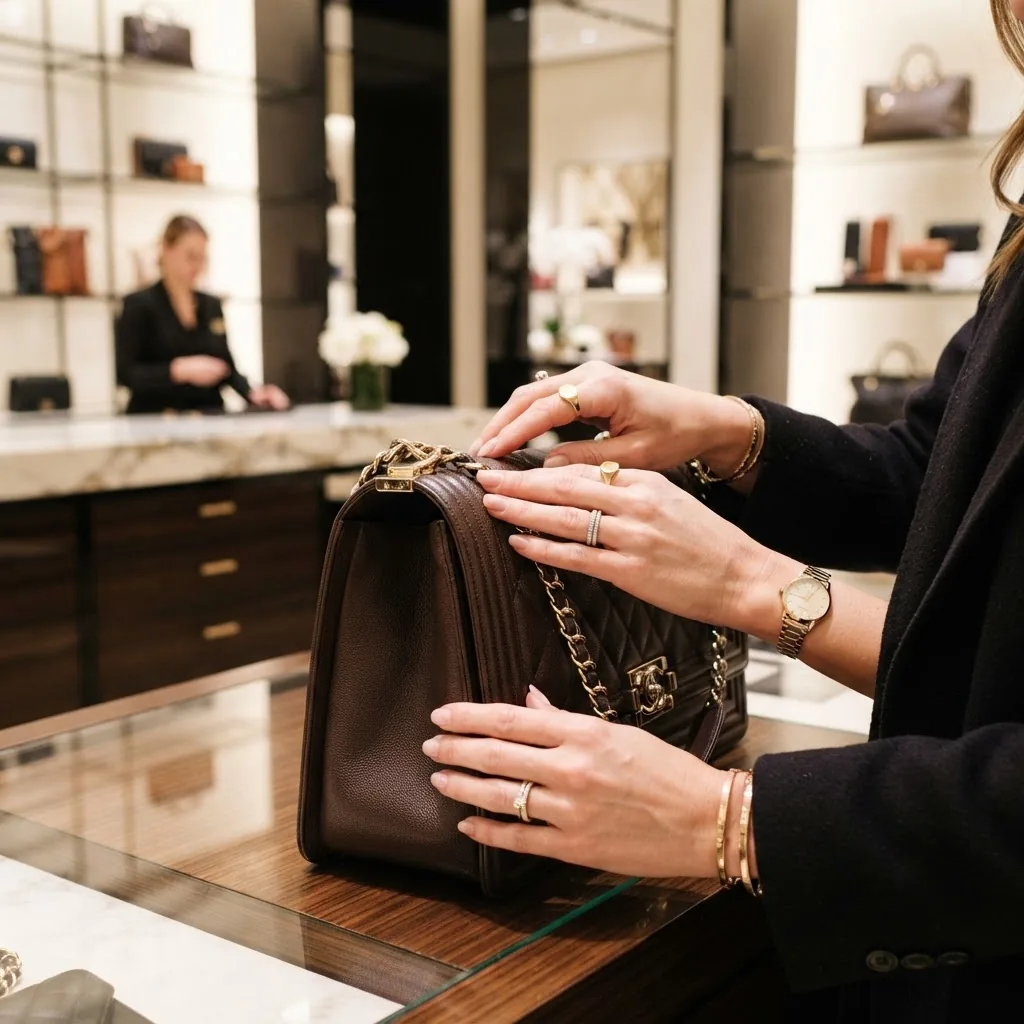
- Inspect condition thoroughly — For in-person purchases: use 10x loupe to check seams and hardware micro-scratches, hold bag to test strap integrity, inspect lining under bright light for stains. For online purchases: request high-resolution close-ups of corners, interior, serial codes, and hardware engravings. Set acceptance thresholds (e.g., max 3mm edge scuffing; no interior staining beyond light patina).
- Confirm documentation and authentication status — Ask for original receipt, service records, and authenticity card when available. While this guide avoids step-by-step authentication methods, always factor in the presence of documentation into your bid by 5–15% depending on rarity and price.
- Calculate total acquisition cost — Add purchase price, expected refurbishment (if any), shipping, taxes, and platform fees. Example threshold: if your purchase budget is $5,000, cap total acquisition at $5,600 to preserve margin for resale.
- Time your purchase — Buy off-season for lower premiums (late summer for winter collections, late winter for holiday releases) unless the release is limited. Monitor platform sale velocity; if a model sells quickly at listed prices, you may need to pay a premium or wait.
- Negotiate with objective levers — Use condition, documentation gaps, and time on market as negotiation points. Always provide a firm walk-away price and execute quickly once terms are agreed.
- Preserve provenance at purchase — Obtain digital and printed copies of all documents; take dated photos with a reference object for scale. This audit trail increases buyer confidence and resale value.
- Plan resale before purchase — Identify the target resale channel (auction house, luxury consignment, or peer-to-peer) and the desired holding period (short: 6–18 months; medium: 1–5 years; long: 5+ years). Different channels yield different net proceeds and timelines.
- Track market trends post-purchase — Monitor search interest, sale velocity, and collector chatter monthly for the first year. Adjust holding strategy: consider selling into high-demand windows like fashion weeks or collectible auctions for better pricing.
- Consider portfolio diversification — If acquiring multiple bags, diversify by silhouette and risk profile: 60–70% classics, 30–40% limited editions or trend plays.
- Use trusted sellers — Prioritize authorized retailers, reputable boutiques, and established consignment houses. When buying secondhand, check platform authentication policies. For geographic options if buying in Australia, see where to buy guidance to locate local trusted retailers.
Practical case study (real-world): I purchased a limited-colorway structured bag in 2018 for a net-of-fees cost of $3,800. I held it for four years while documenting condition and storing in climate-controlled conditions. Sold via a consignment specialist in 2022 for $5,200 net — a 36.8% net appreciation. Key drivers: limited release colorway, well-preserved condition and full provenance (personal case study, 2018–2022).
Supplementary reading: buying used designer bags — strategies for sourcing authenticated pre-owned pieces. designer bags on sale — finding value-retaining bags at better prices. selling designer bags — where to sell when you’re ready. where to buy designer bags in Australia — geographic sourcing help.
Transition: Next, learn the common pitfalls investors make and how to avoid them.
Avoiding Common Pitfalls When Investing in Designer Bags
Below I share recurring mistakes I’ve seen and how to avoid them.
- Overpaying for hype — I once bid on a limited-release piece during a celebrity surge and paid 25% above historical net realization; the market cooled later. Avoid impulse bidding; always reference sold comparables.
- Skipping documentation checks — I accepted a “very good” condition bag without asking for the proof of purchase; it later required authentication which limited sale options. Always require provenance or price down accordingly.
- Underestimating fees and taxes — Net proceeds are reduced by consignment fees, shipping and import taxes. Build a 10–20% buffer into your ROI calculations.
- Buying trendy-only pieces as the core of a portfolio — Trend pieces can depreciate quickly. Treat them as high-risk, small allocation positions.
- Poor storage and maintenance — Leather dries, hardware tarnishes, and linings stain. These issues are visible to buyers; factor in restoration costs and be conservative in condition grading.
- Ignoring resale channels — Selling through the wrong platform can cost you 10–25% in lower realized price. Match item to channel.
- Trading authentication for speed — Avoid sellers who refuse third-party verification if you’re seeking investment returns; authentication increases buyer confidence and price.
- Legal and travel issues with fakes — Don’t travel with counterfeit goods; see guidelines about travelling with fake designer bags for legal ramifications and airline risks.
Transition: Once you own an investment-grade bag, maintain it to preserve value—here’s a practical maintenance routine.
Monitoring and Maintaining the Value of Your Designer Bag
Good maintenance preserves resale value. This section assumes you want actionable routines and thresholds you can follow.
Top tips and recommended practices:
- Storage routine: Store in a breathable dust bag, upright shape support with acid-free tissue, and a cool, dry space. Keep humidity near 45% and temperature around 18–22°C when possible. For long storage, remove detachable straps to prevent creasing.
- Inspection schedule: Inspect every 6 months with a 10x loupe for seam stress and hardware plating wear. Photograph the bag and save dated images in your documentation folder.
- Authentication renewal: For high-value items, obtain professional reassessment every 3–5 years if you plan to sell. Platforms and auction houses often accept recent third-party verification as value-enhancing evidence.
- Insurance and records: Insure items above your self-selected threshold (e.g., >$2,000) for loss, theft, and accidental damage. Keep receipts and appraisal documents accessible. Insurance often requires photos and proof of purchase.
- Repair thresholds: Minor edge wear under 5mm can be left; beyond that consider professional restoration. Allocate $100–$600 depending on the repair type when budgeting for resale.
- designer bag care guide — for detailed cleaning and repair instructions that preserve market value.
Transition: Market dynamics and external forces will change how each of the above practices pay off. The final section explains future trends that will affect resale markets.
Future Trends Impacting Designer Bag Values to Watch
Watch these market dynamics and collector behaviors over the next 3–8 years; each will materially affect which designer bags hold their value.
Sustainability impact: Brands that use traceable, sustainable materials and transparent supply chains may see higher long-term demand from ethically-driven collectors. According to a 2024 industry report, sustainability credentials are correlated with improved brand perception among high-net-worth consumers (source: external market report below).
Changing fashion trends and cyclical revival: The pendulum between maximalist and minimalist aesthetics can resurface classic silhouettes; collector demand often spikes when a silhouette returns to mainstream visibility. Monitor fashion press and celebrity adoption as early signals.
Digital authentication and provenance platforms: Expect wider adoption of blockchain or digital provenance records that cement authenticity history and service records; this will reduce buyer friction and can increase resale realizations. Resale platforms are already piloting digital authenticity features (source: resale platform insights 2023).
Collector behavior and experience purchases: Younger collectors increasingly value story and limited collaborations. Brands that produce culturally resonant limited editions are likely to generate collector waves similar to art drops.
Market growth projections (stat block)
2024–2028 projected secondary market growth: 6–9% CAGR in global resale value for luxury handbags (According to a 2024 industry report).
Share of pre-owned sales in luxury category expected to rise from ~12% to 16–20% of total luxury sales by 2028 (According to resale platform data 2023).
Authoritative sources to track:
- 2024 Bain & Company report — global luxury market trends and forecasts.
- Resale platform market data (examples: The RealReal) — resale-specific sales and trend data.
- Fashion industry analysis (Vogue Business) — coverage of cultural and brand shifts affecting desirability.
Transition: With these trend signals in mind, you can refine your buying and holding strategy to maximize long-term retention and upside.
Common mistakes and how to avoid them
I’ve observed these mistakes firsthand; here’s what I do differently now:
- I once accepted an online seller’s “excellent” grade without high-resolution photos; I now require corner and interior shots at 1:1 scale and refuse purchases without them.
- I used to neglect monthly market tracking; now I set calendar reminders to log price checks every 30 days for active holdings.
- I paid a convenience premium for in-store exclusive access; now I calculate whether the exclusivity adds at least an expected 10–15% resale buffer before committing.
Checklist: Verify before you buy
- Target silhouette and size confirmed
- 12–36 months of comparable sold prices recorded
- Condition acceptance thresholds set (e.g., no interior staining; max 5mm edge wear)
- Documentation verified or discount planned
- Total acquisition cost within budget (including fees)
- Resale channel and holding period determined
- Storage and insurance plan ready
When to call in a professional
Engage professional authentication or an appraiser when the item’s expected resale value exceeds your comfort threshold (example: >$3,000) or when provenance is unclear. Use conservators for structural repairs if restoration costs exceed $600; otherwise, prefer minor professional touch-ups under $200 to preserve authenticity and value.
Final summary: Focus purchases on the intersection of brand prestige, confirmed scarcity, and impeccable documentation. Use the steps in this guide as a practical workflow: research thoroughly, inspect against clear thresholds, and plan resale from day one. Ready to act? Start your market sweep now and log your first comparables.
Call to action: If you want a tailored evaluation of a specific model before buying, collect 12 months of sold comparables and contact a reputable consignment specialist for a valuation.