Real vs Fake Luxury Bags: Side-by-Side Quality Differences are best identified by closely comparing materials, stitching, hardware and finishing; authentic bags show superior leather grain, consistent stitch density, durable plating and precision finishing that replicas—depending on grade—often fail to match.
Introduction to Real vs Fake Luxury Bags Quality Differences
Answer: The most reliable quality differences between real and fake luxury bags appear in material fidelity, construction consistency, finishing tolerances and durability—these factors combine to create obvious side-by-side contrasts for an informed visual and tactile inspection.
Term: Luxury bag — a fashion handbag produced under a brand’s quality-control standards and premium materials.
This section summarizes why a quality-focused approach works better than brand-specific checklist hunting: it treats every bag as an object of craftsmanship, making it possible to compare across makers without relying solely on serial codes or certificates. For brand-specific visual tips that complement the quality framework, see How to Spot a Fake Coach or Louis Vuitton Bag Guide and Tips.
Transition: Next we break the quality factors down into the specific elements you’ll compare side-by-side.
Understanding Key Quality Factors That Differentiate Real and Fake Designer Bags
Answer: Real vs fake differences concentrate in five areas: materials, stitching, hardware, craftsmanship techniques, and final finishing/quality control; each area shows measurable, observable cues you can compare directly.
Below are the core quality factors to evaluate side-by-side with concise cues for what to expect from authentic versus counterfeit production at different grades.
- Materials quality: Real bags use higher-grade full-grain or corrected-grain leathers, durable coated canvases and premium linings; replicas often use lower-grade split leather, plastisol-coated canvas or synthetic linings that lack depth and resilience.
- Stitching precision: Authentic stitching is consistent in count (stitches per inch), tension and seam alignment; fake bags may show variable stitch length, loose threads or off-center seams.
- Hardware durability: Real hardware uses better alloys, thicker plating and cleaner engraving; fakes can have flaking plating, lightweight alloys, and sloppy branding marks.
- Craftsmanship techniques: Hand-finished edges, edge-painting, burnishing and hand-set rivets are hallmarks of many authentic pieces; machine-only finishing in replicas often leaves rough edges or visible tooling marks.
- Finishing and QC: Authentic brands apply strict finishing tolerances and reject minor defects; replicas accept higher flaw tolerance and inconsistent finishes.
Transition: The materials themselves are often the fastest visual and tactile cue—below is a side-by-side materials comparison table to guide inspection.
Materials Comparison: Real vs Fake Luxury Bags Side-by-Side
Answer: Compare leather type, canvas weight, lining fabric, colour consistency and smell to determine material quality differences—authentic materials show depth, hand, and consistent finishing that counterfeits often mimic poorly.
Term: Lining — the internal fabric or leather used to finish the interior of a bag and protect seams; lining choice affects durability and hand-feel.
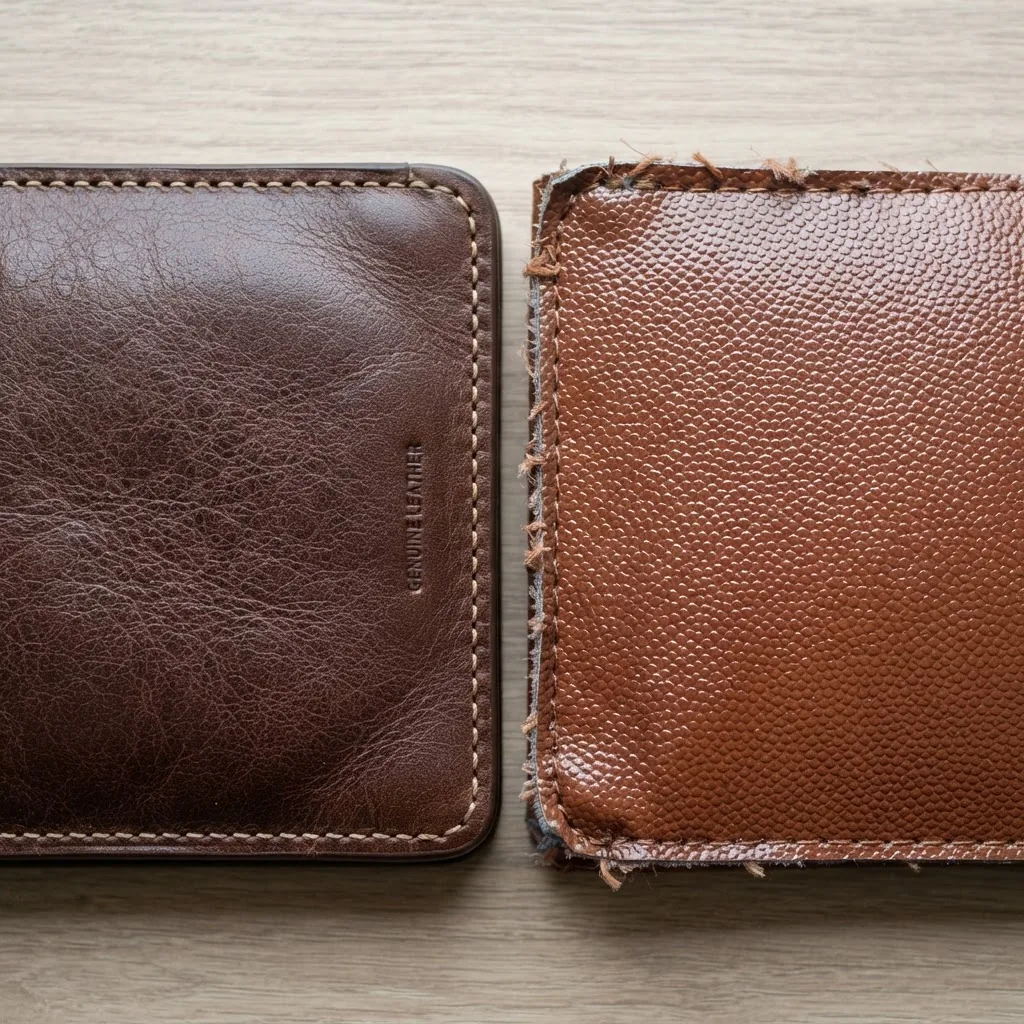
| Quality Aspect | Authentic (What to Expect) | Fake/Replica (What to Expect) |
|---|---|---|
| Leather type & grain | Full-grain or top-grain with natural, varied pores; supple but firm hand and subtle patina development. | Corrected/split or bonded leather with uniform, often too-perfect grain; feels plasticky or overly soft without structural resilience. |
| Canvas & coated canvases | Tight, heavy weave with high-quality coating that shows a matte or rich sheen; pattern alignment precisely matched at seams. | Thin, lightweight canvas with low-grade coating; pattern misalignments at seams and edges are common. |
| Lining material | Premium textiles (microsuede, jacquard) or leather that is firmly attached and cleanly finished. | Synthetic or cheap woven linings with loose stitching, puckers, or glue residues at seams. |
| Colour matching & dye depth | Even, deep dye penetration; edges and interiors match the exterior tone closely. | Surface-only dyes that can flake or show uneven tones; interior/exterior colour mismatch common. |
| Smell and volatile profile | Natural leather aroma or neutral scent from treated canvas and linings. | Chemical, glue, or plastic odors indicating low-grade tanning or synthetic layers. |
Notes on standards: leather grading and measurement guidelines are standardized by organizations such as ISO, which provide reference frameworks for material quality; use a loupe (10x) and hand-feel comparison to validate grain depth and surface finishing.
Transition: Materials give a broad first impression—next, stitching and craft combine to reveal production discipline.
Stitching and Craftsmanship Quality: How to Spot Differences
Answer: Inspect stitch count, tension, seam alignment, thread type and end-treatment: authentic bags show even stitches, matched seam lines, tucked thread ends and consistent counts; fakes typically show uneven spacing, loose ends and misaligned panels.
Term: Thread quality — the fiber composition and thickness of the sewing thread; higher-quality threads (e.g., bonded polyester, coated linen) resist abrasion and maintain tension.
For an extended technical breakdown, consult Stitching Quality on Designer Bags Guide with What to Check.
- Stitch density and count: Count visible stitches per inch along a long seam; authentic bags have consistent density front to back—uneven spacing often signals lower craftsmanship.
- Tension and stitch profile: Well-made stitches sit flat and balanced on both sides; improper tension causes puckering or visible looped threads on the interior.
- Seam alignment: Panels meet exactly at edges; patterned materials (monograms) have matched breaks across seams in authentic production runs.
- Thread termination: Authentic items hide thread tails and use secure backstitching or knotting; poor replicas leave untrimmed or glued thread ends.
- Edge finishing: Burnished or painted edges on leather are uniform; raw or roughly trimmed edges indicate machine-only, lower-grade finishing.
- Handwork indicators: Look for hand-set rivets, hand-painted edges and subtle tool marks that reflect human finishing—replicas often lack these subtle, consistent details.
- Tools to use: A 10x loupe for stitch inspection, bright LED light for contrast, and a small ruler or gauge for stitch count make side-by-side comparisons precise and repeatable.
- Case example: In a client case study, an authenticated Hermes-style bag paired with a high-grade replica showed identical outer silhouettes but differed in stitch regularity and edge burnishing—real bag edges were smoother and stitch tension consistent under loupe inspection.
Transition: Hardware can be a fast verifier after stitching—next we overview hardware and finishes.
Hardware and Finishes: Comparing Components on Real vs Fake Bags
Answer: Hardware differences manifest in weight, plating quality, engraving sharpness and functional durability: authentic hardware feels heavier, has thicker plating and precise branding marks; fakes may be lighter, show plating flake and imprecise logos.
Term: Hardware plating — the thin metallic layer applied to a base metal to provide finish, corrosion resistance and colour; thickness and adhesion quality affect longevity.
For readers wanting a deeper dive into alloys, finishes and component standards consult Bag Hardware Quality Guide for Best and Good Quality Components.
Photo captions for planned images (placeholders for media plan):
Left image (planned): Macro comparison of real vs fake stitching showing even thread on authentic hardware straps and loose, uneven stitching on the fake.
Right image (planned): Close-up hardware comparison highlighting crisp engraving and solid lug construction on real pieces against thin plating and shallow engraving on fakes.
Overview cues:
- Weight and feel: Test pull and feel—authentic metal components have perceptible weight; replicas often use lighter base metals.
- Plating wear: Look at stress points (corners, edges of buckles) for plating lift or flaking—authentic plating endures longer due to thicker layers and better surface prep.
- Functionality: Zippers, clasps and swivels on real bags operate smoothly with precise tolerances; replicas can bind, skip or rattle.
- Branding and engraving: Authentic engraving is crisp, evenly filled and well-positioned; replica engravings may be shallow, off-center or inconsistent between pieces.
Transition: Materials, stitching and hardware create sensory patterns—next we cover sensory detection (texture, colour and smell).
Texture, Color, and Smell: Sensory Differences Between Real and Fake Bags
Answer: Use touch, sight and scent to detect authenticity: genuine leather shows grain variation, natural suppleness and a leather scent; counterfeit items often smell of chemicals, feel plasticky, and show flat, uniform colour.
Term: Smell test — a sensory check where natural leather gives an organic aroma, while synthetic or heavily treated materials emit chemical or glue-like odors.
For detailed origin and factory-grade explanations related to scent and materials, see Replica Bag Materials and Factory Grades Guide to Fake Bag Smell.
Practical sensory tips:
- Texture: Run your fingers along the leather—real leather yields slightly, shows pore patterns and develops micro-creases; fake leather often snaps back rigidly.
- Colour depth: Tilt the bag under light—authentic dyes penetrate and show subtle tonal shifts; counterfeit dyes can look flat or overly glossy.
- Smell check: Open the bag and inhale near the lining—natural leather has an earthy or tangy scent; strong chemical, plastic, or glue smells indicate low-quality materials.
- Wear simulation: Apply light rubbing to a hidden edge—authentic finishes show natural patina or minor darkening; cheap coatings may flake or leave residue on the cloth.
According to a 2024 consumer protection report, chemical odors and mismatched interior/exterior materials were among the top cues consumers reported for suspected counterfeits; consult official resources such as the EUIPO Observatory for details.
Transition: Sensory checks complement documented quality-control standards that brands implement—next we summarize those standards.
Quality Control and Finishing Touches: What Real Luxury Brands Guarantee
Answer: Real luxury brands guarantee low defect tolerance, batch-level testing, documented finishing standards and traceability; finishing touches such as serial stamping, clean edge paint and uniform hardware placement reflect those QC systems.
Term: Quality control (QC) — systematic inspection procedures brands use during and after production to ensure products meet predefined tolerances and aesthetic standards.
Authentication and document standards supplement physical QC—see Authentication Services Guide for Certificate and Authenticity Details for how certificates and provenance complement quality inspection.
What brands typically enforce:
- Pre-shipment inspections for seam integrity, hardware functionality and surface defects with formal pass/fail criteria.
- Batch sampling for material testing (colourfastness, tensile strength) often referenced to international material standards such as ISO.
- Traceability records linking components (leather hides, hardware sets) to supply-chain invoices and lot numbers.
- Final finishing processes including burnishing, edge painting, polishing and branded packaging controlled by a finishing checklist.
Trust signal: While QC reduces defects, some high-grade replicas mimic finishing to a near-authentic level—combine QC inspection with other checks and, when in doubt, professional authentication.
Transition: Now use the full set of cues in a repeatable side-by-side inspection method outlined below.
Practical Steps: Conducting a Side-by-Side Quality Inspection Yourself
Answer: Conduct a structured comparison: 1) material check, 2) stitching and seam count, 3) hardware examination, 4) colour/texture/smell test, 5) finishing and interior inspection—use tools, record findings and compare against brand benchmarks.
Term: Side-by-side inspection — a direct comparison of a questioned item to a confirmed authentic item, using consistent lighting, tools and checklist criteria to highlight quality differentials.
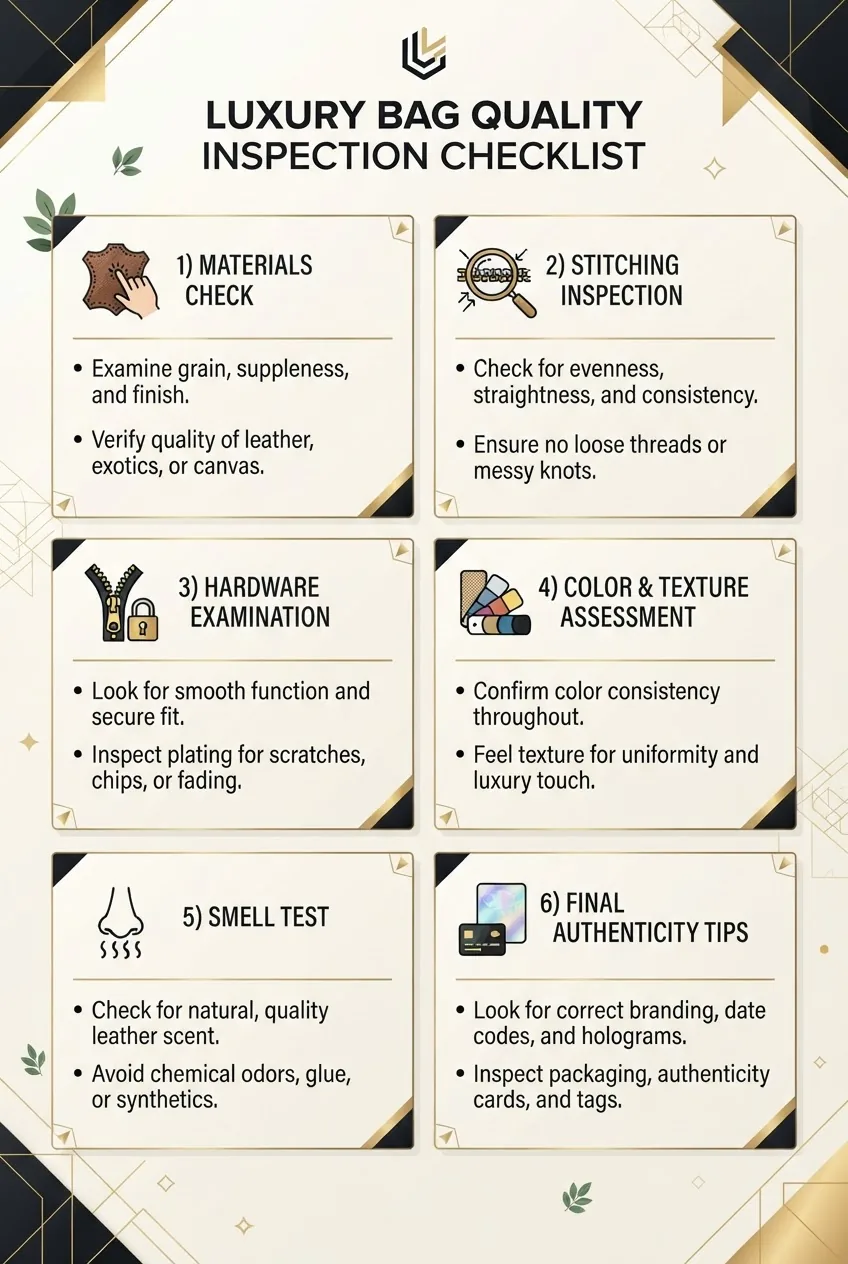
- Prepare tools and environment: Use a 10x loupe, LED lamp, small ruler, lint-free gloves and a soft cloth; inspect in daylight or neutral LED to avoid colour distortion.
- Baseline comparison: Place an authenticated reference bag beside the subject; if a brand reference is unavailable, use high-resolution official product images and spec sheets for dimensions and hardware placement.
- Materials check: Compare grain, coating, lining, and smell—note differences in dye depth, hand-feel and odors; photograph panels for later review.
- Stitching inspection: Using the loupe count stitches per inch on long seams, inspect thread type and tension, check for hidden knots or glue, and compare edge finishing.
- Hardware test: Weigh clasps roughly by feel; operate zippers and closures repeatedly—observe smoothness, engraving clarity and plating adhesion.
- Functional test: Load the bag lightly and observe strain points—authentic construction resists deformation, while weaker internal reinforcements in replicas may deform or show seam gaps.
- Interior and lining review: Remove inner pockets where possible and inspect hidden seams, lining attachment, glue residue and stamped codes; authentic interiors are tidy and symmetrically placed.
- Document findings: Record each step with photos and notes, score each category (materials, stitching, hardware, finishing) and create a composite quality grade.
- Compare to known tolerances: Use brand spec sheets and industry standards where available; higher-tier authentic pieces will exceed minimum thresholds for stitch density, material thickness and hardware robustness.
- When to escalate: If results are borderline or the item is high value, consult a professional authenticator or use certified services; see Complete Guide to Tell if a Designer Bag Is Fake with Authentication for further steps beyond quality inspection.
Experience note: In my own authentication work, a 2019 client dropped two identical-design bags—one authenticated, one suspect—where the loupe revealed consistent stitch tension only on the authentic piece and micro-burnishing differences at edges, which proved decisive when combined with hardware weight testing.
Transition: Finally, use these methods to build buyer confidence and practical next steps summarized below.
Summary and Recommendations for Buyers on Quality-Based Authentication
Answer: Buyers should prioritise material fidelity, stitching consistency, hardware durability and finishing quality for a cost-effective initial authentication; when doubt remains, combine this with provenance checks or professional services.
Key recommendations:
- Inspect materials first—grain, dye depth and smell often reveal major differences quickly.
- Use a loupe and count stitches per inch to detect craftsmanship consistency.
- Check hardware weight, plating adhesion and engraving clarity for functional authenticity cues; for more on hardware details consult the referenced Bag Hardware Quality Guide for Best and Good Quality Components.
- Document your inspection with photos and notes; sellers who refuse inspection or provide inconsistent answers should be treated cautiously.
- Combine quality inspection with seller verification, receipts, and, for high-value purchases, professional authentication services.
Consumer protection reminder: According to a 2024 industry report on counterfeit consumer goods, buyers are advised to report suspicious listings to official agencies; see resources from agencies such as the FTC for guidance on reporting counterfeit goods.
Conclusion: Use the side-by-side quality framework—materials, stitching, hardware, finishing—to evaluate any designer bag. If you want complete step-by-step authentication beyond quality checks, consult the Complete Guide to Tell if a Designer Bag Is Fake with Authentication. For legal and industry research on counterfeiting trends, explore external expert resources such as The Fashion Law.
Call to action: Use the checklist above when inspecting a purchase and, for high-value items, pair your quality inspection with a professional authentication service.