Replica Bag Materials, Factory Grades and Why Fake Bags Smell: high VOC synthetic materials, low-grade adhesives, and coated substrates cause the plasticky, glue-like odors commonly found in counterfeit tote bags; smell intensity correlates strongly with factory grade and material sourcing. This guide explains the chemistry, grading, and practical identification steps.
What are replica bag materials and factory grades?
Answer: Replica bag materials are predominantly synthetic or treated substrates—like PU leather, PVC, bonded leather and coated canvas—used instead of genuine leather; factory grade replicas are quality tiers (1st, 1.5, 2nd, etc.) that reflect material fidelity, assembly precision, and finishing, which together determine smell and durability.
PU leather: a synthetic leather made by coating a fabric base with polyurethane to mimic natural leather.
PVC: polyvinyl chloride, a plastic used as a cheaper coated surface with a distinct chemical odor.
Factory grade replicas: informal quality tiers used by replica factories to label how closely a piece copies the original—higher grades use better materials, tighter tolerances, and more finishing labor.
This article supports deeper authentication techniques—see the full pillar resource for step-by-step verification.
Complete Guide to Tell if a Designer Bag Is Fake with Authentication
Transition: below we compare specific replica materials, show how they age and smell, then connect those properties to factory grade labels and practical smell-based checks.
What materials are used in replica bags and how do they affect quality?
Answer: The choice between PU leather, PVC, bonded leather, and coated canvas defines appearance, durability, smell, and how convincing a counterfeit tote bag will be; higher material fidelity generally means subtler odors, better edge finishing, and longer life.

Transition: below are direct comparisons and a concise table to show typical properties, smell profiles, and lifecycle differences.
| Material | Typical Feel / Look | Smell Profile | Durability / Price Signal |
|---|---|---|---|
| PU leather | Soft, uniform grain; sometimes plasticky finish | Mild chemical/plastic, stronger when new | Mid-low; cheaper than genuine leather |
| PVC coated materials | Shinier, stiffer surface | Strong plastic/solvent odor initially | Low; used on budget replicas |
| Bonded leather | Patchy grain, less natural hand | Glue and binder smell possible | Low; inconsistent aging |
| Coated canvas | Textile base with polymer coating; printed motifs possible | Mild polymer smell, depends on coating | Varies; higher-grade coatings age better |
| Genuine leather | Natural grain, variable patina | Hide/leather scent, not chemical | High; ages gracefully |
For a broader comparison of designer bag quality, see the real vs fake luxury bags guide for context on how materials map to perceived authenticity.
real vs fake luxury bags guide
Synthetic Leathers (PU, PVC)
Answer: Polyurethane (PU) leather is a fabric base coated with polyurethane for a leather-like finish; polyvinyl chloride (PVC) is a plasticized coating that creates a glossy or rigid surface—both are cheaper than genuine leather and have different durability and smell profiles.
Term: PU leather — synthetic leather made by bonding polyurethane to a textile backing for a realistic surface.
PU tends to be softer, more breathable than PVC and can be embossed to simulate grain; PVC often sits on cheaper replicas because it is easier to print and waterproof, but it releases stronger plastic and solvent odors and cracks differently with age.
Examples:
- Mid-grade replica using PU: realistic touch, moderate smell at unpacking, fades with wear.
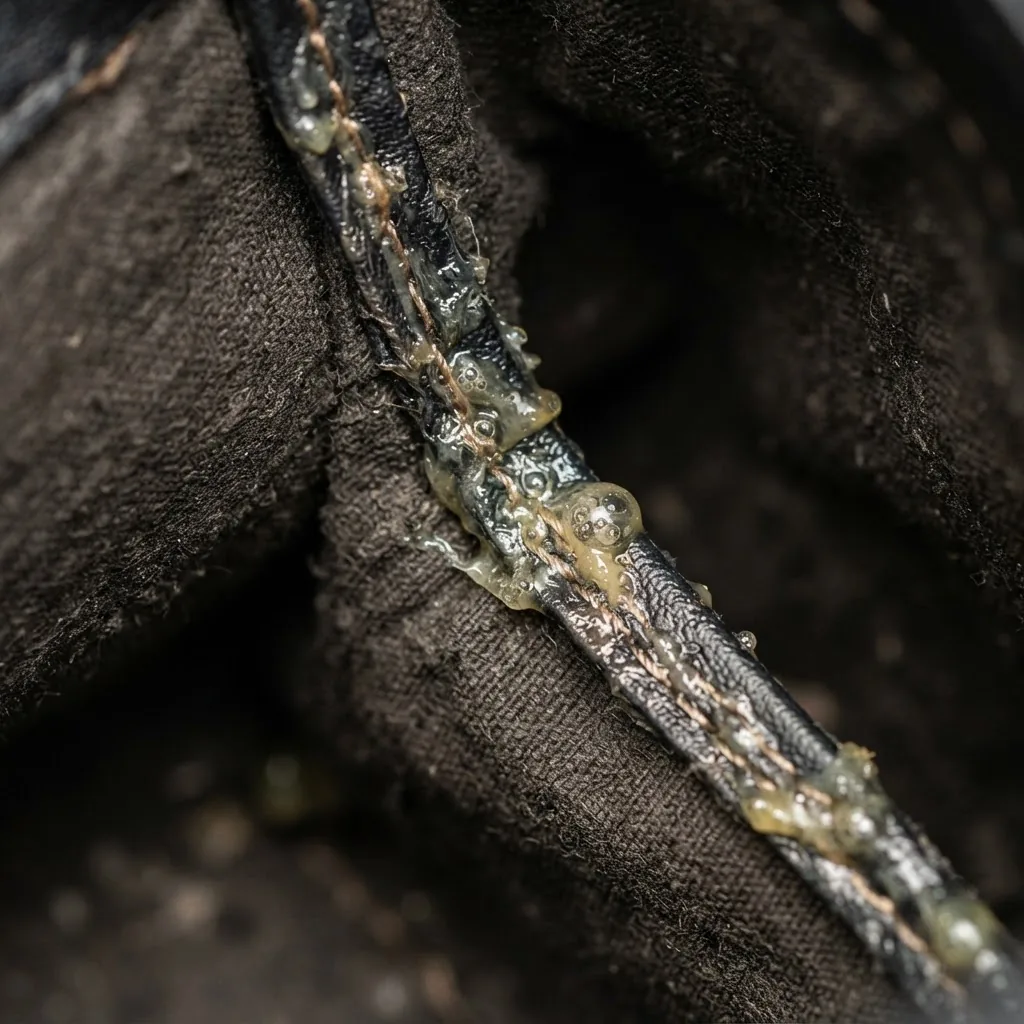
- Low-grade replica using PVC: shiny finish, strong chemical/plastic odor, visible seam glue.
Coated Canvas and Calfskin Alternatives
Answer: Coated canvas replicates logoed textiles by applying polymers to a textile base; imitation calfskin is a treated split leather or high-end PU variant designed to mimic fine-grain leather—visual accuracy can be high but tactile cues and smell differ.
Term: Coated canvas — a textile substrate treated with polymer coatings to provide water resistance and printability.
Coated canvas can be convincing visually (patterns, prints) but often reveals its textile base at cut edges and emits polymer odors from the coating or from heat-cured inks. Imitation calfskin in higher-grade replicas will use tighter backing and edge-painting to hide inconsistencies.
Other Materials in Replica Totes and Handbags
Answer: Many replicas use bonded leather, fabric blends and inexpensive linings; hardware is often plated brass or alloy—these choices affect weight, edge finishing, seam adhesive needs, and consequently smell and longevity.
Bonded leather: composite leather made from shredded leather scraps bound with adhesives and coated—cheaper and inconsistent in quality.
Low-cost linings may be polyester or nylon with heavy finishers; cheap interfacings and adhesives add to glue/chemical odors. Higher factory grades invest in cotton twill or leather trims that reduce the need for strong adhesives and lower off-gassing.
Transition: next we’ll define factory grading more precisely and show how those tiers change material choices, inspection cues and smell intensity.
How are factory grades defined and how do they influence replica bag quality?
Answer: Factory grades are informal labels (1st, 1.5, 2nd, etc.) that signal production quality—higher grades use better materials, tighter stitching, correct hardware, and milder chemical finishing, while lower grades cut costs with cheaper substrates and adhesives that produce stronger smells and visible defects.

Transition: the list below breaks common grade tiers into observable differences you can use when assessing a bag.
-
1st Grade (Top / “1:1”):
Closest to originals; uses higher-grade PU or correct coated canvas formula, accurate hardware (often correctly plated brass), minimal glue residue, and stricter QC. Smell: faint or leather-like if genuine leather is used; synthetic smell minimal due to better curing and lower-VOC adhesives.
Signals: accurate logo placement, consistent grain, heavy-quality edge paint, tight stitching.
Related resource: bag hardware quality guide
-
1.5 Grade (High-mid):
Many visual details match originals; materials are upgraded but may use lower-spec adhesives or printed hardware. Smell: noticeable polymer or adhesive odor on unpacking that reduces after airing due to less aggressive solvents than low-end factories.
Signals: good pattern alignment, slightly lighter hardware plating, some edge finishing visible under magnification.
-
2nd Grade (Mid / Common Replica):
Cost-driven material choices like lower-grade PU, PVC-coated fabric, and bonded leather. Smell: clear plastic/chemical odor from solvents, curing agents and cheaper adhesives. QC issues (loose threads, glue stains) are common.
Signals: inconsistent stamping, edge paint pooling, uneven stitching.
Check stitching guides for more on workmanship: stitching quality on designer bags
-
3rd Grade and Below (Low-end):
Highly inconsistent materials, heavy use of PVC and cheap adhesives, mass-produced details, and strong chemical smells. Smell: overpowering plastic, glue, and solvent odors; hardware may be hollow or poorly plated.
Signals: incorrect fonts, cheap lining materials, exposed raw edges.
-
Factory variations and custom grades:
Some factories label pieces differently (e.g., custom “1st” that is actually higher-quality; others use numeric bands like 1, 1.5, 2—these are industry colloquialisms, not universal standards). Always corroborate material checks with other authentication signals.
Transition: the chemistry behind smells gives objective clues to material and grade—read on to learn the volatile compounds responsible and how they indicate production choices and health risks.
Why do fake designer bags smell?
Answer: Fake designer bags smell because of VOCs (volatile organic compounds) emitted from synthetic coatings, curing solvents, plasticizers in PVC, and adhesives—lower-grade materials and poor curing practices increase VOC emissions, producing the common “plastic”, “glue”, or “chemical” odors.
VOCs: volatile organic compounds—organic chemicals that evaporate at room temperature and contribute to noticeable odors and indoor air concerns.
Transition: the next subsection breaks down exact odor sources and their chemical causes, with examples linking odors to materials and factory practices.
Sources of Odors in Replica Materials and Adhesives
Answer: Odors originate from solvents (ketones, esters), plasticizers (phthalates), residual monomers in PVC, curing agents in coating resins, and non-crosslinked adhesives—each emits specific VOCs that present as plastic, nail-polish, glue, or chemical smells.
Common chemical contributors:
- Solvents used in adhesives and coatings: acetone, methyl ethyl ketone (MEK), toluene—evaporate quickly and smell sharp.
- Plasticizers in PVC: phthalates and other esters—produce a lingering “plastic” or “sweet” chemical odor.
- Residual monomers and stabilizers in polymers: vinyl chloride residues or stabilizing additives create off-gassing.
- Uncured or partially cured polyurethane finishing agents and isocyanate residues—can give pungent, persistent odors.
Example walkthrough: a low-grade coated canvas uses a solvent-based ink printed onto PVC laminate; after lamination, insufficient oven curing leaves solvent trapped in the coating and strong solvent VOCs escape during storage and early use, producing the “new fake bag” smell.
According to a 2023 material safety study, solvent-based adhesives in low-cost fashion products had measurable VOC emissions exceeding recommended indoor limits during initial off-gassing; consult authoritative guidance when assessing risk.
Authoritative references: see the EPA VOC guidelines for health-based VOC context and safe exposure ranges; for polymer chemistry, consult the material science literature (search for polyurethane and PVC off-gassing studies).
How Factory Grade Affects the Smell of Replica Bags
Answer: Higher factory grades reduce smell by using lower-VOC adhesives, better-cured coatings, higher-quality substrates (less residual solvents), and controlled finishing; lower grades economize on curing, adhesives, and coatings, producing stronger and longer-lasting odors.
Practical correlations:
- 1st grade: minimal VOC trace when properly cured; smell often dissipates in hours to days.
- 1.5 grade: noticeable SMT (solvent-mediator trace) odor on unpacking, fading over days to weeks with ventilation.
- 2nd/3rd grade: persistent plastic/chemical smell lasting weeks to months depending on storage temperature and ventilation.
Manufacturing location impacts smell because regulatory enforcement, factory ventilation, and available adhesive formulations differ by region; factories with better QC invest in water-based adhesives or post-cure ovens that reduce odors.
Environmental and health risks increase with lower-grade production: cheap phthalate plasticizers and solvent residues can pose long-term exposure concerns; consult consumer safety advisories for specifics—see a consumer safety advisory for counterfeit product risks.
Transition: the smell and materials information above can be applied as practical detection steps—read the procedural checklist next for sniff-tests and material inspection tips.
How can smell and material quality help identify replica bags?
Answer: Use a prioritized checklist: smell test (immediate VOC presence), visual/material inspection (edges, backing, grain), adhesive residue check, hardware and stamping verification, and, when needed, professional authentication—smell is a strong clue but not definitive alone.
Follow these numbered steps to assess a suspect bag:
-
Smell test (first 10–60 seconds):
Open packaging and bring the bag close (without prolonged inhalation); a strong chemical/plastic/glue odor indicates likely lower-grade materials or poor curing—like new plastic toys or fresh paint. Note: some high-grade replicas may be intentionally deodorized.
-
Edge and cut inspection:
Look at raw edges: genuine leather shows fibrous hide, coated canvas reveals textile threads, bonded leather shows composite layers and glue lines; heavy glue or pooling is a low-grade sign.
-
Stitching and seam evaluation:
Count consistency and tension; uneven stitches or skipped rows suggest lower factory grade. See the stitching quality on designer bags for inspection thresholds.
-
Hardware and plating check:
Tap hardware lightly—hollow feel or flaking plating points to cheaper production; compare logos and fonts to verified examples. For hardware specifics, consult the bag hardware quality guide.
-
Lining and label materials:
Cheap polyester linings or printed labels often betray replicas; authentic houses use branded linings that match model specs.
-
Smell persistence test:
After airing for 24–72 hours, re-check odor—low-grade materials often retain odor; high-grade pieces neutralize quickly. Document time-to-neutral for comparison.
-
When in doubt, escalate:
Use professional services— authentication services for certificate and authenticity details—and reference brand-specific guides like how to spot a fake Coach or Louis Vuitton bag.
Caveats and variability: smell can vary by production batch, storage, shipping conditions, and deodorizing treatments—do not use smell as the sole authentication method; combine with physical checks and professional services when necessary.
How can I reduce or remove the smell of a fake bag I own?
Answer: Reduce odors by ventilating, using low-heat baking techniques cautiously, activated charcoal, baking soda, or odor-neutralizing products designed for fabrics; avoid aggressive solvents or high heat that can damage coatings or release more VOCs.
-
Air and temperature:
Place the bag in a well-ventilated area at room temperature for several days; sunlight may help but avoid prolonged direct sun that can warp coatings. Warmer air accelerates off-gassing but can also accelerate chemical breakdown—moderate warmth (not hot) speeds odor reduction safely.
-
Activated charcoal or bamboo charcoal pouches:
Place charcoal in the interior pocket to adsorb VOCs; replace or recharge per product instructions. This is effective without introducing new chemicals.
-
Baking soda:
Use open containers of baking soda inside the bag for several days; effective for acidic odors but less so for strong solvent smells.
-
Commercial odor neutralizers:
Choose enzymatic or odor-neutralizing products labeled safe for synthetics and textiles; follow manufacturer directions and test an invisible area first.
-
Steam or gentle cleaning:
Steam can help release trapped solvents but may deform coatings or remove finishes; consult a specialist for delicate finishes and always spot-test.
-
Avoid unsafe methods:
Do not use bleach, harsh solvents or high-heat ovens—these can degrade adhesives, release more toxic VOCs, or damage coatings irreversibly.
-
When smell persists:
Consider returning the item if purchased under warranty or contacting the seller; persistent strong solvent smells can indicate unsafe levels of VOCs—consult consumer safety literature for health guidance.
Health note: According to the EPA VOC guidelines, prolonged exposure to certain VOCs may be harmful; if you experience symptoms, stop use and seek advice.
What are the key takeaways about replica materials, factory grades, and fake bag smell?
Answer: Material choice and factory grade are the primary drivers of fake bag smell: lower-grade PU/PVC and cheap adhesives emit more VOCs, while higher-grade replicas minimize odors through better materials and curing; smell is a fast clue but must be combined with visual and hardware checks and, when needed, professional authentication.
Key points:
- Smell sources: solvents, plasticizers, residual monomers and adhesives—these create the common plastic/glue/chemical scents.
- Factory grade correlation: higher-grade replicas use better materials, controlled curing and lower-VOC adhesives, producing subtler odors.
- Identification: use smell as one of several checks—edge inspection, stitching, hardware, lining, and persistence of odor after airing.
- Health and environment: cheap VOC-emitting chemicals can pose risks; reference EPA guidance and consumer safety advisories.
- Mitigation: ventilation, activated charcoal, baking soda and approved neutralizers help, but avoid heat or solvents that can damage finishes or increase off-gassing.
Final CTA: If you want a step-by-step verification that goes beyond smell—packaging, serial checks, and lab-level testing—start with the Complete Guide to Tell if a Designer Bag Is Fake with Authentication and consider professional authentication for high-value pieces.