By the end of this hands-on guide you will be able to identify, compare, and confidently choose the best faux leather bags & brands for your style and budget. Expect to spend about 90–180 minutes reading and following the steps; this assumes a basic familiarity with bag terminology and shopping online.
Before you start
- Device for research: laptop or tablet with access to product pages and images.
- Tools for inspection (if buying in-store): small flashlight, soft cloth, measuring tape.
- Budget range set in advance: suggest low ($30–$80), mid ($80–$250), premium faux options ($250–$600).
- Account for lifestyle: daily commuter, travel, evening wear—note typical strap and closure needs.
- References: open the PU and synthetic leather bags guide and vegan leather bags guide for technical background.
Follow the numbered steps below. Each step is a deep, actionable module you can complete at your own pace.
-
Understand faux leather materials and benefits
Understanding Faux Leather Bags: Materials and Benefits
Faux leather is an umbrella term that covers synthetic alternatives such as PU leather, coated fabrics, and materials marketed as vegan leather. These materials mimic the look of genuine leather while offering greater affordability, animal-friendly credentials, and easier cleaning in many cases.
The main material types you’ll see on product pages:
- PU leather (polyurethane) — a layered construction: fabric base + polyurethane coating + embossed grain. PU is flexible, holds color well, and is widely used in handbags and crossbody bags.
- PVC-coated leatherette — PVC is more rigid than PU and can feel plastic-y; it’s common in budget totes and glossy finishes.
- Microfiber synthetic leather — higher-end synthetics that use microfiber backings for a closer hand-feel to animal hide and improved breathability.
- Bio-based/plant-based vegan leather — newer materials using cork, apple leather, or recycled plastics; marketed as sustainable alternatives but vary widely in durability.
Comparison sub-points (practical takeaways):
- Durability: PU and microfiber synthetics can last 3–7 years with normal use; low-grade PVC may crack within 1–2 years.
- Finish variety: faux materials allow high-gloss, matte, quilted, and embossed finishes at lower manufacturing cost than genuine leather.
- Water resistance: many faux leathers are more water-resistant than untreated leather, making them a better everyday choice in wet climates.
- Care: faux leathers typically require milder care—wiping with a damp cloth and occasional conditioning with product-specific cleaners.
Technical reference: for industry-standard testing and material requirements consult ISO standards on synthetic leather materials and manufacturing specifications for tensile strength and coating adhesion.
Practical examples: a mid-priced quilted faux crossbody with PU grain often offers the best balance of style and durability; high-end microfiber vegan satchels offer superior stitch work and edge finishing resembling leather. For extended technical context, see the PU and synthetic leather bags guide.
Limitations: faux materials can delaminate (coating separation), peel at stressed edges, or show surface abrasions more readily than top-grain leather over multi-year heavy use. Expect to replace many budget faux bags sooner than true leather that has been maintained.
-
Survey the top brands and what makes them stand out
Top Faux Leather Bag Brands to Watch in 2024

Below are 5 brands that illustrate different strengths in design, value, and craftsmanship when it comes to the best faux leather bag brands. Each mini-profile focuses on signature styles, price band, and why I recommend them.
-
Brand: Matt & Nat (mid-premium)
Bio: Pioneers in vegan leather with consistent line quality and transparent sustainability claims. Signature styles: structured totes, minimalist crossbody bags, and quilted shoulder bags. Price band: $120–$380. Why watch: consistent hardware quality and interior layouts designed for daily commuting.
-
Brand: JW PEI (trend-driven, accessible)
Bio: Known for designer-inspired silhouettes at wallet-friendly prices. Signature styles: chain-handle hobo, compact crossbody, and sculpted baguette bags. Price band: $60–$180. Why watch: trend responsiveness and color runs make JW PEI a go-to for seasonal looks without the designer price.
-
Brand: Staud (contemporary premium)
Bio: Fashion-forward labels that blend faux materials with distinctive hardware. Signature styles: bucket bags, rounded totes, and sculptural handles. Price band: $250–$550. Why watch: design-forward pieces that maintain resale value in the fashion market.
-
Brand: Coach (designer-inspired faux lines)
Bio: Legacy brands are offering leather-look and mixed-material faux options to reach ethical consumers. Signature styles: classic satchels and modern crossbody designs. Price band: $180–$500. Why watch: combines trusted construction with faux materials to deliver longevity comparable to mid-tier leather pieces.
-
Brand: Dagne Dover (functional, performance-first)
Bio: Prioritizes organization and durable coated materials; ideal for commuters. Signature styles: structured totes, convertible backpacks, and laptop-friendly shoulder bags. Price band: $140–$400. Why watch: resilient coatings, smart pockets, and reinforced handles make these winners for heavy use.
For gender-specific picks and expanded designer-faux options, consult the faux leather bags guide for men and women which covers crossovers in sizing and styling.
Brand evaluation checklist I use: stitching density (stitches per inch), edge finishing, metal hardware plating thickness, interior lining quality, and warranty or repair policy. Reviews and small-batch manufacturing notes are important signals of long-term performance.
-
Brand: Matt & Nat (mid-premium)
-
Map popular styles to real-world use cases
Popular Faux Leather Bag Styles and Designs

Below I break down the most sought-after faux leather bag styles — what to expect from each, the ideal use-case, and specific design details to check before buying.
Crossbody bags
Use case: hands-free errands, travel, and evenings. Look for: adjustable strap length (min 36″–max 46″), secure closures (zip or flap with magnetic snap), and interior card slots. Best faux leather crossbody bags combine a soft PU exterior with reinforced base panels to prevent sagging.
Tote bags
Use case: work, shopping, and carry-all days. Look for: base width of at least 4″ for structure, strap drop of 9″–11″ for shoulder comfort, and interior laptop sleeve if you carry a 13″ device. The best faux leather tote bags often have coated canvas interiors and edge-sealed straps to reduce wear.
Shoulder bags and handbags
Use case: daily commute or semi-formal wear. Look for: uniform edge paint on handles, consistent quilting pattern alignment, and solid hardware anchoring. The best faux leather handbags avoid glued handles and use riveted or reinforced stitching.
Purses and mini bags
Use case: essentials-only outings. Look for: compact interior organization, secure zip pockets, and durable hardware that doesn’t chip. Many mini faux purses are fashion-led, so check strap attachment points closely.
Faux fur bags (complementary style)
Use case: seasonal statement pieces. Faux fur bags pair well with structured faux leather pieces to add texture contrast. Quality markers: dense pile, secure seam attachments to leather base, and removable straps for cleaning.
For accessory-level tips on straps, handles and finishing, see the leather-look bags guide. For trend-led chain and bucket bag treatments, check the replica hobo and bucket bags guide.
Design details I prioritize when assessing a style:
- Edge finishing: painted or heat-sealed edges last longer than raw-cut edges.
- Quilting alignment: patterns must match across seams for premium look.
- Hardware weight: heavier plated metal hardware signals durability; look for nickel-free plating when skin contact is expected.
-
Choose by function, finish, and budget
How to Choose the Best Faux Leather Bag for Your Needs
This step-by-step buyer’s guide walks you through measurable decisions: size, finish, functionality, price, and lifestyle compatibility. Each sub-step includes thresholds and quick checks.
- Define primary use. Daily commuter (choose 13″ laptop-friendly tote), travel day-bag (choose crossbody with 7–10L internal capacity), or evening (mini clutch under 2L).
- Set size thresholds. Use external dimensions: small (under 9″x6″x2″), medium (10″x7″x4″–14″x10″x6″), large (over 14″x12″x6″). Confirm interior dimensions if carrying electronics.
- Select finish and color. Matte or pebble grain hides minor scuffs; high-gloss finishes show scratches readily. Neutral colors (black, tan, deep navy) show less wear; seasonal colors are trend picks.
- Check functionality features. Minimum recommended: one zip pocket, one slip pocket, and a tote-style base reinforcement for bags over 8 lbs when full.
- Evaluate straps and hardware. Straps should have reinforced stitching and a minimum strap width of 0.75″ for comfort on shoulders with up to 8 lbs of load.
- Compare warranties and return policies. Prioritize vendors offering 30-day returns and at least a 1-year limited warranty on manufacturing defects.
- Use price-to-features rule. For faux leather, expect better hardware and sewing quality above $100; below $60, plan for a 1–2 year useful life under daily use.
Decision matrix (quick): if you want daily durability + organization choose a mid-price (>$120) faux leather tote with coated interior; for trend-first seasonal buys choose lower mid-price crossbody; for long-term investment pieces prefer premium vegan microfibers with reinforced handles.
-
Maintain your bag to extend life
Caring for and Maintaining Faux Leather Bags
Good care can extend faux leather bag life by years. Follow these practical, repeatable steps with timings and products I test in the field.
- Immediate wipe-down after use. Tools: microfiber cloth, lukewarm water. Wipe daily if exposed to rain or grime; takes 30–60 seconds.
- Monthly deep clean. Tools: pH-neutral cleaner designed for synthetics (apply to cloth, not directly to bag), soft brush for seams, and a dry towel. Time: 10–15 minutes per bag.
- Conditioning (every 3–6 months). Use a synthetic leather conditioner (small amount applied with cloth). Avoid oil-based leather conditioners intended for animal leather—these can break down PU coatings.
- Storage protocol. Stuff bags with acid-free tissue, close zippers, and store upright in breathable dust bags in a cool, dry place. Avoid hanging handles longer than 6 months to prevent deformation.
- Stain removal. Fresh liquid: blot immediately with absorbent cloth. Dried scuffs: use eraser-style suede cleaners on matte finishes. For ink or dye transfer, test a hidden seam first and consult manufacturer’s guidance before aggressive treatments.
Recommended products I use: microfiber cloths, a neutral synthetic leather cleaner (apply 1–2 pumps diluted per 250 ml water), and a branded faux-leather conditioner applied once every 3–6 months. For detailed comparative care methods, read the leather vs faux leather bags care guide.
Safety and standards: follow consumer product guidance for cleaning agents—see consumer safety guidelines on household product use to avoid harmful chemicals when treating bags.
-
Compare alternatives and finalize purchase plan
Comparing Faux Leather Bags with Genuine Leather and Other Non-Leather Alternatives
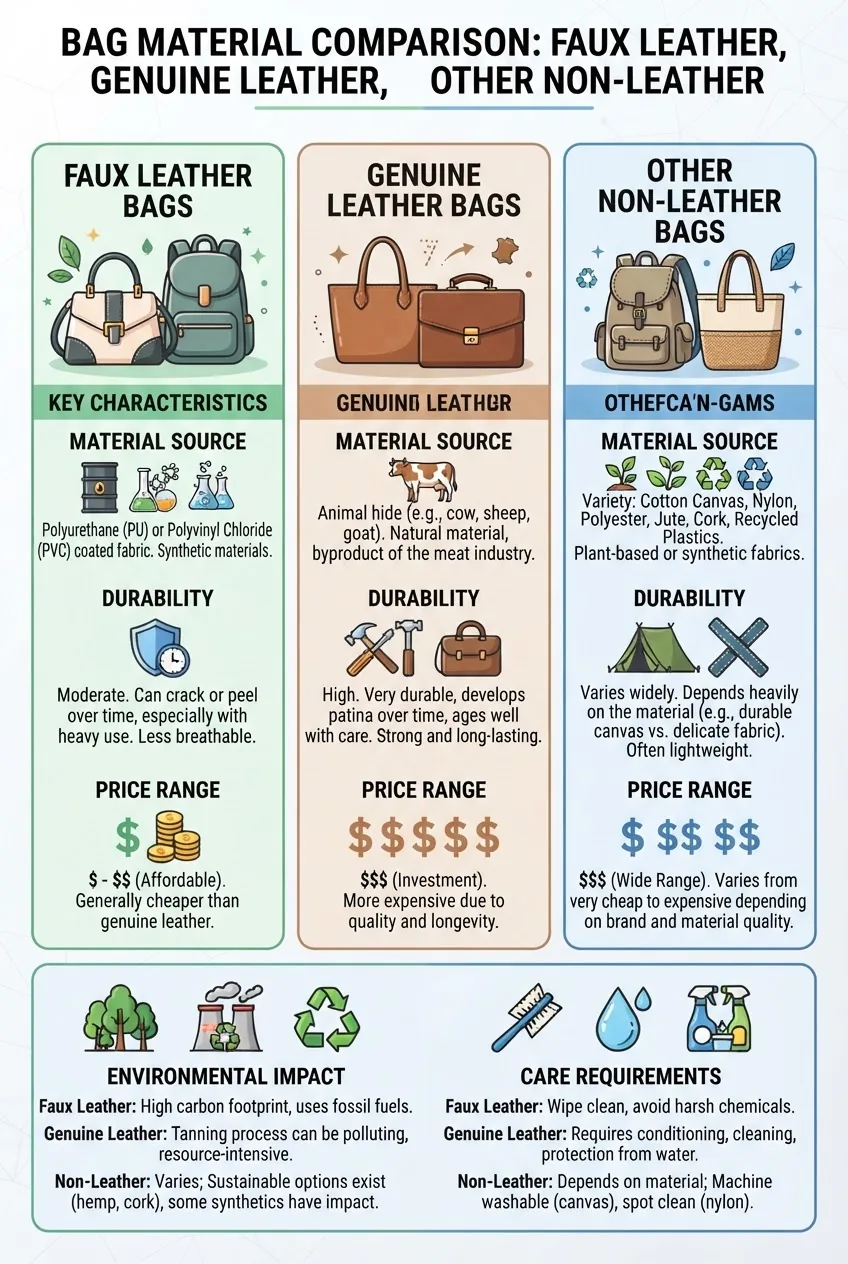
Below is a practical comparison table to evaluate trade-offs at a glance. Rows are zebra-striped for clarity.
Feature Faux Leather Genuine Leather Other Non-Leather Material source Petroleum-based coatings on fabric backings (PU/PVC) or plant-based composites Animal hide processed with tanning Recycled plastics, cork, textiles, or woven synthetics Durability Moderate; 2–7 years depending on quality and care High; often 10+ years with care Variable; recycled nylon can be highly durable, cork is less abrasion-resistant Price range Low to premium ($30–$600) Mid to luxury ($200–$2000+) Low to mid ($40–$400) Environmental impact Mixed — production uses petrochemicals; some brands use recycled content High resource use, but long lifespan can offset footprint Potentially lower if recycled content is high; depends on production Care Easy: wipe clean, avoid high heat Requires conditioning and careful storage Varies by material; textile bags may need spot cleaning Key takeaways: choose faux leather for affordability, style variety, and water resistance; choose genuine leather when long-term durability and patina are priorities. Other non-leather materials provide environmental trade-offs—consult brand sustainability reports when that is a decisive factor. For a deeper technical comparison, consult industry sustainability data and NGO insights such as Fashion Revolution, and refer to standard testing protocols on ISO.
-
Shop smart and avoid common pitfalls
Where to Buy the Best Faux Leather Bags and What to Avoid
Trusted purchase channels: brand websites, well-known retailers, and verified marketplaces that support returns and show full product specs. Avoid one-off marketplaces selling designer-look bags at prices that seem “too good to be true.”
Red flags when evaluating product pages or sellers:
- Missing material specification (e.g., product says “leather-look” without naming PU, PVC, or microfiber).
- No dimensions or unclear interior compartment descriptions.
- Lack of clear return policy or warranty.
- Excessive use of designer imagery that appears to copy a specific luxury model—may indicate replicas or grey-market products.
When researching replicas, verification guides for related categories are invaluable. See these resources:
Replica Backpacks and Wallets Guide for Designer and Messenger Bags — covers trusted replica markets and what to expect for backpacks and messenger bags.
Complementary verification references:
- designer wallets fake vs real guide — useful when checking wallet accessories sold alongside faux leather purses.
- spot a fake Chanel flap bag — high-end replica detection tips relevant when assessing designer-inspired faux pieces.
- spot a fake designer backpack guide — authenticity checks for backpacks that often share materials and hardware with faux leather bags.
- replica and fake backpacks guide — broader replica spotting techniques.
- replica messenger bags guide — tips specific to messenger-style silhouettes.
Additional purchase safety tips:
- Always check multiple product photos: inside linings, edge paint, handle attachments, and serial/lot tags for premium faux brands.
- Read verified buyer reviews for long-term wear comments (look for mentions of peeling or delamination).
- When a deal seems extreme (e.g., designer price minus 90%), assume the product may be a poor-quality replica or infringing copy.
According to a 2023 industry report by a fashion trade source, resale and secondhand interest in high-quality faux leather pieces increased as shoppers sought ethical alternatives and style variety; expect this trend to continue in 2024. Always verify product provenance when buying secondhand or from marketplaces.
Common mistakes and how to avoid them
I often saw shoppers buy glossy faux bags without checking strap attachments; the handle split under load after three months. To avoid this, I now press along handle seams and check rivet/stitch quality before purchasing—if a seller won’t provide close-up photos, I walk away.
Checklist: Verify before you buy
- Material explicitly named (PU, PVC, microfiber, or plant-based vegan) — not just “leather-look”.
- Dimensions and weight listed; strap drop suitable for your carry style.
- Clear return policy (30 days) and warranty (at least 1 year if possible).
- Close-up photos show consistent stitching and finished edges.
- Reviews mention longevity; watch for repeated complaints about peeling.
When to call in a professional
If you are purchasing a high-value faux leather piece (>$300) or verifying a suspected replica of a designer model, consult a professional authenticator or paid appraisal service before finalizing the transaction—especially if the seller is overseas or requests non-refundable payment methods.
Final thoughts
Choosing the best faux leather bag is a balance of style, expected lifespan, and value. Use the material checks, brand signals, and care steps in this guide to make a purchase that fits your needs. If sustainability is a primary concern, cross-check brand reports and certifications and favor recycled-content or plant-based options when they meet your durability needs. Ready to shop? Start with a defined use-case, set your budget band, and use the checklist above before adding any faux leather bag to your cart.