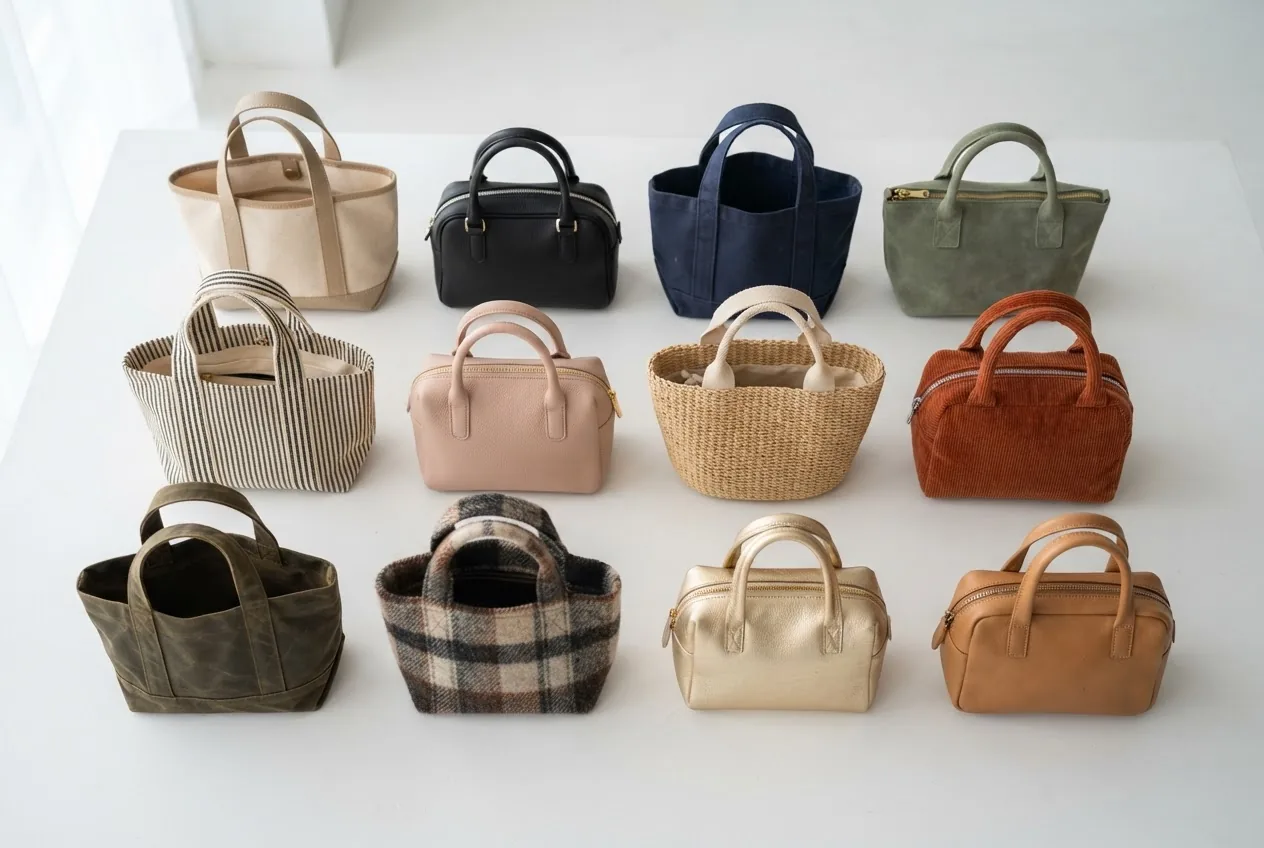
By the end of this hands-on guide you will confidently identify, choose, wear, and care for Crossbody Flap Bags, match them to outfits, and evaluate replica quality. Estimated time: 90–180 minutes of active reading and practical trials. Skill level: beginner to intermediate—no special tools required.
Before you start
- Tools: soft lint-free cloth, leather cleaner or balanced pH cleaner, beeswax or leather conditioner, microfibre cloth, small sewing kit (for minor stitching), ruler or tape measure
- Materials: clear workspace, access to daylight for color/texture checks, optional magnifier to inspect stitches and hardware
- Knowledge: basic handbag terminology (flap closure, strap drop, quilted texture)
- Time blocks: 30 minutes to inspect and try on; 30–60 minutes for deep-care; 30 minutes to plan outfits
-
Understand what a crossbody flap bag is
What Are Crossbody Flap Bags?
Crossbody flap bags are a subtype of crossbody style defined by a front flap closure that folds over the main compartment and secures with magnetic snaps, turn-locks, buckles, or hidden clasps. They combine the hands-free convenience of a crossbody with the layered look and security of a flap—think of them as a compact satchel worn across the torso so essentials stay within reach.
Functionally, the flap provides an extra barrier to access: when the flap is closed the bag is less likely to spill or be opened casually by a passerby, which is why many designers have long favored the flap on city-commuter and evening styles. Flap closures vary in accessibility and security: magnetic snaps are forgiving and fast, turn-locks are more secure, and buckles give a classic, mechanical aesthetic.
Examples: an evening quilted flap with chain strap, a smooth leather minimalist flap with a topstitched edge, and a utility flap with external pockets and buckles for travel. Each keeps essentials at torso level but serves different use-cases: formal, everyday, or utility travel.
Terminology quick-define: flap closure (the front panel covering the bag opening), strap drop (distance from top strap to bag top when worn), and chain strap (metal strap often woven with leather or left plain).
For a broader foundation on variations across the category, see related coverage of crossbody bag types and trends.
-
Survey the top styles and when to choose each
Top Styles of Crossbody Flap Bags
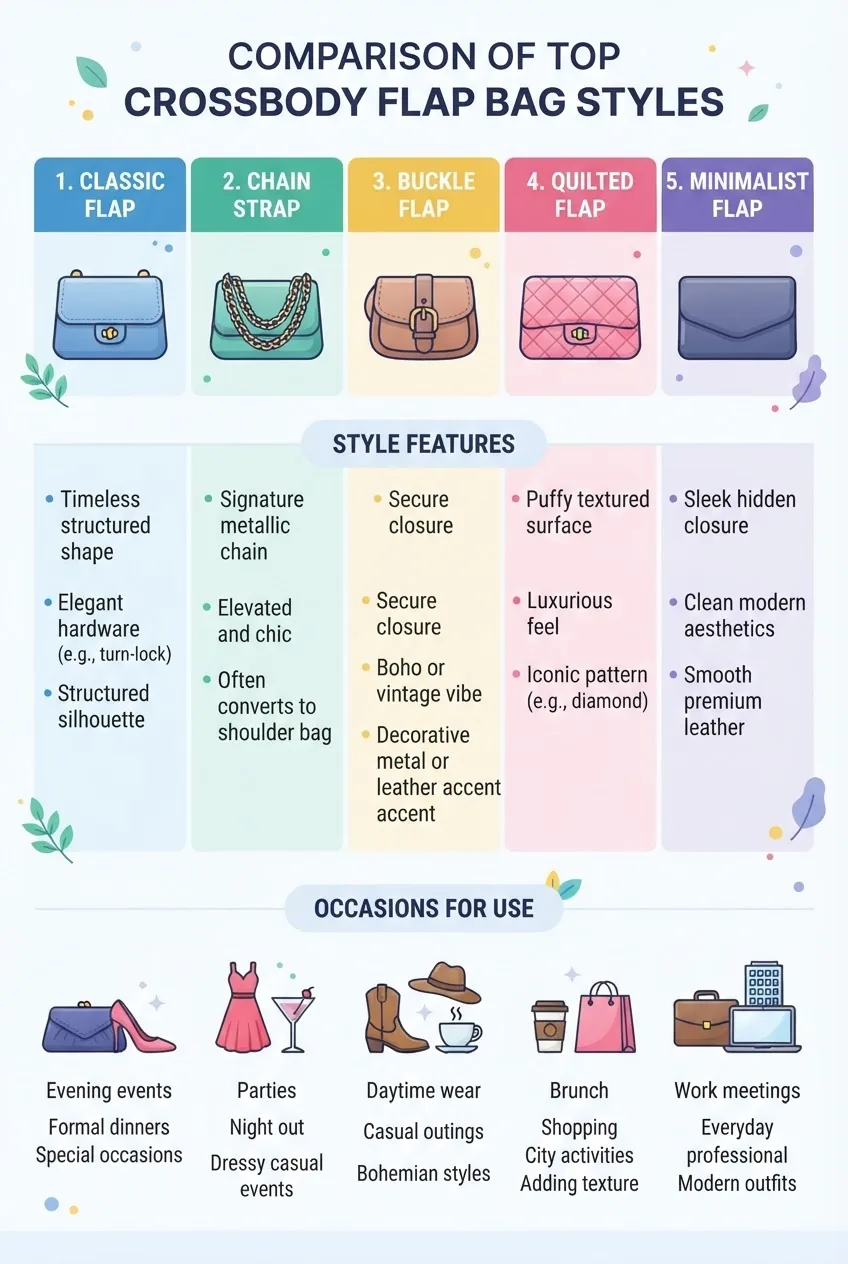
Below are the dominant style families for flap crossbody bags, described with their design cues and recommended use cases. Each entry outlines why the silhouette works and when to choose it.
-
1. Classic Flap Bag (timeless formal to smart-casual)
Design cues: rectangular body, short to medium strap, structured shape, often quilted or smooth leather, magnetic or turn-lock closure. Use case: evening events, business lunches, and city wear where a polished look is needed. Durable structure keeps contents protected and the flap creates a neat front plane for logos or hardware.
-
2. Flap with Chain Strap (elevated and versatile)
Design cues: metal chain strap alone or woven with leather, often convertible to shoulder or hand carry by doubling the chain. Use case: dresses up casual outfits, ideal for evenings or brunch. Chain adds visual interest and can reduce strap sag compared with soft leather straps.
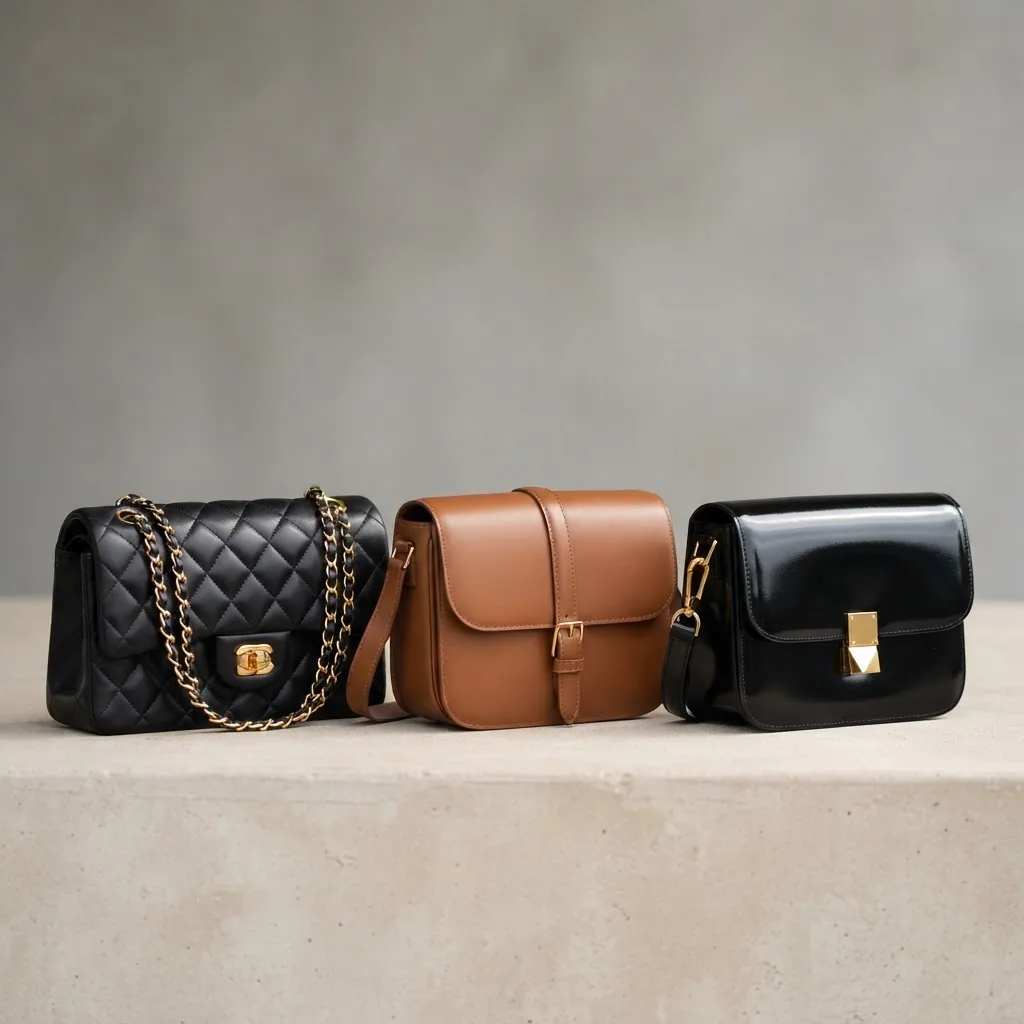
For readers specifically focused on chains, this is a gateway into the deeper strap discussion in our chain crossbody bags guide.
-
3. Flap with Buckle or Strap Closure (heritage and security)
Design cues: mechanical buckles, adjustable leather straps across the flap, or dual-fastening systems. Use case: travel and everyday carry where security and tactile feedback matter. Buckles are slower to open but offer a reassuring, durable closure for heavy use.
-
4. Quilted Flap Bag (texture and luxury cues)
Design cues: diamond or grid quilting, padded texture, often presented in lambskin or faux alternatives, frequently paired with metal logos. Use case: elevated casual, formal, and work settings; quilted texture reads as luxury and adds cushioning for contents.
Monogram motifs and quilting are discussed in the monogram crossbody bags guide.
-
5. Minimalist Flap (clean lines for modern wardrobes)
Design cues: pared-back hardware, smooth or lightly grained leather, rectangular or half-moon shapes, unobtrusive magnetic closures. Use case: everyday smart-casual, workwear that favors subtlety and shape over branding.
-
6. Structured Box Flap (architectural and statement)
Design cues: rigid frames, sharp edges, often top-stitched or piped, keeps internal layout organized. Use case: when you need structure—for camera-style inserts, fragile items, or a sculptural look at an event.
-
7. Sport/Utility Flap (functional travel and streetwear)
Design cues: nylon or coated canvas bodies, external zip pockets under the flap, water-resistant finishes, and adjustable heavy webbing straps. Use case: travel, biking, or hands-free commuting where durability and pockets are prioritized.
-
8. Convertible Flap (multi-wear for flexible wardrobes)
Design cues: removable straps, adjustable drops, and hardware to change from crossbody to shoulder or clutch. Use case: versatile packing for travel or capsule wardrobes where one bag must serve day-to-night.
-
9. Mini Flap Variants (compact fashion-forward choices)
Design cues: very small footprint, single compartment, often worn as an accessory. Use case: statement pieces for nights out and events—less practical for full daily carry. If you want size-specific guidance see the mini crossbody bags guide.
-
10. Replica and Designer-Inspired Flap Styles
Design cues: mimic signature motifs, hardware shapes, and quilting patterns of high-fashion designs. Use case: aesthetic-focused buyers seeking lookalikes—note legal and quality trade-offs covered later in the replica section and in the replica crossbody styles overview.
Use the list above as a decision map: if you value polish, choose classic or quilted; if you need function, pick utility or buckle; if you want versatility, look at convertible or chain strap pieces.
For readers exploring structured alternatives for casual utility looks, consult crossbody messenger bags.
-
-
Assess materials and construction before purchase
Materials and Construction Quality
Material and build determine longevity, feel, and maintenance. Below I compare common material choices and construction points you will inspect during purchase or appraisal.
Genuine leather: Full-grain and top-grain leathers are preferred. Full-grain shows natural markings and develops a patina; expect thicker hides (1.4–1.6 mm) and tight, even stitching (6–8 stitches per inch). Top-grain is sanded for uniformity and behaved surfaces.
Faux leather: PU and PVC variants are lighter and less breathable. High-quality PU often has consistent grain and edge finishing, but it will not develop the same patina as real leather. Check for bonded edges and glued trims—these are weaker over time.
Quilted finishes: Quilting adds padding and structure but relies on internal batting and stitching density. Look for consistent quilting rhythm, secure interior lining, and no puckering along seam lines.
Patent and coated fabrics: Shiny finishes are eye-catching but scratch-prone. Patent can crack if folded repeatedly—best for occasional use.
Hardware and clasps: Metal hardware should have a solid feel, consistent plating, and screws (not just rivets) securing moving parts. Turn-locks should rotate smoothly without lateral play. Chain straps should have well-soldered links and strain-tested connectors.
Construction checks (practical checklist):
- Inspect stitching: expect 6–8 stitches/inch on quality leather—loose threads indicate weak assembly.
- Edge finishing: painted or burnished edges signal attention to detail; raw edges or exposed glue are red flags.
- Lining and seams: linings should be glued and stitched evenly; interior pockets reinforced at stress points.
- Flap interface: the flap’s underside should have reinforcing material or stay to prevent sagging with daily use.
For certification and standards on leather sourcing and environmental practices, consult the Leather Working Group standards and ISO committees. According to a 2024 industry report, traceable supply chains and third-party audits are increasingly required by retailers; see the Leather Working Group for certification details at Leather Working Group.
Trade-offs to judge: full-grain leather requires more care but lasts decades; faux leather is lower cost and lower maintenance but often fails faster. Choose based on intended lifetime and usage frequency.
-
Learn precise wearing and strap-adjustment techniques
How to Wear Crossbody Flap Bags: Practical Tips
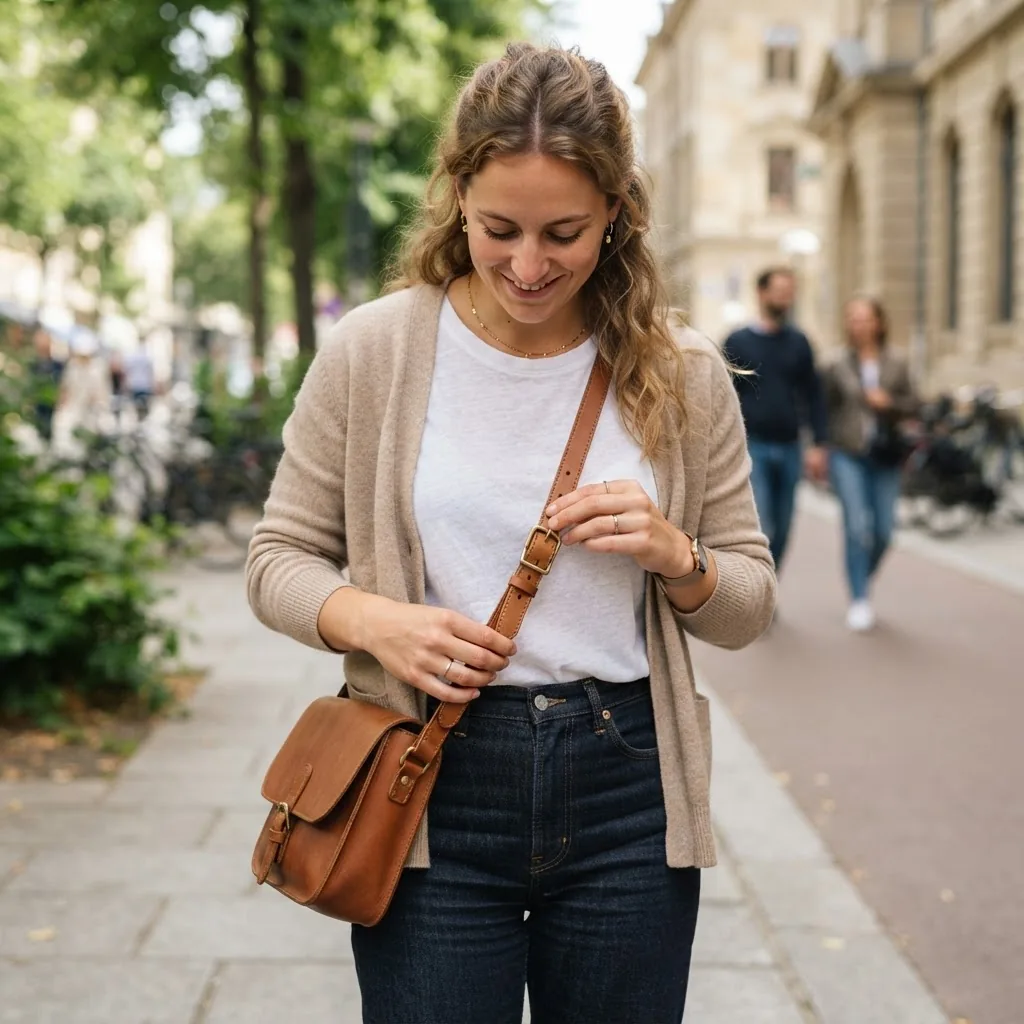
Wearing a crossbody flap bag is as much about comfort as it is about presentation. Follow the steps below to get fit and placement right, with repeatable measurements and quick checks.
- Measure strap drop: The standard crossbody drop range is 22–26 inches for most adults. To measure: hold the strap at shoulder, let bag hang naturally, measure from top of shoulder to top of bag. If you aim for hip carry, 24–26″ drop; for higher torso carry (underarm), 20–22″.
- Adjust for body shape: If you have a shorter torso, reduce drop by 2–4 inches to avoid the bag hitting the hip awkwardly. Taller frames can extend to 28–30″ for low-slung silhouettes—but check balance; the bag should not swing excessively when walking more than 5 mph.
- Try both sides: Wear the strap over your dominant and non-dominant shoulder to see how it affects access. Dominate-side wear can feel more natural for right-handers; cross-shoulder placement (strap across chest) improves security in crowded areas.
- Use strap length for styling: Double chain for shorter shoulder carry: when you loop a chain strap through, doubling halves the drop (e.g., a 24″ single becomes 12″ double). This is perfect for evening or elevated looks.
- Layering with outerwear: When wearing coats, set the strap drop to clear the coat’s top edge for easy access—you should be able to reach the flap without removing the coat. For heavy coats, prefer shorter drops (20–22″) to stop the bag from pressing against the body uncomfortably.
- Comfort tips for long wear: Add a padded strap sleeve for heavy loads; shift the bag occasionally to prevent pressure points—move every 15–30 minutes if walking or standing for long periods.
- Security and accessibility balance: For travel and crowded places, wear the bag across the chest (strap over one shoulder and bag resting at the sternum or hip). For quick access, carry with the strap on the outside of a coat and the flap turned toward you.
- Packing and internal layout: Place heavier items nearest your back to reduce pull; use small pouches for organization and avoid overstuffing the flap which stresses stitching and closure mechanics.
Quick dos and don’ts:
- Do: adjust strap so bag hits the intended body point between 20–26″ drop; test by walking 200 steps.
- Do: test the flap closure with a loaded bag—close and open 10 times to evaluate wear resistance.
- Don’t: carry heavy electronics in tiny flap bags; stress on the flap causes deformation.
- Don’t: let a chain strap rub unchecked against delicate fabrics—use a leather shoulder pad if necessary.
For travel-focused size alternatives and daily-carry recommendations, see small crossbody bags for travel and everyday use.
-
Build outfits around flap shapes, textures, and colors
Styling Ideas: Matching Crossbody Flap Bags with Outfits
Styling a flap bag is about balance: match the bag’s scale and texture to your outfit’s line and occasion. Below are hands-on, scenario-based ideas you can try immediately.
Casual day—weekend brunch:
- Choose a minimalist or chain strap flap in neutral leather (tan, black, olive).
- Outfit: relaxed denim, knit sweater, and ankle boots. Let the bag sit at hip-level (24″ drop) for easy reach to phone and wallet.
- Accessory pairing: small gold hoop earrings to pick up chain hardware.
Office—smart workwear:
- Opt for a structured classic or quilted flap in pebbled leather to resist scuffs.
- Outfit: tailored blazer, pencil trousers, low-heeled pumps. Wear the bag under the arm or at mid-torso (20–22″ drop) for a polished silhouette.
- Color matching: navy or burgundy bags pair with neutral suiting to add depth without clashing.
Evening—dressed-up looks:
- Go for a compact chain-flap or a patent leather flap for sheen.
- Outfit: slip dress or tailored jumpsuit. Double the chain for shoulder carry or keep single drop across the chest for a modern twist.
- Match hardware color (gold/silver) with shoes or belt for cohesion.
Travel—airport and city days:
- Pick a utility flap with zipped pockets under the flap and water-resistant finish.
- Outfit: layered tee, lightweight jacket, and comfortable sneakers. Wear cross-chest for security; place passports in an internal zip pocket nearest the back.
Seasonal cues:
- Spring/Summer: lighter leathers, pastel or white tones, and smaller silhouettes.
- Fall/Winter: quilted textures, deeper tones (oxblood, forest green), and structured shapes that work under coats.
Color coordination rules I use professionally:
- Match bright bag accents to at least one other element in the outfit (shoes, scarf) to avoid the bag feeling isolated.
- For patterned outfits, keep the bag neutral or pick one color from the pattern to harmonize.
- When mixing metals, keep one dominant metal and let the other be a subtle counterpoint—don’t exceed two metal finishes on visible accessories.
If you’re exploring alternative casual silhouettes, check the crossbody messenger bags piece for rugged, oversized crossbody looks.
-
Perform ongoing care and protect flap mechanics
Caring for Your Crossbody Flap Bag
Routine care keeps flaps from sagging and hardware from tarnishing. Follow these step-by-step maintenance tasks with concrete frequencies.
- Weekly quick-clean: Wipe leather surfaces with a dry microfibre cloth for 60–90 seconds to remove dust. For light dirt, use a pH-balanced leather cleaner applied to the cloth, not directly to leather.
- Monthly conditioning: For full-grain or top-grain leathers, apply 1–2 drops of leather conditioner on a cloth and rub evenly for 2–3 minutes; let absorb 10–15 minutes, then buff. Do not over-condition—limit to once every 4–8 weeks depending on dryness.
- Hardware care: Use a soft cloth to polish metal hardware; for plated hardware avoid abrasives and test a small, hidden area first. Tighten loose screws (use a jeweler’s screwdriver) on detachable straps every 6 months.
- Flap preservation: When storing, keep flaps lightly stuffed with acid-free tissue (not newspaper) to preserve shape and prevent creasing. Close magnetic snaps to maintain flap alignment but avoid over-straining the magnet if the bag is stuffed.
- Storage: Store in breathable dust bags at 50% upright support—do not hang by the strap long-term (this stretches leather). Ideal climate: 50–60% humidity at 18–22°C to avoid drying or mold growth.
- Spot repair: For small stitching failures, re-stitch with polyester thread sized to original (use 0.4–0.6 mm needles). For delamination or major hardware failure, consult a professional leather repairer.
- Protection from elements: Use a spray-on water repellent rated for leather and fabric (apply once, test on hidden seam). For patent finishes, wipe with a slightly damp cloth and avoid prolonged sunlight to reduce discoloration.
Tools and product recommendations (quantified): 1 microfibre cloth (40×40 cm), 1 leather cleaner bottle (120 ml), 1 leather conditioner jar (50 ml), jeweler’s screwdriver set (six bits). Only use cleaners labeled for leather or mixed materials.
For deeper restoration or structural repairs, call a leather repair professional if the flap sag exceeds 1.5 cm or internal lining separation exceeds 10% of seam length—these are thresholds where DIY fixes often fail.
-
Evaluate replica options with care and legal awareness
Replica Crossbody Flap Bags: What to Know
This section gives an evidence-based overview of replica designer crossbody flap bags with buyer considerations, quality markers, and legal disclaimers. I draw from practitioner experience and industry reporting to help you make informed choices.
First, an important disclaimer: replicas can infringe trademarks and may be illegal to import or sell in some jurisdictions. Be mindful of local laws when purchasing. For legal context and consumer protection guidance, consult the U.S. Federal Trade Commission guidance on counterfeit goods at FTC.gov.
If you are evaluating replicas for aesthetic reasons (designer-inspired looks at lower price), focus on these quality signals:
- Stitching density: Replicas with 6–8 stitches per inch and clean stitch alignment are of higher craft quality.
- Hardware weight and finish: Cheap replicas often use light, plated hardware that flakes quickly; higher-quality replicas use heavier base metals and consistent plating depth.
- Edge finishing: Look for painted or burnished edges that match the body color; raw or glue-exposed edges are signs of low-cost assembly.
- Leather smell and feel: Real leather has a warm, organic scent and slight surface variation; plastic or chemical smells indicate lower-quality synthetics.
- Flap fitment: The flap should align evenly, close with minimal lateral play, and show uniform contact with the base—excess gaps signal poor pattern cutting.
Price expectations and budgeting: a quality non-designer, well-made flap replica might range from $80–$300 depending on materials and hardware; lower than $80 often correlates with obvious shortcuts. According to a 2024 industry report, mid-tier replica manufacturing has improved hardware and finishing but still lags in leather sourcing and long-term durability.
How to spot fakes and avoid pitfalls:
- Check logo placement against authenticated references—small spacing differences are common in replicas.
- Inspect internal labels and dust bag finishes—authentic dust bags have branded, high-quality cotton and neat stitching.
- Watch for too-good-to-be-true pricing combined with rush shipping and lack of return policy—these are red flags.
For deeper guides on spotting specific brand fakes, see spotting fake designer bags and our broader fake designer crossbody bags overview.
For pricing context on mini formats and market ranges, consult the mini crossbody bag prices resource.
Finally, if you want the full contextual primer that compares replicas and licensed alternatives, read the pillar on replicas: Replica Crossbody Bags Guide for Designer and Luxury Styles.
Common mistakes and how to avoid them
I once bought a beautiful quilted flap without testing the flap closure under load; within two weeks the flap developed a pronounced sag. Lesson: always load-test a flap ten times with your typical contents before committing.
I also used a generic household cleaner on a pebbled leather flap and noticed finish stripping; now I always use a pH-balanced leather cleaner tested on a seam first.
In crowded travel situations I trusted an unsecured magnetic flap; a pickpocket accessed a shallow pocket that I’d left unzipped. Now I keep travel essentials in a zippered interior pocket beneath the flap and wear bags cross-chest in transit.
Final checklist
- Strap drop tested by walking 200 steps (target 20–26″ depending on desired placement)
- Flap closure opened and closed 10 times under load—no rubbing, misalignment, or sag
- Stitch density and edge finishing inspected (6–8 stitches per inch; painted or burnished edges)
- Hardware weight and soldering checked; screws tightened
- Materials checked for smell, grain, and consistent finish
- Storage plan in place (dust bag, tissue support, humidity control)
- Replica buyers: verified return policy, shipping details, and authenticity comparisons
When to call a professional
Call a professional leather restorer if the flap sag exceeds 1.5 cm, if stitching fails across more than 10% of a seam, or if hardware detachment requires welding. For authenticity assessments of high-value replicas or disputed designer pieces, consult a certified appraiser or brand-authentication service.
Transition: now that you’ve completed the hands-on steps—from identification to styling and care—you can confidently select the right crossbody flap bag for your needs and spot common construction and replica issues before they become costly mistakes.