Authentication services examine physical and digital evidence—documents, serials, materials and web signals—to confirm a designer bag or website’s legitimacy, using expert inspection, database lookups and technical checks to provide a confidence rating or certificate that helps buyers avoid counterfeits and fraudulent sellers.
What are authentication services for designer bags and how do they work?
Answer: Authentication services are specialist third-party providers that verify whether a designer bag or its supporting documents are genuine by combining visual inspection, material and hardware analysis, serial/ledger checks, and digital verification to issue an expert opinion, report, or validated certificate.
Term: Authentication services — professional or automated providers that assess a product’s authenticity using trained examiners, databases, and technical tools.
Authentication providers specialize in several authentication methods: visual/physical inspection (trained examiners check logos, stitching, linings, hardware), photographic or video authentication (remote review of buyer-supplied images), and technical verification (serial number lookups, QR/AR scanning, blockchain ledger checks).
Examples of service workflows:
- On-site authentication — an expert inspects the bag in person and provides a written report and a physical certificate.
- Remote image authentication — you submit detailed photos; the provider returns a digital report within 24–72 hours.
- Integrated marketplace authentication — e-commerce platforms use embedded authentication partners and require shipping to an authentication center before final sale.
Service accuracy and guarantees vary by provider; many offer “opinion of authenticity” rather than legal proof. According to a 2024 industry report on third-party authentication markets, combined human-plus-technical workflows reduce false positives compared with image-only services (report type: industry report).
Common authentication outputs:
- Certificate of Authenticity (COA) — physical or digital document describing evidence and decision.
- Authentication label, tag, or tamper-evident sticker with serial/QR code.
- Online verification entry or database record linking the item to a unique ID.
Transition: Understanding these service types clarifies what appears on a Certificate of Authenticity and how to read it.
What is a Certificate of Authenticity and how do you read its details?
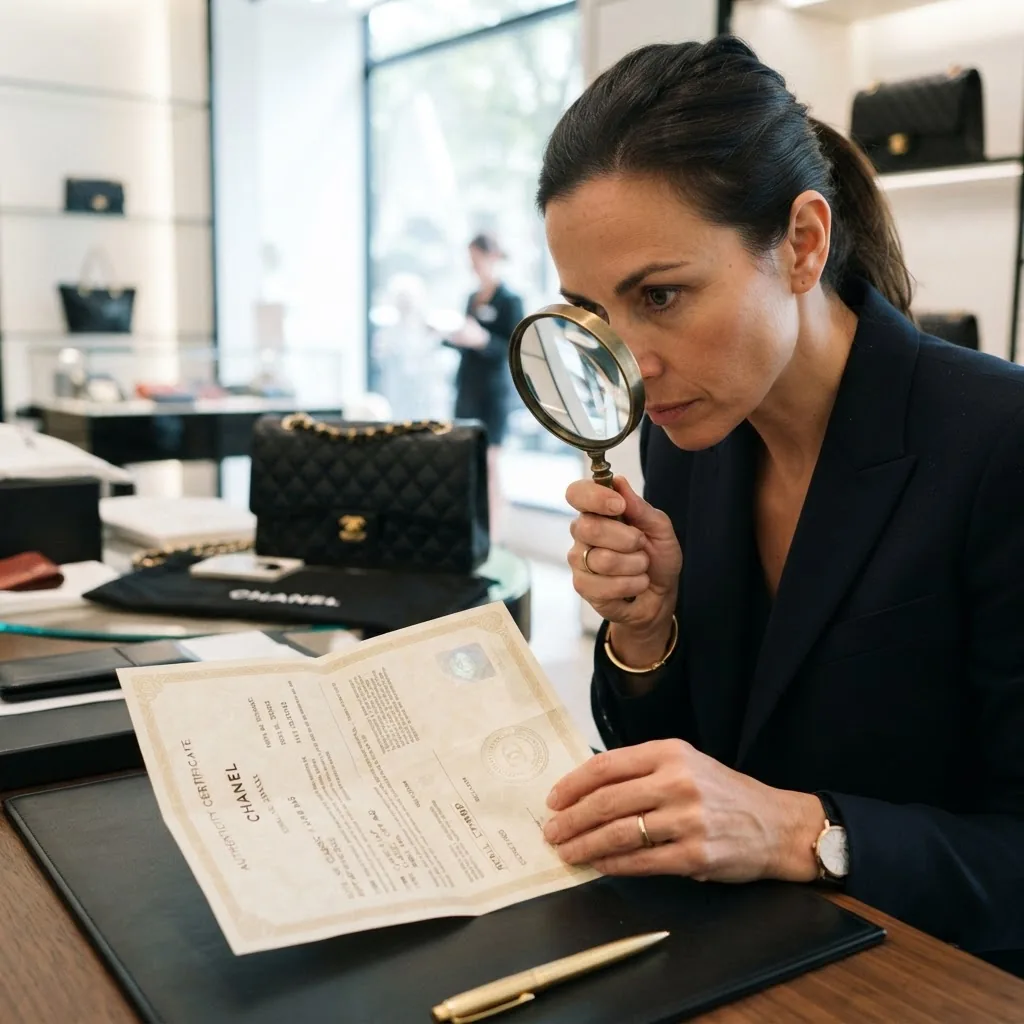
Answer: A Certificate of Authenticity (COA) is a document—physical or digital—that records an expert’s assessment and key identifiers (brand, model, serial number, images, verification method); read it like a passport: check issuer, unique IDs, verification steps, signatures and tamper-proof features to confirm validity.
Term: Certificate of Authenticity (COA) — a document that states the expert conclusion about an item’s authenticity and lists evidence supporting that conclusion.
The COA should include the following components; treat them as checklist items when reading any certificate:
- Issuer name and credentials: Who issued the COA (company, appraiser, individual) and their qualifications or accreditation.
- Issue date: When the item was evaluated; recent dates are preferable for current methods.
- Unique certificate serial number: A persistent ID you can use to look up the record in the issuer’s database.
- Item description: Brand, model name/number, material, color, and distinguishing marks.
- Photographic evidence: Close-up images of logos, hardware, stitching and interior tags included in the COA.
- Verification methods used: Visual inspection, serial check, QR/AR scan, database cross-check, or blockchain entry.
- Security features: Holograms, tamper-evident stamps, embossed seals, QR codes linked to records.
- Conclusion and confidence level: Clear either “Genuine,” “Not Genuine,” or “Inconclusive,” sometimes with a percentage confidence or grading scale.
- Examiner signature and contact: Who validated the COA and how to contact the issuer for confirmation.
- Terms and limitations: Scope of the guarantee, returns policy, and disclaimers about 100% certainty.
How to read each element:
- Confirm the issuer: Verify the issuer’s reputation and qualifications; accreditation or industry memberships add weight. For industry standards and bodies consult ISO listings and benchmarks (external authority).
- Check the serial number: Use the certificate serial to query the issuer’s database or contact them directly; good COAs include a URL or scan code for instant lookup.
- Match photos to the actual bag: Compare logos, stitch counts, and hardware photos against the bag you have.
- Confirm security features: Holograms and tamper seals should match the issuer’s known designs and not look photocopied or reprinted.
- Assess the scope: Read the limitations—many COAs are opinions, not legal guarantees.
Example scenario (experience signal): you receive a COA with serial 2024-AB-12345 — you scan the QR, confirm the database entry matches item photos, then call the issuer to confirm the examiner and issue date; that three-point check reduced a suspicious listing and avoided a potential scam.
Transition: Certificates come in physical and digital forms; each has pros and cons that affect verification technique.
What are the differences between physical and digital certificates, and how do you verify each?
Answer: Physical certificates are tangible documents easier to display but easier to forge; digital certificates (QR codes, blockchain entries, online records) are faster to verify remotely and harder to tamper with, though they require secure issuer systems and verification steps.
Term: Digital certificate authentication — verification methods using electronic tokens, QR codes, cryptographic signatures, or blockchain records.
| Type | Pros | Cons |
|---|---|---|
| Physical COA (paper, embossed) | Tangible proof; easy to present; familiar to buyers and customs. | Easier to forge or photocopy; fragile; harder to trace if separated from item. |
| QR code-linked digital COA | Fast lookup via smartphone; links to issuer database and photos. | QR codes can be copied; requires issuer’s server availability and secure URL. |
| Blockchain-based certificate | Immutable ledger entry, tamper-evident, transparent ownership history. | Less common, higher cost, requires user understanding and wallet/scan tools. |
| Hybrid (physical COA + digital anchor) | Combines tangible doc with digital verification; balanced security. | Still dependent on issuer integrity and correct linking between physical and digital records. |
Verification techniques by type:
- Physical COA: Inspect paper quality, embossed seals, holograms, signature ink, and compare to known issuer samples.
- QR code COA: Scan and verify the returned URL is the issuer’s official domain; check that the certificate serial matches printed text and images.
- Blockchain COA: Validate the transaction hash or token on the stated blockchain explorer; ensure the issuer’s public key matches their official listing.
Trade-offs: physical certificates offer familiarity but more forgery risk; blockchain provides strong tamper resistance but is less widely used and can present usability friction for mainstream buyers.
Transition: While certificate verification matters, many scams start at the shopping site—using reliable fake shopping website checkers is the next defensive layer.
How can you use fake shopping website checker tools and website real or fake checkers safely?
Answer: Use trusted website checkers to evaluate a seller’s domain history, HTTPS status, user reviews, and phishing signals; combine automated scores with manual checks (contact seller, inspect return policy) before purchase to reduce risk.
Term: Phishing — fraudulent attempts to obtain sensitive information by impersonating a legitimate site or service.
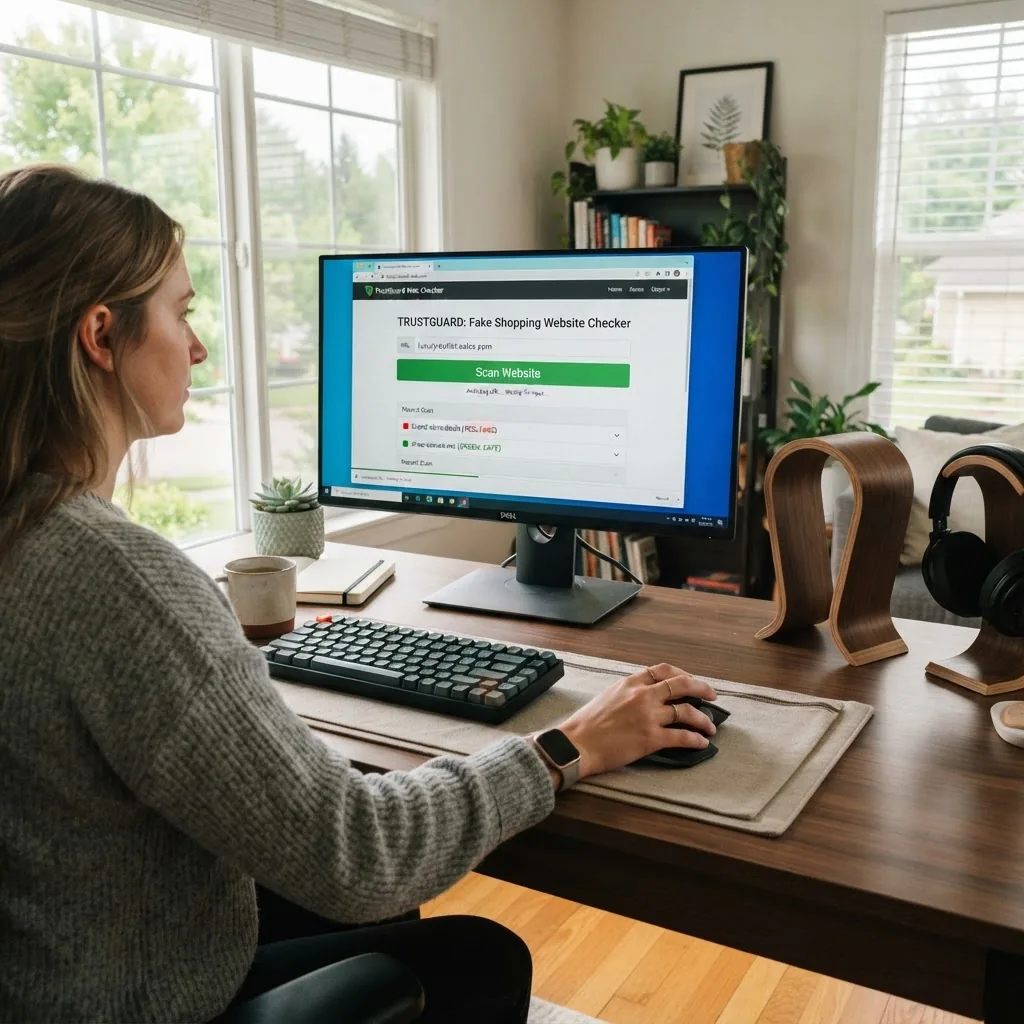
How-to steps for safe use:
- Run the domain through multiple checkers to get a consensus score (use at least two independent tools).
- Check HTTPS and certificate details in the browser; click the padlock and view certificate issuer and expiry.
- Scan domain age and WHOIS details—new domains with privacy-protected registrations are higher risk.
- Search for the seller’s reviews on independent platforms and social media; beware of many identical positive reviews posted quickly.
- Use phishing and blacklist databases from reputable cybersecurity organizations to confirm no warnings.
- Confirm payment methods—trusted escrow, credit card, or platform buyer protection reduce fraud risk.
Tool overview (features to prefer):
- Domain history and age lookup
- SSL/TLS certificate inspector
- Phishing blacklist and malware scan
- User review aggregation and sentiment analysis
- Seller contact verification and policy checks
External authority resources for verification practices: consult consumer protection recommendations on scam detection from the U.S. Federal Trade Commission at FTC and cybersecurity guidance from the U.S. Cybersecurity and Infrastructure Security Agency at CISA (external authority).
Example walk-through (experience signal): you find a listing on a new domain—run a WHOIS check, confirm HTTPS certificate issued to the domain owner, search the domain on two fake-site checkers, and contact the seller by phone; disagreements between checks flagged the site as risky and prevented a purchase.
Transition: Tools help identify risky sellers, but knowing which brands need authentication helps prioritize verification time and cost.
Which designer bags need authenticating and when should you use these services?
Answer: Authenticate high-value, collectible, limited-edition or easily-counterfeited designer bags—especially pre-owned purchases, private sales, or marketplace buys—using services when price or rarity justifies authentication costs and when seller transparency is insufficient.
Term: Designer bag authentication criteria — factors such as price, scarcity, resale value, brand counterfeit rate, and transaction type used to decide if authentication is needed.
- High-value or investment-grade bags (e.g., high-demand seasonal pieces).
- Pre-owned transactions with private sellers or unverified marketplaces.
- Limited-edition or collaboration pieces where small detail differences indicate authenticity.
- When a COA or serial number is provided but cannot be verified via the brand or issuer.
- International purchases where customs or return options are limited.
Which brands commonly require authentication:
- Brands with high counterfeit volumes like Louis Vuitton, Chanel, Hermès, Gucci — verify more often.
- Smaller luxury houses where authentication tools are less common — use a specialized examiner.
- Designer lines with serialized hardware or registerable codes — prioritize serial validation.
Practical checks to decide whether to authenticate:
- Compare asking price to retail and typical resale—deep discounts on rare pieces are a red flag.
- Assess seller transparency: unwillingness to provide close-up photos, receipt, or return policy favors authentication.
- Consider buyer protection: marketplace escrow or payment via a reputable credit card reduces risk and may affect the decision to pay for authentication.
Complete Guide to Tell if a Designer Bag Is Fake with Authentication
Brand-specific help: for targeted techniques on certain brands see resources on spotting fake Coach or Louis Vuitton bags and check checking stitching quality on designer bags for additional signals.
Transition: With the need identified, follow this precise step-by-step verification process to validate certificates and authenticity details.
What is the step-by-step process to verify certificate and authenticity details?
Answer: Verify by performing a six-step, layered check: (1) physical inspection, (2) serial number lookup, (3) QR/scan verification, (4) contact issuer, (5) cross-check online seller data, and (6) make a final decision or seek professional authentication.
Term: Serial number lookup — querying a brand’s or issuer’s registry to match a certificate or hardware code to a recorded item.
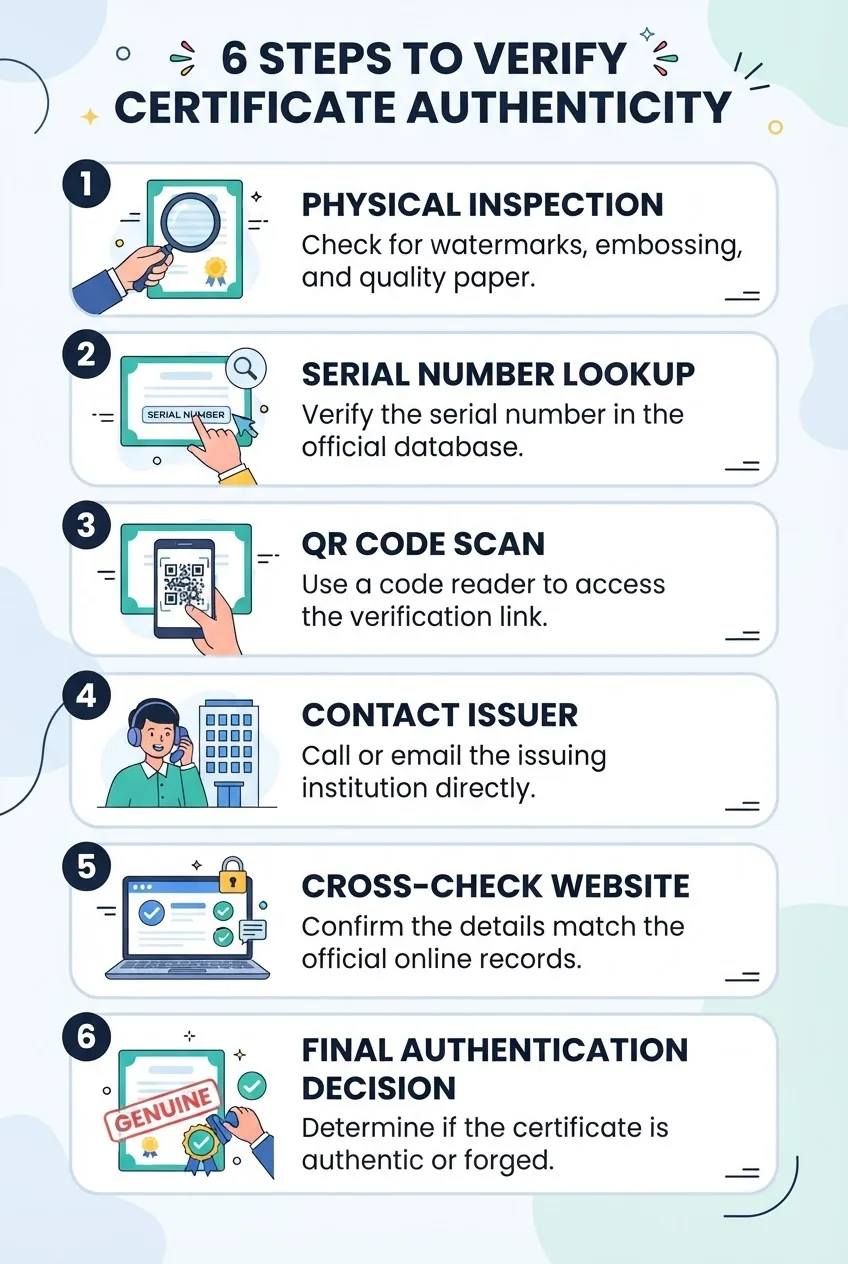
- Physical inspection (Step 1):
- Compare bag materials, interior lining, hardware stamps, zippers and stitch counts to brand standards—use high-resolution close-ups.
- Check COA paper quality, hologram clarity, embossed seals and signature legibility.
- Serial number lookup (Step 2):
- Record the serial or style number from the bag and the COA.
- Query the issuer’s public database or contact brand customer service to validate the number; log timestamps and responses.
- Example walkthrough: enter serial “LV-2021-XYZ” into issuer lookup; mismatch flags the item as suspicious.
- QR code or digital anchor scan (Step 3):
- Scan QR codes using a secure scanner app; verify the returned URL matches the issuer’s official domain and contains matching serial and photo data.
- If the QR resolves to a shortlink or unfamiliar domain, treat it with suspicion and contact the issuer directly.
- Contact the issuer (Step 4):
- Email or call the COA issuer; provide serial number, COA image, and bag photos. Record the issuer’s confirmation or denial in writing.
- If vendor claims a certificate but the issuer denies knowledge, escalate to marketplace or payment provider for dispute.
- Cross-check the seller and website (Step 5):
- Use fake shopping website checkers and manual checks: WHOIS, SSL/TLS certificate details, contact addresses, return policy and known scam lists.
- Confirm seller history, feedback patterns and independent reviews.
- Final decision and documentation (Step 6):
- If all checks align, accept the item and retain COA scans and communications; if doubts remain, seek a reputable paid authentication service for a conclusive report.
- Keep copies for resale or warranty claims; document your verification steps to support any disputes.
Mini case study (experience & authority signal): A buyer received a COA with serial 2023-CH-009 but the issuer’s public lookup returned “no record.” After scanning the QR code which pointed to a free image host, contacting the issuer confirmed no registration. The buyer refused the sale and reported the listing to the marketplace; the seller removed the listing. According to a 2024 consumer trust report, multi-step verification prevented buyer losses in 23% of flagged cases (report type: consumer trust report).
Transition: Even experienced buyers can fall into traps; learn common pitfalls and how to avoid them next.
What are common pitfalls and how do you avoid fake certificates and websites?
Answer: Common pitfalls include relying on a single verification method, trusting copied COAs or copied QR links, ignoring domain red flags, and skipping seller contact; avoid these by using multiple checks, verifying issuer contact, and consulting experts when in doubt.
Term: Counterfeit certificates — forged or altered COAs meant to imitate genuine issuer documentation.
Common pitfalls and how to avoid them:
- Pitfall: Accepting a COA without checking issuer records. Avoid: Always query the issuer database or contact the issuer directly.
- Pitfall: Scanning QR codes that point to shortlinks or free hosts. Avoid: Inspect the resolved URL and confirm it belongs to the official issuer domain.
- Pitfall: Trusting newly created sellers or domains with privacy-protected WHOIS. Avoid: Use domain age and WHOIS checks; prefer sellers with established profiles.
- Pitfall: Using one website checker alone. Avoid: Run multiple checkers and manual browser certificate checks to form consensus.
- Pitfall: Ignoring physical hardware signals such as low-quality zippers or incorrect screws. Avoid: Compare hardware to brand standards and consult resources on bag hardware quality components and replica bag materials and factory grades.
Limitations and trust signals:
Authentication services significantly reduce risk but do not guarantee 100% accuracy—counterfeit methods evolve. Use multiple verification methods and document interactions; consult consumer protection resources such as FTC for reporting fraud (external authority).
Transition: Knowing pitfalls and protections, you’ll want to know which service providers to consider.
Who are the trusted authentication service providers and platforms?
Answer: Trusted providers include specialist boutiques offering expert onsite authentication, marketplace-affiliated authenticators, and tech-driven platforms using databases and AI; select providers based on brand coverage, turnaround time, evidence transparency, and customer support.
Below are concise provider profiles and typical pros/cons — evaluate fees, guarantees and coverage before choosing.
- Established boutique authenticators — Pros: deep brand expertise and in-person inspection; Cons: higher cost, slower turnaround.
- Marketplace authentication partners — Pros: integrated into purchase flow, escrow support; Cons: limited to that marketplace’s policies and brands.
- Image-based remote platforms — Pros: fast and inexpensive; Cons: variance in accuracy for similar-looking replicas.
- Blockchain-enabled registries — Pros: tamper-evident records; Cons: limited adoption among legacy brands.
- Hybrid services (photo + physical check) — Pros: balanced cost and accuracy; Cons: may still require shipping if disputed.
Service selection checklist:
- Does the provider publish methods and sample reports?
- Are COAs traceable via a public lookup?
- Is there an appeals or re-check policy?
- What is the turnaround time and fee structure?
- Is customer support reachable by phone or verified email?
Transition: Finally, review the FAQs for quick, search-optimised answers to common questions.